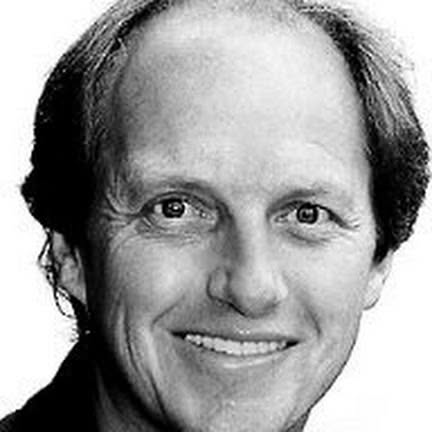
St. Louis County Commissioner Ashley Grimm has something that cannot be manufactured through campaign advertising, political consultants or an impressive collection of endorsements. She has a record of winning elections, an established base of political support and a willingness to challenge government decisions even when it means standing alone.
Those qualities make the two-term commissioner representing western Duluth one of the more intriguing figures in the early conversation surrounding Duluth's 2027 mayoral election. They also raise an increasingly relevant question: If Mayor Roger Reinert decides against seeking a second term, or if a serious challenger emerges from the city's organized progressive movement, could Grimm become a formidable candidate for City Hall?
The answer, based on her experience and political record, is yes. Whether she wants the job is an entirely different matter.
During an extensive interview this week, Grimm acknowledged that people have been asking about her political future, but she emphasized her satisfaction with serving on the County Board.
"I tell them I'm very happy at the county board," Grimm said.
Asked directly whether she was ruling out running for mayor, Grimm declined to make a formal announcement about her future.
"I don't know if I want to say anything official," Grimm said.
Her answer deserves to be taken seriously. She has given no indication that she is organizing a mayoral campaign, and there is no basis for portraying her as an announced or prospective candidate actively preparing to run.

But the larger political question remains. Grimm possesses many of the qualities associated with a credible challenger, and Duluth's evolving political landscape makes her record especially relevant as voters begin considering who might lead the city after 2027.
Grimm first won election to the County Board in 2020, succeeding retiring Commissioner Beth Olson. Four years later, she faced Duluth City Councilor Janet Kennedy, an experienced elected official with established political relationships. Grimm won convincingly, receiving 8,869 votes to Kennedy's 5,748, approximately 60% of the vote.
Winning twice does not guarantee success in a citywide election. Western Duluth represents only part of the city's electorate, and a mayoral candidate must build support across neighborhoods with different economic priorities, political traditions and expectations of government. But Grimm has demonstrated that she can organize a successful campaign, defend her public record and persuade voters to return her to office.
Her political support is another important consideration. Grimm received the endorsement of the Twin Ports Democratic Socialists of America in her 2024 reelection campaign and has previously been endorsed by DFL organizations, including Stonewall DFL. Those relationships place her within an organized progressive political network that has demonstrated an ability to recruit candidates, mobilize volunteers and influence local elections.
That does not mean those organizations would automatically support her for mayor. Nor does it mean every voter who supported her for county commissioner would follow her into a citywide contest. But endorsements, political relationships and successful campaigns provide an organizational foundation that many first-time mayoral candidates spend years trying to develop.
Grimm also brings a dimension to the discussion that challenges the conventional portrayal of progressive politicians as advocates for ever-expanding government spending.
Last December, the County Board approved a $564 million budget for 2026 that included a 12.4% increase in the county property tax levy. The vote was 6-1. Grimm was the only commissioner to oppose the spending plan.
It was a significant political decision, particularly for a commissioner closely identified with Duluth's progressive movement. But Grimm sees no contradiction between her political philosophy and her insistence that government exercise fiscal restraint.
"Yeah, I think I truly believe that the left is much more fiscally responsible than what is deemed the center, and that is because we're focused on bread and butter issues and quality of life," Grimm said.

Her argument is that fiscal responsibility should be measured not simply by how much government spends, but by whether its spending priorities correspond to the needs of the people paying the bills.
Grimm's years working at the Damiano Center gave her direct experience with families struggling to afford housing, food and other necessities. That background, she said, influences her decisions about public spending. She believes elected officials must recognize the difference between programs that directly improve lives and expenditures that may be politically attractive but are not essential.
"There were pet projects in there that were not community priorities," Grimm said of the county budget. "There were spending that we were spending on things we shouldn't have been spending on."
She also objected to decisions involving opioid settlement funds, arguing that money intended to confront the addiction crisis should be directed toward effective community responses rather than depleted for other purposes. Other commissioners defended the budget as necessary to maintain essential services, meet rising costs and fulfill county obligations.
Grimm acknowledged that the spending plan contained worthwhile programs, but she was unwilling to support the entire package.
"And there was a lot in that budget that was still very good, but every dollar matters. And I know people say that, and then just vote the other way. I just think we have to really vote like every dollar matters," Grimm said.
That position could become politically significant in a mayoral election where property taxes, affordability and the cost of government are almost certain to be major issues. Grimm's lone opposition to the county levy increase complicates any easy attempt to portray her political philosophy as simply a demand for higher taxes and more public spending.
One budget vote does not make someone a fiscal conservative, nor does it settle broader questions about how Grimm would manage a municipal budget. But it establishes something important about her approach: She has demonstrated a willingness to vote against substantial spending even when the majority of her colleagues disagree.
Her independence has emerged in other significant controversies, including the proposed Google data center in Hermantown. Grimm challenged nondisclosure agreements signed by fellow county commissioners during early discussions involving the development, arguing that elected officials should not be prevented from sharing information about matters of public concern.

Her effort to prohibit commissioners from signing such agreements failed, but the controversy raised questions about government transparency and the role elected officials should play in economic development negotiations. Supporters of confidentiality agreements argued that preliminary business discussions sometimes require discretion. Grimm maintained that public accountability should not be sacrificed in the process.
Her opposition to the project has not prevented her from distinguishing between her policy preferences and her responsibilities as a commissioner. On Tuesday, she supported a county agreement with Hermantown concerning road safety improvements associated with the data center, explaining that the county could not dictate if roads were used, so she would vote to build taxpayer protections for streets and utilities even though she continues to oppose the development.
It is a distinction that matters in evaluating a potential mayoral candidate. Elected officials are frequently required to manage the consequences of decisions they opposed, and political credibility depends in part on recognizing those obligations.
Grimm also has considerable experience with public safety, an issue that would figure prominently in any mayoral campaign.
As chair of the County Board's Public Safety and Corrections Committee, she has been involved in discussions about jail operations, law enforcement resources and mental health services. One of her most significant early efforts involved replacing a private medical contractor at the St. Louis County Jail with Duluth-based St. Luke's, now part of Aspirus Health.
The county's previous contractor, MEnD Correctional Care, had faced serious scrutiny over medical services in Minnesota correctional facilities. Grimm pushed for a local provider capable of delivering expanded health care and mental health services, working alongside advocates seeking improvements in correctional health care.
The change became an example of what she believes government can accomplish when elected officials are willing to challenge practices that have become accepted simply because they have been in place for years.
Grimm also helped build support for community crisis response services designed to provide mental health assistance during nonviolent emergencies. She rejects the suggestion that providing additional mental health resources is somehow opposed to law enforcement, arguing that police departments themselves recognize the need for trained professionals who can respond to people in crisis.
"I feel really proud I was able to take things on that were politically difficult to take on, but important," Grimm said.

That experience provides a natural bridge to one of Duluth's most persistent problems: the condition of downtown and the continuing struggle to address homelessness, addiction, mental illness and public safety.
Grimm believes downtown's recovery will require sustained cooperation among government, businesses, property owners and community organizations. She is encouraged by partnership efforts involving Boreal and believes the city should take a more aggressive approach to attracting businesses into vacant commercial properties.
But she also believes the city's economic development strategy should extend beyond the traditional downtown business district.
"I also think we should be thinking about West Duluth as having a second downtown and really think about our investments there," Grimm said.
Her observation reflects a longstanding concern among western Duluth residents that city investment and political attention too often concentrate on the waterfront and central business district. Vacant buildings along Central Avenue, aging commercial properties and opportunities for neighborhood redevelopment deserve attention alongside projects in the city's more visible commercial areas.
Rather than relying on one major development or a single sweeping initiative to revitalize downtown, Grimm favors a collection of smaller, coordinated improvements.
"I think it's going to be a lot of small solutions," Grimm said.
She was more critical of downtown enforcement strategies that she believes rely too heavily on briefly incarcerating people for nonviolent offenses without providing the treatment, housing and support necessary to prevent repeated encounters with the criminal justice system.
Her concern is not simply philosophical. Grimm argues that repeatedly cycling people through jail without addressing underlying problems is expensive, ineffective and ultimately harmful to the broader community.
"I think there's a lot of opportunity to actually look at what other areas are doing and build out the mental health and substance use supports that you need for a healthy and caring community," Grimm said.

That approach would face difficult questions from downtown business owners and residents who want immediate improvements in public safety and stronger enforcement against disruptive or illegal behavior. Those concerns cannot be dismissed, and any mayoral candidate advocating expanded social services would need to explain how those investments would produce measurable improvements in downtown conditions.
Grimm's response is that sustainable progress requires both economic development and an effective system of community support.
She praised the collaborative work of the Damiano Center, Chum and the Union Gospel Mission, while emphasizing that nonprofit organizations cannot solve homelessness and related problems without substantial cooperation from city and county government.
She wants additional mental health treatment beds, more housing opportunities and stronger programs to help families remain in their homes before financial difficulties become housing emergencies. She also wants government to become easier for businesses to work with, particularly those considering investment in vacant downtown properties.
"And be easy to work with. I know everyone says this, but we do. We need to be really easy to work with and attract more businesses downtown and some of our vacant spaces too," Grimm said.
Grimm also expressed concern about proposals affecting Duluth's skywalk system and the downtown public library, arguing that accessibility must remain central to decisions involving two important civic resources.
"I really think we need to keep the skywalk," Grimm said.
Her comments demonstrate that she has thought seriously about problems extending beyond the County Board's immediate responsibilities. Downtown revitalization, neighborhood investment, public safety, housing and the relationship between government and private business are central responsibilities of Duluth's mayor.
When asked to assess Reinert's performance, Grimm was cautious about assigning responsibility for particular problems to the mayor. She acknowledged that the position attracts considerable criticism because residents naturally look to City Hall for answers, even when the underlying issues involve multiple levels of government.
Still, she believes Duluth has considerable work ahead.
"I mean, so much hinges on that mayoral position, and I do think we've got a lot of work to do," Grimm said.
Her comments about downtown, western Duluth and core municipal services suggest a belief that residents are still waiting for more visible progress in several areas.
Reinert, meanwhile, has emphasized the development of his administrative team, improvements to basic city services, economic growth and efforts to keep municipal property tax increases affordable. He defeated incumbent Emily Larson in 2023 on a platform that stressed those priorities, and he continues to identify them as central to his administration.
In an email Thursday, Reinert reiterated that his immediate focus remains on the responsibilities of the office rather than the next election.
"We're still nearly a year away from the 2027 election, and right now my focus is 100% on doing the job Duluth elected me to do," Reinert said.
He pointed to progress involving housing, commercial tax base growth, streets, utilities and downtown revitalization, while acknowledging that additional work remains. Reinert has indicated that he expects to consider his political future after the holidays, following completion of the city budget process.
The mayor's decision will influence the political landscape. A reelection campaign would give Duluth voters an incumbent with an established record to examine. An open mayoral contest would create a different opportunity, potentially attracting candidates from the City Council, county government, the business community and the city's organized political movements.
Grimm is not the only possible participant in that conversation, and there is no reason to assume that Duluth's progressive organizations have settled on a preferred candidate. But she brings credentials that deserve consideration regardless of how the field develops.
Even political observers who support Reinert acknowledge her contributions to the community.
"I had an opportunity to work with Ashley on the Spirit Valley Community Center initiative in West Duluth and she did a great job, bringing County funding to the project," said Tim Meyer, a former local political candidate and longtime observer of Duluth politics.
Meyer said he believes Reinert deserves a second term and would support his reelection, illustrating that appreciation for Grimm's public service does not necessarily translate into support for her as mayor.
That distinction is important. A citywide election would not be decided solely by progressive endorsements, previous victories or the popularity of individual commissioners. A successful candidate would have to persuade homeowners concerned about property taxes, business owners frustrated by downtown conditions, residents demanding improvements to streets and utilities, and families seeking affordable housing and reliable public services.
Grimm would have strengths in that discussion. Her election victories establish political viability. Her county experience provides familiarity with large public budgets and government operations. Her work involving public safety, corrections, social services and economic development offers a substantial record for voters to evaluate.
She also has potential vulnerabilities. Her progressive affiliations would invite scrutiny from voters who disagree with the Democratic Socialists of America, and opponents could question whether some of her approaches to crime, homelessness and economic development would produce the results Duluth residents expect. Her relatively limited experience managing an executive branch of government would be another legitimate subject of examination.
Those questions are not disqualifying. They are precisely the questions that should be asked of anyone seeking to become mayor of a city with complex economic, geographic and social challenges.
There is also an important reason Grimm may have little interest in changing jobs. She is approaching a new period on the County Board, where the election of Kris Eilers and the departure of longtime Commissioner Keith Nelson will alter the makeup of county leadership. Eilers' victory over incumbent Commissioner Annie Harala adds another change to a board confronting difficult questions about finances, economic development and the delivery of essential public services.
Grimm sounded genuinely enthusiastic about the opportunities those changes could bring.
"I think we're getting a lot of new energy and I really am excited about the work that we're going to do," Grimm said.
For a commissioner with a term extending into January 2029, there are compelling reasons to remain where she is. She has established relationships, important committee experience and a platform from which to continue addressing issues that have defined her public service.
But political circumstances can change, particularly when a major city approaches an election without knowing whether its incumbent mayor will seek another term.
The more interesting aspect of Grimm's position is not simply whether she might eventually reconsider running for mayor. It is that she has already assembled much of what a serious candidate would need: a public record, campaign experience, substantial electoral support, relationships with organized political groups and positions on the principal issues confronting the city.
None of those qualities guarantees a successful mayoral campaign. They do, however, make her a legitimate figure in the conversation about Duluth's next election.
Grimm is not campaigning for mayor. She says she enjoys her county responsibilities, believes important work remains ahead and considers a mayoral campaign highly unlikely.
Those statements should be respected.
But as Duluth approaches a potentially consequential election, the city's political future remains unsettled, and the qualifications of possible candidates deserve examination before campaigns begin and partisan loyalties harden.
Ashley Grimm has earned that examination through six years of county government service, two successful elections and a public record that extends well beyond the conventional expectations attached to her political affiliations.
Whether she ever seeks the mayor's office remains her decision.
Whether she has the credentials to be taken seriously as a potential candidate is a question her record has already answered.