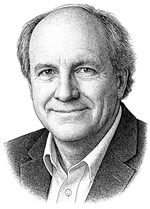
Howie is a longtime Minnesota journalist, independent columnist and author covering sports, power and civic life. His daily column is sponsored by Lyric Kitchen . Bar.
Minnesota’s next governor’s race looks settled in March the way Lake Superior looks calm in June — wide, steady, almost inviting you to forget what it can do when the wind shifts. Right now, it’s a one-horse race. And the stallion is Amy Klobuchar.
Not because she’s unbeatable. Not because the field is empty. Because, at this moment, the state is built for her, the timing is right for her, and the opposition hasn’t yet produced anything that looks like a credible counterweight.
That’s the surface read. The deeper one — the one that matters — starts with a more uncomfortable question: Why would a United States senator at the height of her power leave Washington to run for governor?
This isn’t a promotion. Not in the traditional sense. In Washington, Klobuchar sits in a chamber of 100, with national reach, committee influence, and the kind of long runway politicians spend entire careers trying to secure.

So why leave? Because in Minnesota, she wouldn’t be one of 100. She would be the one.
That’s the part casual observers miss. Power in Washington is negotiated, diluted, stretched across factions and calendars and competing ambitions. Power in the governor’s office is immediate. It is direct. It is visible to the people who live with its consequences.
Budgets get signed. Agencies get shaped. Priorities get set without asking permission from a chamber that hasn’t agreed on lunch in a decade.
If Klobuchar runs, she isn’t stepping down. She’s stepping into a different kind of authority, one rooted in place, not process.
There’s also timing, which in politics is often more decisive than ideology. Open seats in Minnesota don’t come around often, and when they do, they don’t wait. This is a window. Not next year. Not four years from now. Now.
She knows it. Every serious political operator in the state knows it.

"I believe Senator Amy Klobuchar has earned the trust of Minnesotans through steady and effective leadership," Duluth Mayor Roger Reinert said. "It's about more than just familiarity; it’s also about results. Minnesotans know Amy – not just because she has served as our US Senator for nearly 20 years, but also because she has been visible and present in all 87 of Minnesota's counties. Amy has been a good friend and partner to Duluth, and I believe that will continue should Minnesotans elect her our next governor.”
And Klobuchar knows something else, too, something you won’t hear in a campaign speech: her legacy in Washington is solid, respected — and largely invisible to the people who don’t read committee reports. Governors leave fingerprints. Senators leave votes.
That difference matters to people who have already proven everything they needed to prove. Which is why this is her race to lose. Not because she’s perfect. Because she’s aligned.
Minnesota voters have spent nearly two decades telling you what they want, if you’re willing to listen. They want competence without drama. Familiarity without chaos. A steady hand that doesn’t need to announce itself every morning on social media.

Klobuchar has built a career inside that lane. She doesn’t have to introduce herself to the voters who decide elections in this state — the quiet middle in the suburbs, the pragmatic voters in Greater Minnesota who may not agree with every position but understand exactly who she is.
That’s not a small advantage. That’s the election.
Across the aisle, Republicans aren’t without options. They’re without clarity. The party is still trying to decide whether it wants to run a Minnesota race or a national one, whether it’s interested in governing or in messaging, whether it can build a coalition or simply energize a base that, by itself, hasn’t been enough since 2006.
Lisa Demuth is trying to carve out the lane that could matter — disciplined, credible, rooted in state government — but the party hasn’t coalesced around that idea yet. It’s still a conversation. Businessman Kendall Qualls is also in the Republican field.
Elections are won by decisions. And Minnesota does not reward confusion. So yes, it’s a one-horse race. Until it isn’t.

Because here’s the part that separates analysis from prediction: Klobuchar doesn’t lose because someone outshines her. She loses if the ground underneath her shifts.
Her entire political brand rests on competence. Not ideology. Not charisma. Competence. If this election becomes a referendum on whether the system is working — whether oversight has failed, whether fraud and administrative breakdowns are symptoms of something deeper — then the question voters ask is no longer “Who is steady?” It becomes “Who is responsible?”
That’s a different race.
If suburban voters — the ones who quietly decide these things — begin to feel less secure, less confident, less convinced that the current trajectory is working, then stability stops being an asset and starts sounding like complacency.
That’s the crack. Not anger. Not revolt. Discomfort.
The second path is even simpler, and far more within Republican control: nominate someone who looks like Minnesota. Not a cable-news version of Minnesota. Not a social-media version. Minnesota. Measured. Grounded. Focused on results, not volume.

If they do that, this tightens. If they don’t, it doesn’t matter how many rallies they hold or how loud the messaging gets. The math won’t change, because the voters they need will have already tuned it out.
There’s also the quiet force that no campaign fully controls — fatigue. Not outrage, not scandal, just the slow accumulation of years under one-party control that leads enough voters to ask, without saying it out loud, whether it might be time to balance the scales.
That’s how races flip in Minnesota. Not with a bang. With a shrug.
And then there’s the wild card, the one every seasoned political observer respects whether they admit it or not: timing. An economic turn. A policy failure. A moment that crystallizes something voters didn’t quite have words for until they saw it play out.
No candidate outruns timing forever. But right now, timing favors Klobuchar. The state fits her. The moment fits her. The opposition hasn’t yet challenged her in a way that forces voters to reconsider what they think they already know.

That’s what a one-horse race actually is. Not inevitability. Alignment. And alignment, in politics, is powerful — right up until the moment it isn’t.
So yes, this is her race to lose. The only real question is whether Minnesota still wants what she’s been selling all these years: steady, competent, familiar leadership that doesn’t make a mess of things.
If the answer is yes, this race is over before it begins.
If the answer changes — even a little — then the horse everyone assumes is out front may suddenly find itself running into a headwind it didn’t see coming. Minnesota doesn’t shout when it changes its mind. It just does.