Table of Contents

Howie's daily column is sponsored by Lyric Kitchen Bar.
Members Cooperative Credit Union, fresh off rolling out Project Horizon, has picked its first partner. And it didn’t reach for a safe, symbolic name. It went straight into the deep end of a problem every family in the Northland already understands.
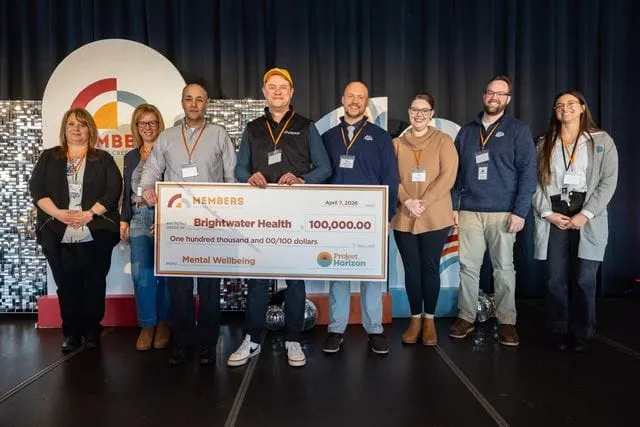
Brightwater Health. The largest community mental health provider in northern Minnesota. Not a small lift. Not a ceremonial handshake.
A $100,000 check, attached to a broader, $1 million commitment aimed at mental well-being — which, if you’ve lived here long enough, you know is another way of saying: the stuff that quietly determines whether people can hold it together when life starts pushing back.

Project Horizon is the credit union’s attempt to step outside the narrow lane of “financial institution” and into something more human. The pitch is connection, partnership, presence — all the words that can feel soft until someone actually funds them.
Members did.
“Financial stress doesn’t exist in a vacuum,” said Simone Suri, the credit union’s chief administrative officer and general counsel, and she’s right — even if it’s the kind of truth people tend to nod at and then move past too quickly. Around here, financial strain has a way of showing up in marriages, in parenting, in isolation, in the long winters that don’t just sit outside your house.
They’re trying to meet that whole picture.
Brightwater operates across Carlton, Lake and St. Louis counties in Minnesota, and Douglas County over in Wisconsin — covering a footprint that stretches well beyond Duluth’s city limits and into the places where access gets thinner and the need doesn’t.
That matters.
Because for all the conversations about mental health — and there have been plenty — the real issue has never been awareness. It’s access. It’s whether someone can actually get in the door, find a provider, stay in care, and afford to keep going.
That’s where partnerships like this either prove something… or fade into the background like so many well-intentioned announcements before them.

Brightwater CEO Benjamin Hatfield didn’t dance around it.
“Members’ commitment through Project Horizon will change the landscape of the Northland’s mental health by supporting organizations like ours,” he said, adding what most providers already know but don’t always say out loud: they can’t meet the demand without help.
Not without sustained help. Not without meaningful help.
This is the first partnership under Project Horizon, which means it sets the tone. There will be others. There always are when initiatives like this get launched.
But first moves matter. They tell you whether something is built for headlines or built for impact.

This one — at least on paper — is aimed at the right pressure point.
The real test comes next. Not in the announcement, but in the follow-through. In whether the dollars keep coming, whether access expands, whether people who’ve been waiting finally get seen.
Around here, people don’t need another slogan about well-being. They need doors that open. Members just put some weight behind one. Now we’ll see how wide it swings.