Howie's daily column is sponsored by Lyric Kitchen Bar.
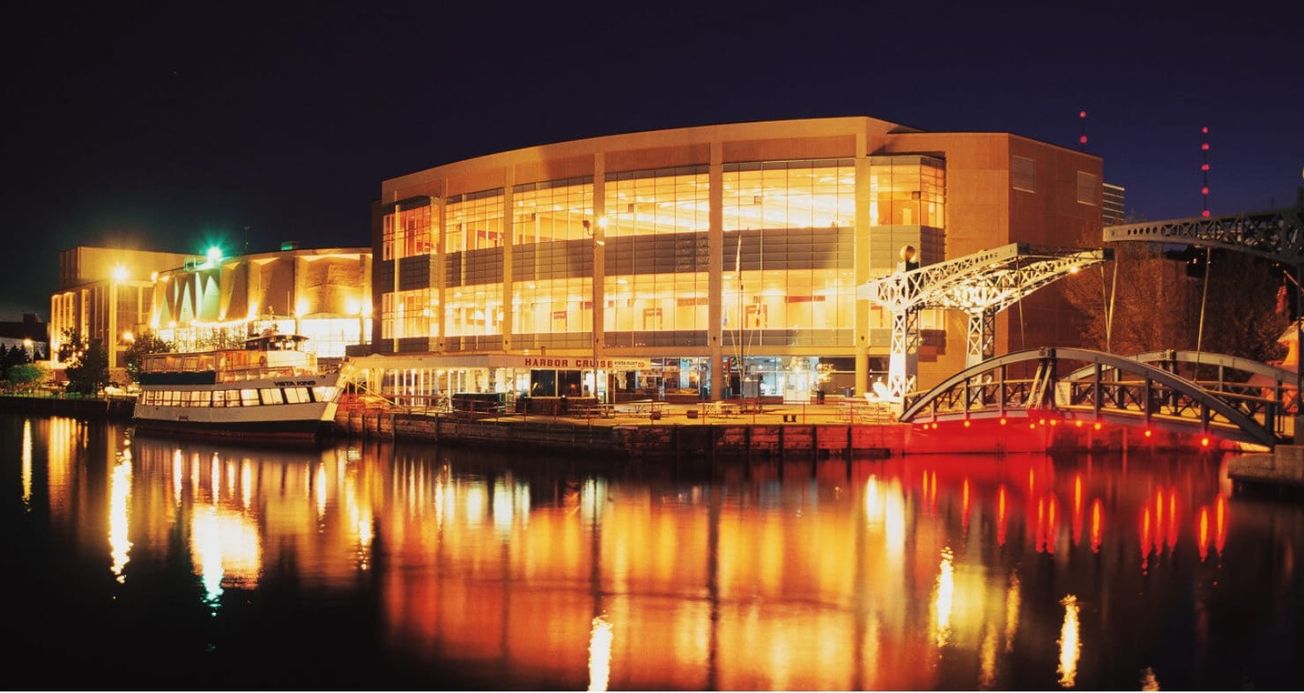
There are buildings that serve practical purposes, and then there are buildings that quietly become part of a region’s emotional infrastructure. The Duluth Entertainment Convention Center belongs in the second category.
For nearly 60 years, the DECC has stood on the edge of Lake Superior performing a function far larger than its official title suggests. It has become the civic commons of northeastern Minnesota — the rare public space capable of pulling together mining families from the Iron Range, tourists from the Twin Cities, hockey parents from Hermantown, business executives from Minneapolis, conventioneers from Chicago, farmers from northwestern Wisconsin and local residents simply looking for a reason to gather in the middle of a hard northern winter.
In a state increasingly fractured by geography, economics, politics and technology, the DECC remains one of the few institutions still capable of creating genuine shared experience.
That is not sentimentality. It is economic reality. It is cultural reality. And it is precisely why the future of the DECC should matter deeply to anyone who cares about the long-term trajectory of Duluth and the Northland itself.
Too often in this region, the DECC is discussed narrowly — as a public facility, a line item, a maintenance challenge, a hockey arena or a convention center requiring periodic subsidy debates from elected officials trying to sound fiscally vigilant during budget season.
That framing fundamentally misses the point. The DECC is not simply a government-owned building sitting beside the harbor. It is one of the central economic circulatory systems of northeastern Minnesota. Its influence spreads outward in every direction.
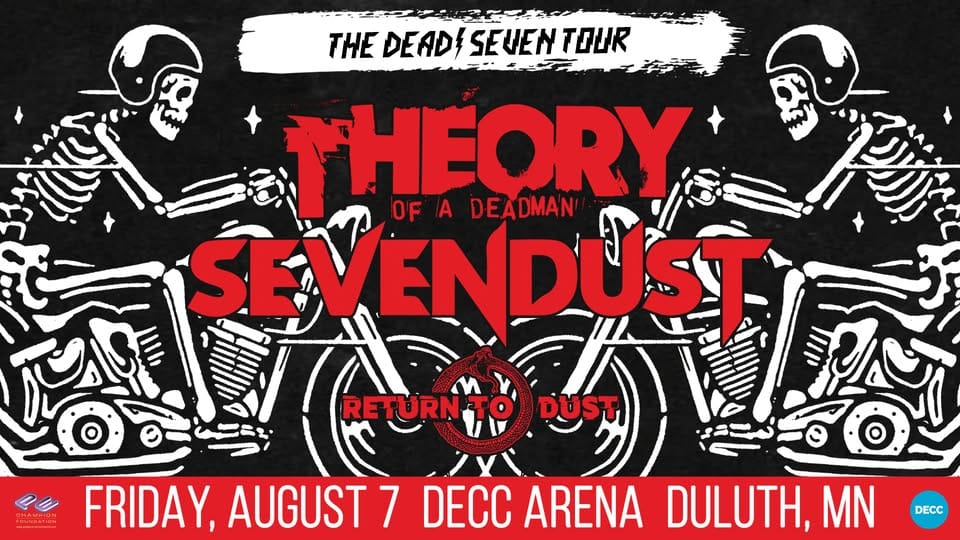
When major youth hockey tournaments arrive, hotel occupancy surges across Duluth. Restaurants fill. Gas stations, coffee shops and retailers benefit from thousands of visitors flowing through the city during months when winter historically slowed commerce to a crawl. Large conventions generate business travel that supports airlines, hospitality workers and downtown businesses. Concerts and entertainment events create foot traffic that spills into Canal Park, Superior Street and the surrounding tourism district. Trade expos connect industries. Graduation ceremonies gather entire communities. Nonprofit events raise millions of dollars over time for causes woven into the fabric of the region itself.
Entire ecosystems quietly depend upon the continued vitality of that campus. And yet the DECC’s deeper importance may actually lie beyond economics.
The building has become northeastern Minnesota’s modern gathering hall — the closest thing the region possesses to a shared civic living room.
That matters enormously in a part of the country where distance and weather naturally isolate people. Northeastern Minnesota is not a compact urban environment. It is a sprawling geographic region connected by highways, forests, shorelines and mining communities separated by hours of driving and long winters. Institutions that consistently bring people together acquire unusual significance over time.

The DECC did not become important accidentally.
When the original Duluth Arena-Auditorium opened in 1966, city leaders were making an audacious statement about Duluth’s future at a moment when many industrial American cities were beginning to retreat inward. Duluth, then still carrying the muscular confidence of a Great Lakes shipping capital, chose expansion instead of contraction. It chose ambition instead of fear.
That decision now looks remarkably prescient.
Over the following decades, the complex evolved into the sprawling DECC campus — adding convention halls, meeting spaces, Symphony Hall and eventually Amsoil Arena, while steadily cementing Duluth’s role as the unofficial capital of the Northland.
The location itself became part of the institution’s power.
There are convention centers across America with larger budgets and newer finishes. Few possess this kind of natural authority. Visitors walk through the DECC and immediately understand where they are. The lake dominates the windows. Ore boats move silently through the canal beneath the Aerial Lift Bridge. Winter storms hammer the glass. Summer sunlight floods the harbor.

The building could exist nowhere else.
That authenticity has value, particularly in an era when cities increasingly resemble interchangeable corporate landscapes built from the same developers, the same chain restaurants and the same architectural formulas.
Duluth still feels distinct. The DECC helps preserve that distinction. Which is precisely why the next chapter matters so much.
The facility now stands at a crossroads familiar to many legacy civic institutions across America. The bones remain strong. The location remains elite. The public attachment remains deep. But portions of the infrastructure are aging visibly, and the convention and entertainment industries have become ruthlessly competitive.
There is no avoiding this conversation anymore: the DECC requires significant reinvestment. Not cosmetic touch-ups designed to survive another election cycle. Genuine modernization.

Visitors notice aging interiors immediately. Event planners compare facilities relentlessly. Touring acts evaluate backstage accommodations, premium spaces, acoustics and technology infrastructure with increasing scrutiny. Convention organizers expect flexibility, updated connectivity and hospitality environments that reflect modern expectations rather than the design assumptions of previous decades.
Cities that succeed in this space understand something essential: convention centers are not passive assets. They are competitive businesses.
Stagnation is expensive. Deferred maintenance eventually becomes reputational damage. This is where leadership becomes critical, and why Dan Hartman’s presence matters.
Hartman understands that the DECC cannot merely preserve itself. It must continuously reposition itself. That distinction separates thriving civic facilities from declining ones.
Hartman brings both operational discipline and entrepreneurial instinct to a role that increasingly demands both. He understands that modern entertainment and convention industries operate inside a brutal attention economy where cities compete aggressively for events, tourism dollars and regional relevance. More importantly, he appears to recognize that the DECC’s greatest strength is not simply square footage or waterfront scenery, but emotional connection.

People across northeastern Minnesota feel ownership of the place. That is extraordinarily difficult to manufacture.
Generations have built personal memory there. Bulldogs hockey championships. Concerts. Boat shows. Home shows. Wedding receptions. Political dinners. Grandma’s Marathon expos. High school graduations. Dance competitions. Business conventions. Family gatherings. Trade expos. First dates. Farewell ceremonies. Civic celebrations.
The DECC has quietly accumulated the shared emotional history of an entire region. That civic value is almost impossible to quantify on a spreadsheet, which may explain why public discussions about the facility sometimes drift into smallness — arguments over parking, subsidies, deferred repairs or isolated operating budgets without fully confronting the larger question underneath:
What kind of regional city does Duluth want to become over the next 30 years? Because the truth is this: Regional dominance is never permanent. Cities lose relevance gradually, then suddenly. Convention business migrates. Entertainment routing changes. Tourism patterns evolve. Competing communities modernize aggressively while older facilities slowly convince themselves nostalgia can substitute for investment.
It cannot.

Duluth has an opportunity right now to think much larger. The DECC campus could evolve further as a year-round regional destination. Expanded convention infrastructure, enhanced public gathering spaces, upgraded hospitality partnerships, integrated waterfront activation, improved skywalk connectivity, expanded youth sports capacity and next-generation entertainment experiences are all realistic possibilities if civic leadership chooses ambition over caution.
The Northland does not need timid stewardship of the DECC. It needs vision. Because sitting there beside Lake Superior is something far more important than an event center. It is one of the last places in northeastern Minnesota where nearly everyone still comes together under the same roof.
And in modern America, that may be the most valuable civic asset of all.