Howie is a longtime Minnesota journalist, independent columnist and author. His daily column is sponsored by Lyric Kitchen . Bar.
For a city that has spent three decades searching for its next economic engine, the answer has been sitting in plain sight, humming day and night on the hillside above Lake Superior.
Healthcare is no longer a supporting player in Duluth’s economy. It is the economy. And the sooner civic leadership organizes around that reality — not as a talking point, but as a development strategy — the sooner the city can begin to reverse the slow erosion of its downtown core.
This is not a theory. It is a pattern that has reshaped mid-sized American cities that once faced the same questions Duluth faces now: How do you replace lost industrial base? How do you stabilize tax revenue? How do you bring consistent, year-round activity back into a hollowing downtown?
They leaned into medicine.

In Rochester, the presence of Mayo Clinic did not remain confined to a campus. It expanded outward, block by block, into a fully integrated downtown ecosystem — clinics, research facilities, education centers, hotels, apartments, restaurants — all designed around the daily movement of workers, patients, students and visitors. The city did not treat healthcare as a district. It treated it as a backbone.
In Cleveland, Cleveland Clinic helped drive redevelopment far beyond its original footprint, anchoring housing, research partnerships and a steady influx of professionals who live within walking distance of where they work.
In Pittsburgh, the combination of University of Pittsburgh Medical Center and university research transformed former industrial corridors into dense, knowledge-based neighborhoods.
The common thread is not just hospitals. It is intentional clustering — healthcare, education, housing and daily life woven together in tight geographic proximity.

Duluth already has the hardest piece in place. Essentia Health anchors a regional medical hub that draws patients from across northeastern Minnesota, northern Wisconsin and beyond. The investment in St. Mary’s Medical Center alone signals where the long-term gravity sits. The question is not whether healthcare can drive economic growth here. It already does.
The question is whether Duluth is willing to build around it.
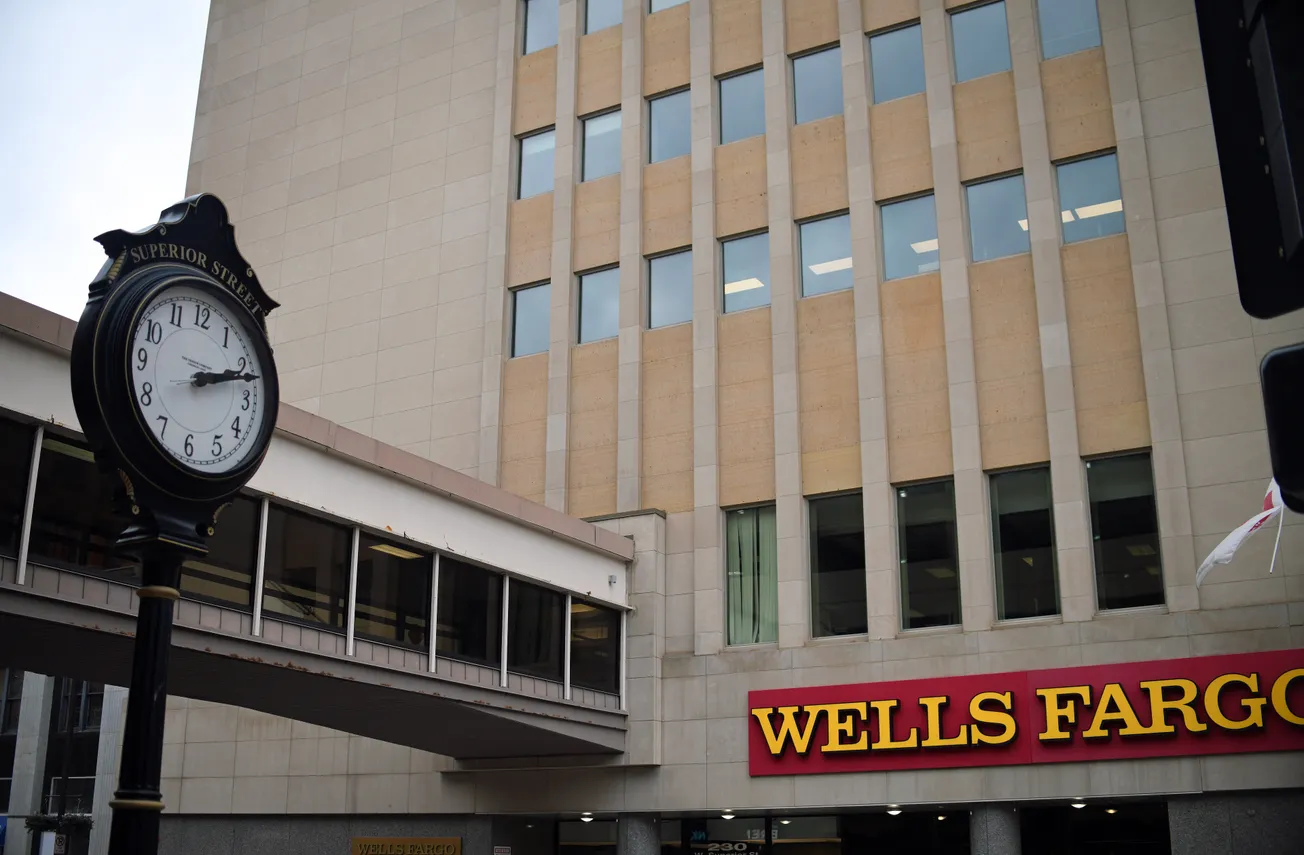
Right now, the medical district sits largely to the east of downtown, functioning as a destination rather than a fully integrated urban engine. Meanwhile, the western portion of downtown continues to struggle with vacancy, declining foot traffic and an uncertain identity.
There is an opportunity — and it is a practical one — to connect those two realities.

Imagine a westward expansion of the medical ecosystem, not necessarily through new hospital towers, but through the pieces that make modern healthcare function: education, training, research support, and workforce housing. With telehealth expanding the reach of care and medical education becoming a larger share of the industry, the need for flexible, urban, live-work environments is growing.
Vacant office buildings and underused properties in downtown Duluth are not liabilities in that context. They are inventory.
Students in nursing, physical therapy, medical technology and allied health fields could live within blocks of their classrooms and clinical rotations. Early-career professionals could occupy modest, affordable apartments tied to employment pipelines. Researchers and administrators could work in converted office space that no longer fits traditional corporate tenants.
The infrastructure is already unusually well-suited to this model.

Duluth’s skywalk system, often dismissed as dated, becomes an asset when viewed through a healthcare lens — a climate-controlled network connecting housing, classrooms, clinics and transit during the most punishing months of the year. The Duluth Transit Authority provides an existing backbone for car-free mobility. The scale of the city makes walking realistic, not aspirational.
This is how you create daily density — not through occasional events or seasonal tourism, but through people who need to be there every day.
There are legitimate concerns. Healthcare systems are not urban planners, and cities that over-concentrate around a single industry can expose themselves to risk. But the counterargument in Duluth’s case is straightforward: diversification has been the stated goal for decades, and yet the city’s most stable, expanding sector has remained healthcare.
Ignoring that reality has not produced balance. It has produced drift.

The more effective approach is to build outward from strength while layering complementary uses — education, small business, housing — that reduce dependence on any one component of the system.
What Duluth lacks is not opportunity. It lacks alignment.
A coordinated strategy involving city government, healthcare systems, higher education institutions and private developers could begin with targeted redevelopment zones — incentives for converting vacant buildings into workforce housing, partnerships to establish satellite teaching centers, and infrastructure planning that prioritizes pedestrian connectivity between the medical district and the downtown core.

None of this requires a reinvention of Duluth’s identity. It requires a decision to recognize what the city already is.
For generations, Duluth was a port city, then a manufacturing city. Today, whether it fully acknowledges it or not, it is a regional healthcare city. The next chapter will be determined by whether it builds like one.