
HERMANTOWN — Google’s proposed data center would bring a large new taxpayer and a major electricity customer to northeastern Minnesota. Whether it is built, under what conditions and with what financial and environmental obligations depends on several proceedings that address different parts of the development. The city controls local land-use decisions. State utility regulators review electric-service arrangements. Environmental reviews and permitting address the effects of construction and operation. Approval in one proceeding does not settle the questions assigned to another.
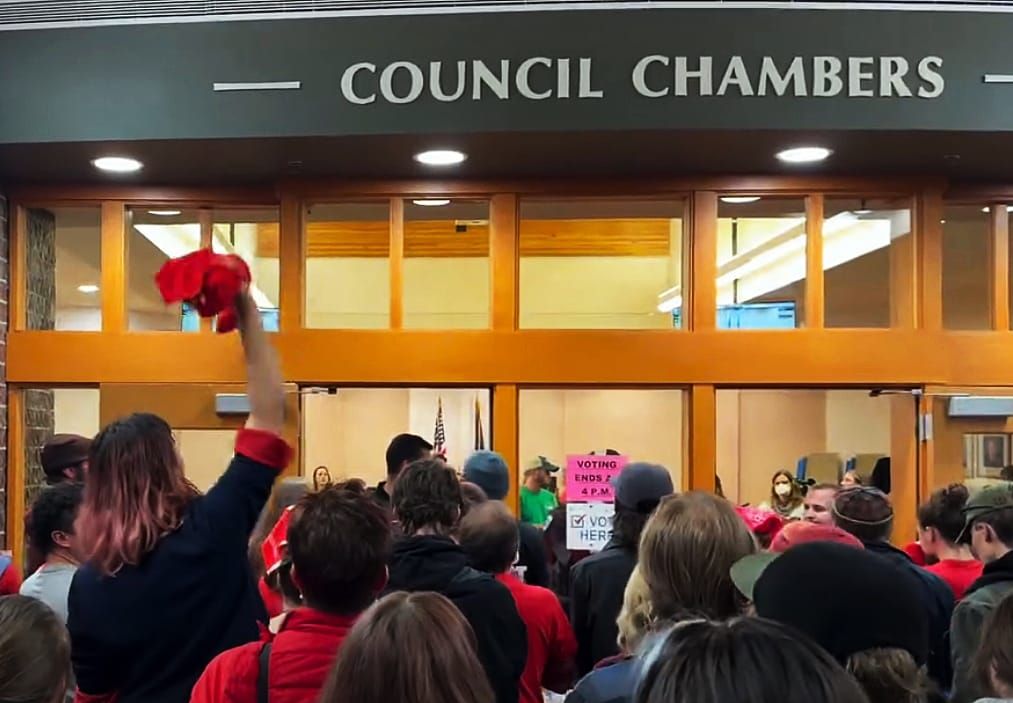
The local decision remained unresolved after protesters disrupted the City Council’s meeting on Monday night, prompting officials to postpone scheduled votes. The city subsequently canceled tonight's replacement meeting because of concerns about overlapping with early voting at City Hall. Its cancellation announcement did not identify a new meeting date. The delay leaves proposed permits and agreements awaiting council action, following an Oct. 20 Planning and Zoning Commission recommendation to approve the special use permit.
The current campus proposal includes three principal data center buildings, each with approximately 375,000 square feet, accompanied by mechanical buildings and equipment yards. At the planning commission meeting, the city’s engineer described a 234-acre site with about 191 acres to be disturbed. Google has identified the 2027 construction season as its earliest possible start, contingent on additional permitting, business demand, market conditions and other factors. Those qualifications make the construction date a projection rather than an established deadline.
The employment figures also describe different stages of development. Hermantown’s published information anticipates hundreds of construction workers over an eight- to 10-year building period, at least 40 full-time positions associated with the initial building and potentially 100 or more positions at full buildout. Construction employment would occur during development; operating employment would continue after buildings enter service. The city identifies proximity to Minnesota Power’s Arrowhead Substation as a principal reason for the location.

Google’s withdrawal of its property-tax abatement request changed the financial proposal this month. The company’s project website now cites a city estimate of more than $240 million in regional property-tax revenue over 20 years. That is a forecast associated with the proposed development, not revenue already collected. Google also says it will work with local leaders on support for the school district outside the abandoned abatement arrangement.
A separate financial question concerns electricity. The Citizens Utility Board of Minnesota, a nonprofit ratepayer advocate, reports that the Hermantown facility would require 500 megawatts. Its review challenges whether the proposed service agreement adequately assigns costs to Google, including the company’s share of existing utility infrastructure and obligations if its electricity demand declines or it leaves the system. These are objections submitted in the regulatory process, rather than findings that customers have already been charged improperly.
Minnesota Power presents a different assessment. In announcing its agreement with Google, the utility said the company would cover the necessary energy infrastructure costs and that existing customers would be protected. It also said the arrangement would support 300 megawatts of wind generation and 400 megawatts of battery storage, along with efforts to reduce demand during periods of strain on the grid. The utility argues that adding a large customer can spread fixed system costs more broadly and support long-term rate stability.
The Citizens Utility Board has asked for changes to minimum billing requirements, fees for reducing demand and charges for leaving the system. It also objects to a proposed five-year business expansion incentive that would discount some charges. The organization’s position is that Google should cover both new infrastructure built for the facility and its allocation of shared system costs, with protection against unpaid investment remaining after the company’s departure.

The Minnesota Public Utilities Commission identifies protection of other ratepayers as a central obligation of its review. Its published guidance says utilities cannot shift the costs of serving qualifying data centers to other customers and must demonstrate that service will not interfere with state clean-energy requirements. The commission can approve, modify or reject an electric-service agreement. Its review also encompasses proposed customer-specific rates and incentives. Dropping a local property-tax abatement request therefore does not resolve the separate dispute over electric-service terms.
Water presents another distinction: the amount a facility consumes and the effects that developing its site may have on surrounding water systems. Hermantown says the proposed campus would use municipal water and sewer, would not use water for cooling and would consume no more than 50,000 gallons daily at full buildout. Those statements address its planned water supply and consumption. The Department of Natural Resources’ correspondence addresses additional questions involving groundwater, wetlands, springs and trout streams.
In an Aug. 25 letter, the DNR identified gaps in baseline groundwater information, alternatives analysis and defined mitigation measures. It noted that data collection had occurred during a significant drought and cautioned that modeling based solely on those conditions would not represent typical hydrology. The agency also sought closer examination of effects associated with connected energy projects and the development’s location within the headwaters of two high-quality trout streams. The letter did not constitute a formal objection to the environmental review.
The DNR’s subsequent Sept. 10 letter acknowledged progress and clarified that the agency did not object to the Alternative Urban Areawide Review. It emphasized collecting as much baseline information as reasonably possible before construction, identifying the measurements that would trigger corrective action and establishing responses that could be implemented promptly. Read together, the letters document both the agency’s concerns and its recognition of subsequent work on monitoring and mitigation.

The agency also clarified its authority. In the August correspondence, it said the project was not expected to require DNR permits or approvals and that its role in this review was to provide technical expertise. It warned that descriptions suggesting broader DNR regulatory oversight could create an inaccurate public expectation. That distinction identifies who supplies environmental advice and who must incorporate requirements into decisions and enforceable conditions.
Google’s project website describes a groundwater monitoring network consisting of four pairs of deeper wells along the perimeter and eight shallow wells near wetland complexes. The company says the network is intended to establish conditions before construction. MPR News also reported that Google committed to finding replacement water supplies for landowners whose wells are affected by development. Monitoring provides information about changes; the replacement-water commitment addresses a potential consequence for neighboring property owners.
The public process has generated its own legal dispute. In a complaint against the city, Stop the Hermantown Data Center alleges violations involving public information, meetings, planning and land-use decisions. The complaint challenges the use of nondisclosure agreements and the authority of city administrators to enter them. Those assertions are the plaintiffs’ allegations, not judicial findings. Hermantown’s published explanation defends allowing developers to evaluate proposals before public applications and says the city will address litigation through the legal process.
The proposals awaiting local consideration also address what would happen if the facility stopped operating. The council’s scheduled resolutions included a decommissioning agreement establishing a process to repurpose or clear an unused site, alongside the special use permit, final plat and development agreement. The decommissioning proposal concerns the physical property. The utility proceeding separately examines financial responsibility for electrical infrastructure serving it. Both address obligations that could outlast active data center operations.

Hermantown adopted its updated environmental review Oct. 5, but that action did not complete every approval necessary for construction. Local permits and agreements remain part of the process, as do utility review and additional agency permits. The public record thus contains several different kinds of information: employment and tax projections, proposed contractual obligations, agency recommendations and disputed legal claims. The remaining decisions will determine which commitments become requirements, who enforces them and what must occur before construction can begin.