Table of Contents
Before AMSOIL Arena, Bayfront Festival Park and the expanding entertainment district around Canal Park, there was the Duluth Arena — a steep-walled concert hall on the Lake Superior waterfront where Johnny Cash, KISS, Mötley Crüe, Metallica and generations of other performers helped shape the city’s cultural history.
Now known as the DECC Arena, the building is approaching its 60th anniversary as one of Duluth’s most recognizable public venues. It remains in regular use for concerts, conventions, exhibitions and community gatherings, surviving dramatic changes in the entertainment industry while retaining the intimate design and harborfront setting that made it distinctive when it opened in 1966.
The DECC highlighted the arena’s history as it prepared for another national rock tour to begin in Duluth. Theory of a Deadman and Sevendust will open their 36-date Dead / Seven Tour at the arena Friday, with Return to Dust opening the 7 p.m. concert.

The tour opener gives the building another entry in a concert history spanning six decades. It also reinforces the arena’s continuing place in the DECC complex, even after the larger and more modern AMSOIL Arena opened next door in 2010.
The original Duluth Arena Auditorium quickly became northern Minnesota’s leading stop for nationally touring performers. Johnny Cash, Sonny & Cher and Three Dog Night appeared during its early years, while Bob Hope and Lawrence Welk brought different generations of entertainment to packed Duluth audiences.
The music became louder during the 1970s and ’80s. Deep Purple and The Guess Who were followed by Cheap Trick, KISS, Styx, the Doobie Brothers and a young Mötley Crüe. Metallica performed there in the early 1990s, adding another major name to a lineup that traces changing eras of American popular music.
Those performances made the arena more than a municipal building or another stop on a touring schedule. For generations of Duluthians, it became the site of first concerts, memorable nights downtown and encounters with artists who previously had been experienced only through records, radio or television.

The building’s most identifiable feature is its dramatically tiered seating. Rows rise sharply above the arena floor, creating an amphitheater-style view that places much of the audience above the stage rather than directly behind a standing crowd.
The configuration gives the arena a sense of intimacy despite its size. Spectators in the upper rows remain close enough to follow a performance, while the steep seating pulls the audience visually toward the stage. The result is a concert environment substantially different from newer arenas built around larger capacities, premium seating and expansive video boards.
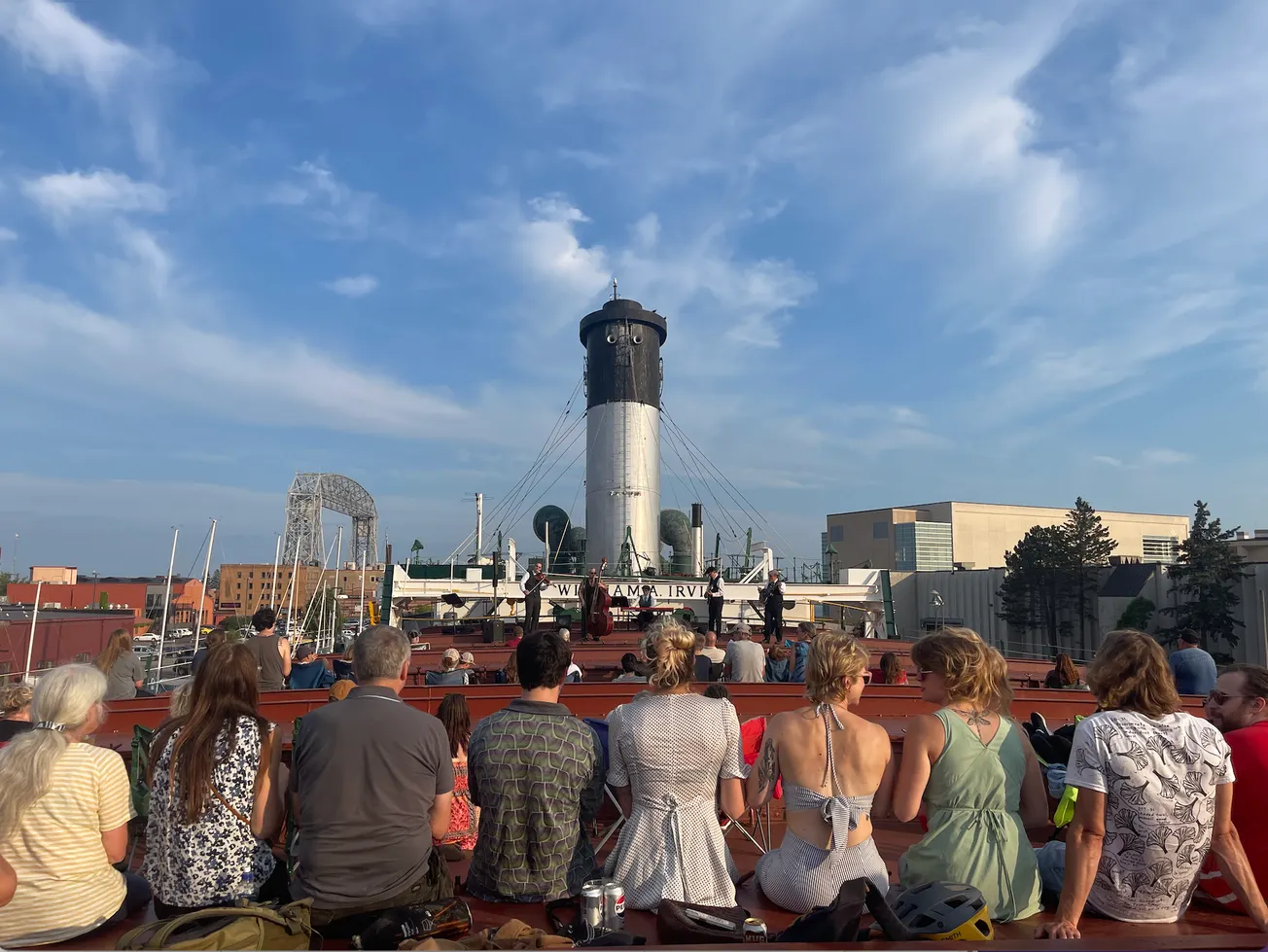
Its location remains equally important. The DECC complex sits along the Lake Superior harbor, within sight of the Duluth Aerial Lift Bridge and a short walk from Canal Park hotels, restaurants and shops. Few indoor arenas can match the experience of arriving for a concert beside the lake or stepping outside after a show to the lights of the bridge and harbor.
That waterfront setting has become more valuable as Canal Park has developed into Duluth’s primary visitor district. A concert at the arena can support an entire evening downtown, with visitors moving among restaurants, hotels, shops and other attractions without driving between destinations.

The arena also has carried a substantial civic role. Beyond rock concerts and touring entertainment, it has hosted trade shows, expos, athletic events, conventions and large community gatherings. Its open floor and permanent seating have allowed it to adapt repeatedly as Duluth’s event needs changed.
The arrival of AMSOIL Arena did not make the original building obsolete. Instead, it gave the DECC two distinctly different venues. AMSOIL Arena offers greater capacity and modern amenities for major sporting events and larger productions. The DECC Arena offers history, closer sightlines and an atmosphere that cannot easily be reproduced in a newer building.
The Friday night concert fits that identity. Theory of a Deadman and Sevendust are established rock acts with audiences built over decades, and their decision to begin a national tour in Duluth extends the arena’s long association with guitar-driven music.
Nearly 60 years after its doors opened, the building continues to work because it has never depended on being the newest or largest venue. Its appeal is rooted in permanence: the steep rows, the compact concert setting, the proximity to the lake and the accumulated memories of everyone who has passed through its doors.
The performers and audiences have changed since Cash, Sonny & Cher and Hope came to Duluth. The arena has not lost its fundamental character. It remains what it became in 1966 — Duluth’s classic stage.