
Howie: The Gift From the North
If the nation is wise enough to listen north, it will find the answers waiting. Because up here, health care isn’t just a profession. It’s a promise. And we keep our promises close to home.
If the nation is wise enough to listen north, it will find the answers waiting. Because up here, health care isn’t just a profession. It’s a promise. And we keep our promises close to home.
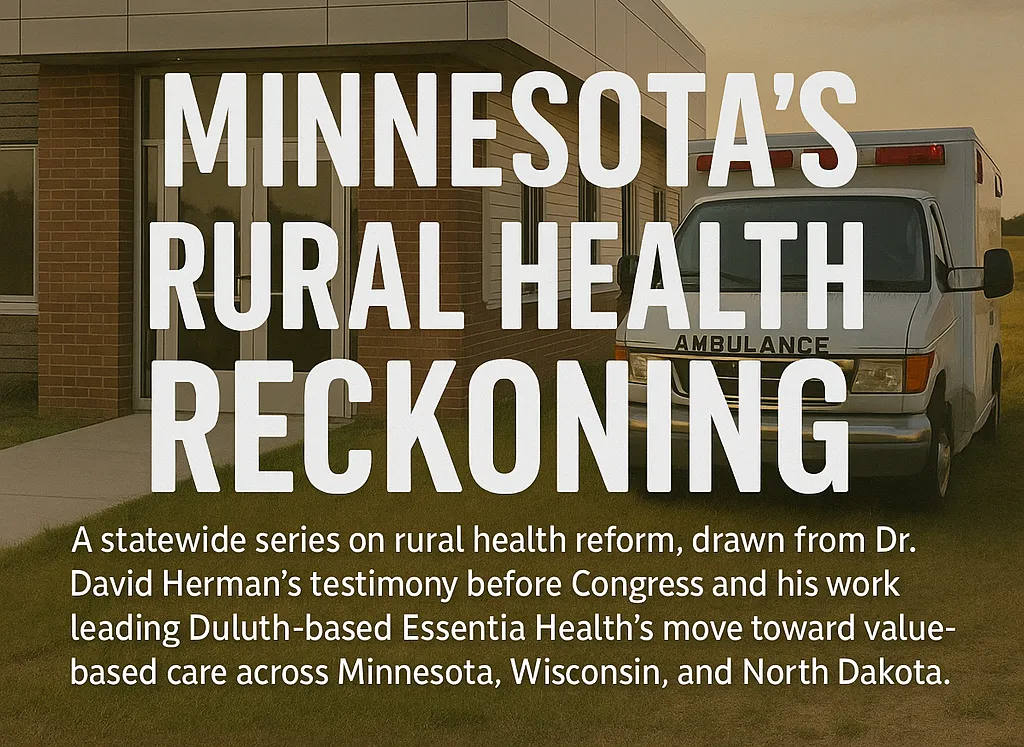
If Washington has the humility to learn from Dr. Herman and Essentia's story, it might just rediscover what leadership in health care looks like — steady, patient, and powered by people who measure progress one healed life at a time.
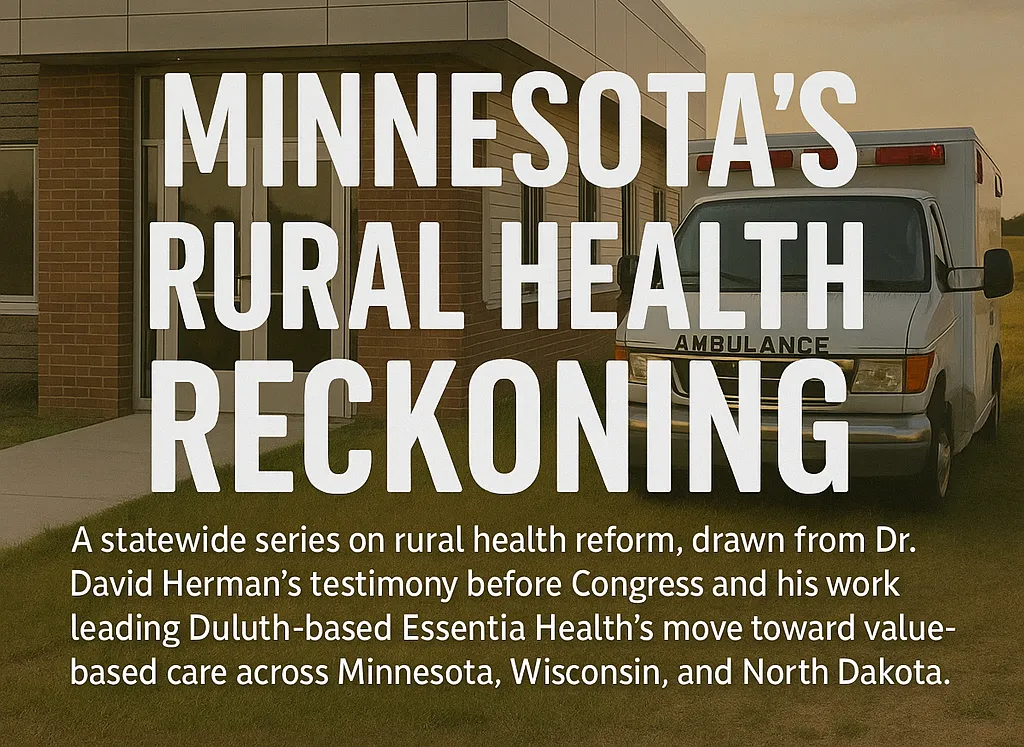
Nationally, analysts note that Duluth’s homegrown health system has achieved what many academic centers still struggle with: integrating digital health records, preventive outreach, and local trust into a cohesive care network.
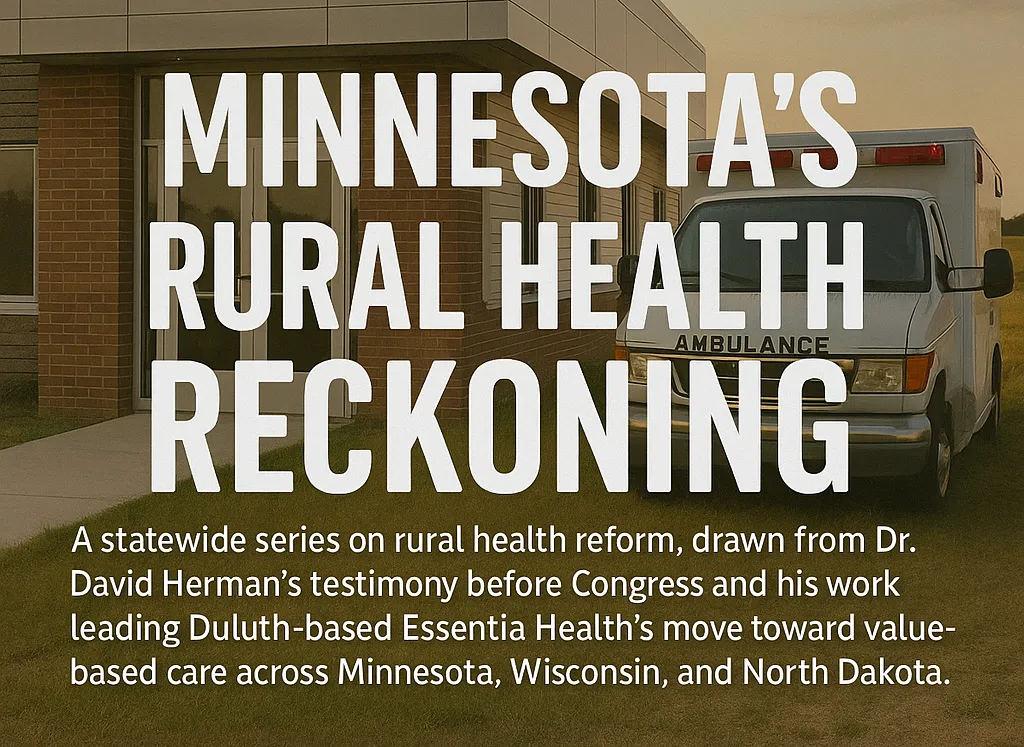
Health systems from across the country — and even from Canada — have begun studying Essentia Health's model of “rural integration,” which marries technology with value-based care contracts that reward prevention over procedures.

Dr. David Herman sees hospitals as ecosystems — living, breathing networks that keep small towns from disappearing. Duluth’s skyline now offers proof in steel and glass. The new St. Mary’s Medical Center doesn’t just treat patients. It sends a message: downtown Duluth still matters.
Minnesota has exported iron ore, timber, and hockey players. Now it’s preparing to export something even more valuable: a pathway to rural health equity.
In the heart of northern Minnesota, Essentia Health and Tribal leader Samuel Moose are proving that equity isn’t a promise — it’s a practice. By turning sovereignty into shared governance and empathy into measurable outcomes, they’ve created the model Washington now tries to copy.
“Connecting to other social services is a critical part of population-health improvement,” Dr. David Herman, President and CEO of Essentia Health, told the Senate. “Access to healthy food, transportation, and housing must be seen as part of health care.”
For once, a health-care revolution isn’t coming from Silicon Valley or Washington, but from the north shore of Lake Superior. And if it succeeds, the light in the pharmacy window — the one Herman says tells you whether a town is still alive — might stay on a little longer.
Dr. David Herman, President & CEO of Essentia Health in Minnesota, Wisconsin and North Dakota, has become the calm in the middle of this storm — a measured advocate who can walk senators through the compliance forms, the pharmacy audits, the real-world consequences.
The 96-hour rule may have once been a guardrail. Now it’s a barrier. If Congress wants to help rural America without another task force or photo op, it can start with one simple act: stop the clock.
Telehealth, Dr. David Herman insists, is not a shortcut but a lifeline. The proof is already visible: fewer hospitalizations, lower costs, and improved patient outcomes. What’s missing is the will — and the infrastructure — to finish the job. “Broadband is the new stethoscope,” Herman said.
The next era of rural health depends on designing systems that reward results rather than codes, that measure well-being rather than billing.