By Shauneen Miranda, Minnesota Reformer
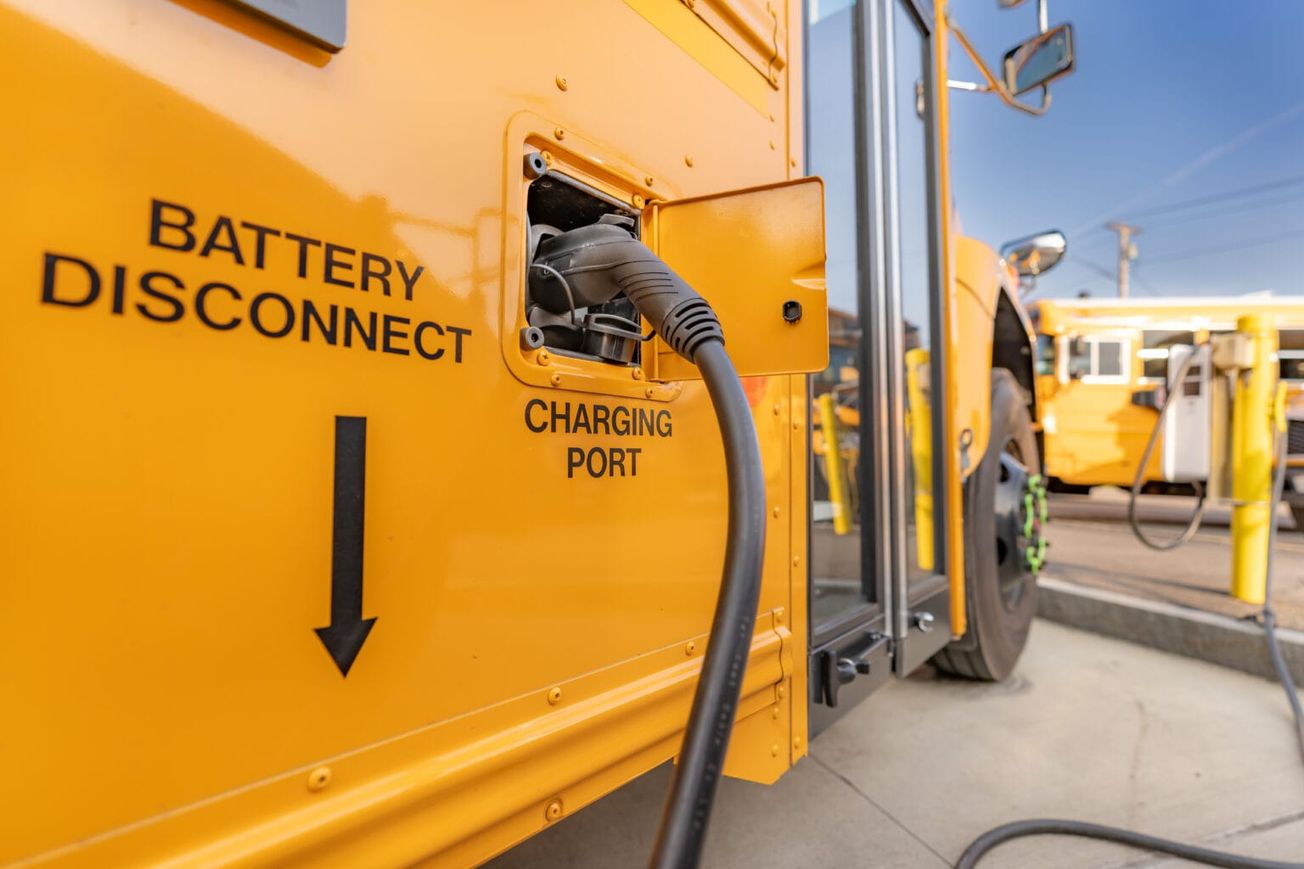
WASHINGTON — As part of its ongoing effort to replace diesel-fueled school buses, the Biden administration on Wednesday said it will provide approximately 530 school districts across nearly all states with almost $1 billion to help them purchase clean school buses.
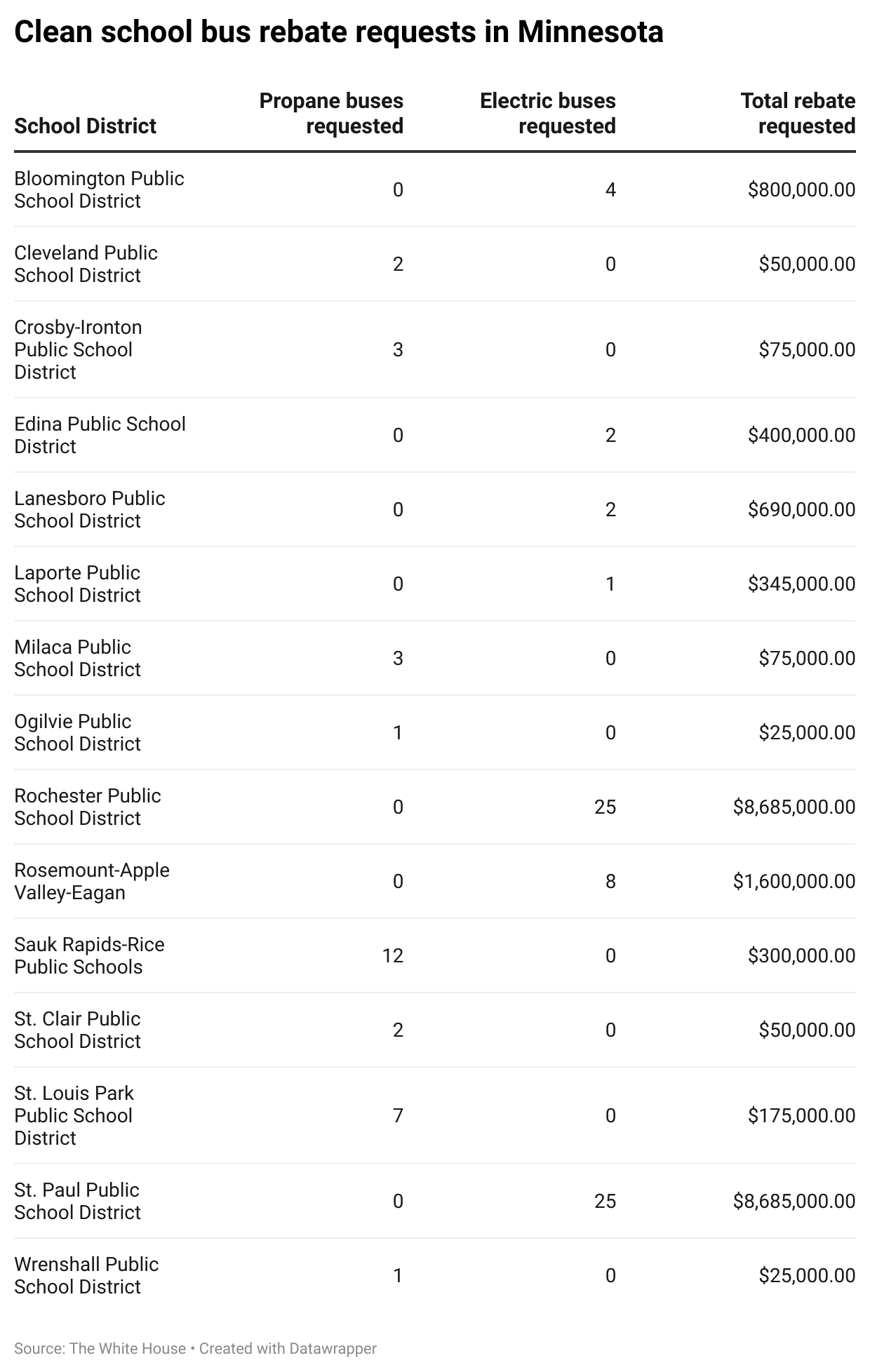
Among them: 15 Minnesota districts, including Rochester, St. Paul, Milaca, Crosby-Ironton, Bloomington, Sauk Rapids, Edina, Wrenshall, Laporte, Lanesboro, St. Louis Park, St. Clair, Rosemount-Apple Valley-Eagan, Ogilvie and Cleveland.
The initiative, part of the U.S. Environmental Protection Agency’s Clean School Bus Program rebate competition, will give funds to school districts in 47 states and the District of Columbia to help them buy over 3,400 clean school buses. Alaska, Hawaii and Nevada are not part of this round of funding.
Nearly all of the clean school buses purchased will be electric, at 92%, according to the administration.
“This announcement is not just about clean school buses, it’s about the bigger picture,” EPA Administrator Michael S. Regan said during a call with reporters on Tuesday, prior to the announcement. “We are improving air quality for our children, reducing greenhouse gas pollution and expanding our nation’s leadership in developing the clean vehicles of the future.”
Low-income, rural and tribal communities — accounting for approximately 45% of the selected projects — are slated to receive roughly 67% of the total funding, per the administration.
Regan noted how “low-income communities and communities of color have long felt the disproportionate impacts of air pollution leading to severe health outcomes that continue to impact these populations.”
As for business and economic opportunities, Regan pointed to the development of new, well-paying manufacturing jobs and investment in local businesses stemming from the increasing demand for these clean school buses.
“As more and more schools make the switch to electric buses, there will be a need for American-made batteries, charging stations and service providers to maintain the buses supercharging and reinvigorating local economies,” he added.
The Clean School Bus Program has now collectively awarded nearly $3 billion to fund approximately 8,500 electric and alternative fuel buses for over 1,000 communities across the United States, according to the administration.
The program started through the Bipartisan Infrastructure Law passed by Congress and signed by President Joe Biden, which includes $5 billion over five years to transform the country’s existing school buses with “zero-emission and low-emission models,” per the EPA.
Among many negative health and environmental effects, especially for communities of color, diesel exhaust exposure can lead to major health conditions such as asthma and respiratory illnesses, according to the EPA.
Exposure to diesel exhaust can also “worsen existing heart and lung disease, especially in children and the elderly,” the agency said.
Minnesota Reformer is part of States Newsroom, a nonprofit news network supported by grants and a coalition of donors as a 501c(3) public charity. Minnesota Reformer maintains editorial independence. Contact Editor J. Patrick Coolican for questions: info@minnesotareformer.com. Follow Minnesota Reformer on Facebook and Twitter.