Table of Contents
DULUTH — Community Action Duluth's Stream Corps has completed an extensive tree-planting season, adding 9,254 trees to environmentally sensitive areas of Duluth as part of a continuing effort to restore native habitats, protect watersheds and strengthen the region's natural environment.
The work concentrated on two important areas of the city: the Magney-Snively Natural Area in western Duluth and the corridor between the Lester River and Amity Creek in the eastern part of the city. Both areas are part of Duluth's natural landscape, where maintaining healthy vegetation is important to protecting soil, waterways and native plant communities.
Beyond planting trees, Stream Corps crews installed protective barriers around most of the newly planted pines and cedars to reduce damage from deer browsing, which can threaten young trees before they become established. The additional work represents a significant part of the restoration process, requiring crews to protect new growth rather than simply plant seedlings and move on.
Volunteers from YouthWorks provided important assistance during June and July, helping Stream Corps crews complete the planting and protection work. Their participation allowed the program to expand its restoration efforts while involving young volunteers in hands-on environmental stewardship.
The Stream Corps operates through partnerships with several organizations involved in conservation and natural resource management, including the Minnesota Land Trust, Minnesota Department of Natural Resources, St. Louis County's Aquatic Invasive Species Program and PAMF's Active Adaptive Management Program. Those partnerships provide support for work aimed at improving environmental conditions and addressing threats to native habitats.
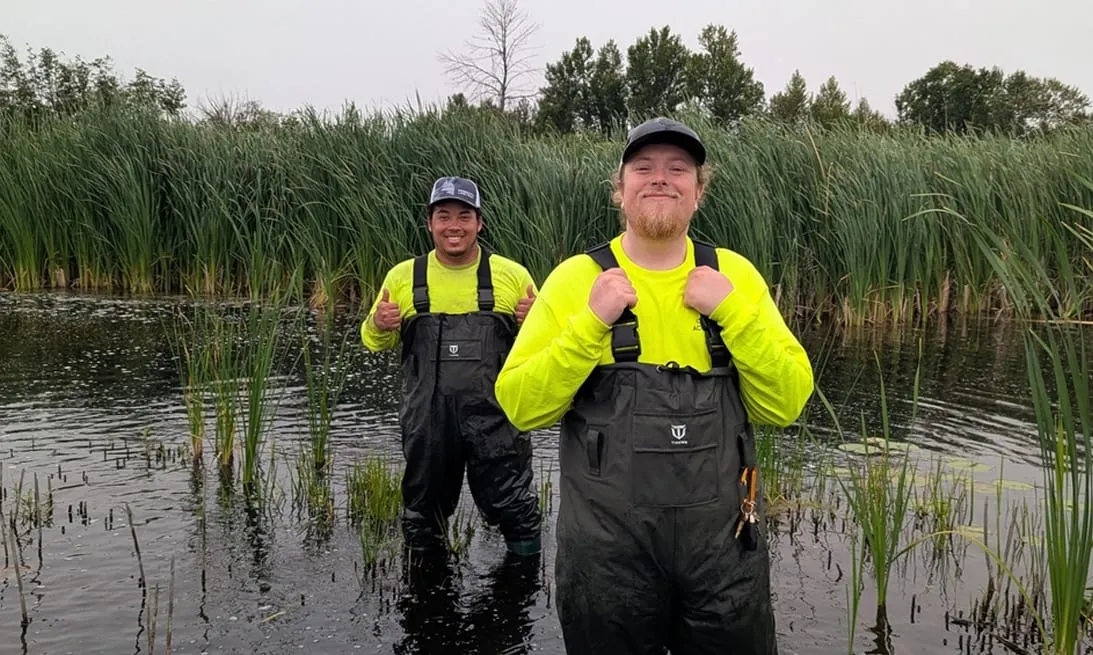
With the planting season completed, Stream Corps has shifted its attention to another major environmental challenge: controlling invasive phragmites, an aggressive grass capable of spreading through wetlands and shoreline areas.
The invasive form of Phragmites australis, commonly known as common reed, can develop into dense stands that crowd out native vegetation, reduce plant diversity and degrade important wetland habitats. Its spread poses a particular concern in areas where healthy wetlands and shoreline ecosystems provide habitat for wildlife and help maintain water quality.
Community Action Duluth has made phragmites control an ongoing priority through its Stream Corps program. Working with guidance from a specialized Phragmites Tech Team, crews have targeted invasive populations in the Duluth area in an effort to prevent further expansion into other parts of Minnesota.
According to the organization, those efforts have contributed to a reduction in Duluth's invasive phragmites population. Stream Corps considers that progress especially important because controlling established populations can reduce the likelihood of the grass spreading into previously unaffected waterways and wetlands.
The work requires continued management. Invasive plants can persist or reestablish after initial treatment, making follow-up monitoring and repeated control efforts important components of long-term habitat restoration.
Together, the tree-planting and invasive species projects illustrate the two major responsibilities of Stream Corps: restoring native vegetation where environmental conditions can be improved and protecting existing natural areas from species that threaten their ecological health.
For Community Action Duluth, the program represents a continuing investment in the region's natural resources, combining conservation partnerships, fieldwork and volunteer involvement to address environmental challenges across the city.
The planting of 9,254 trees marks the completion of one major seasonal project. Protecting those trees as they mature and continuing the campaign against invasive phragmites will determine how much of that work translates into lasting environmental improvements.