Howie is a longtime Minnesota journalist, independent columnist and author covering sports, power and civic life. His daily column is sponsored by Lyric Kitchen . Bar.
The most revealing moment of Duluth Mayor Roger Reinert’s State of the City address Tuesday night came after the speech ended, when a downtown businessman with five decades of experience distilled the evening into a single, unsentimental conclusion.
“I was very impressed with Roger’s honesty about the financial straits that the city of Duluth is facing right now,” Nick Patronas said. “Not so much of a feel good night, but a realistic State of the City.”
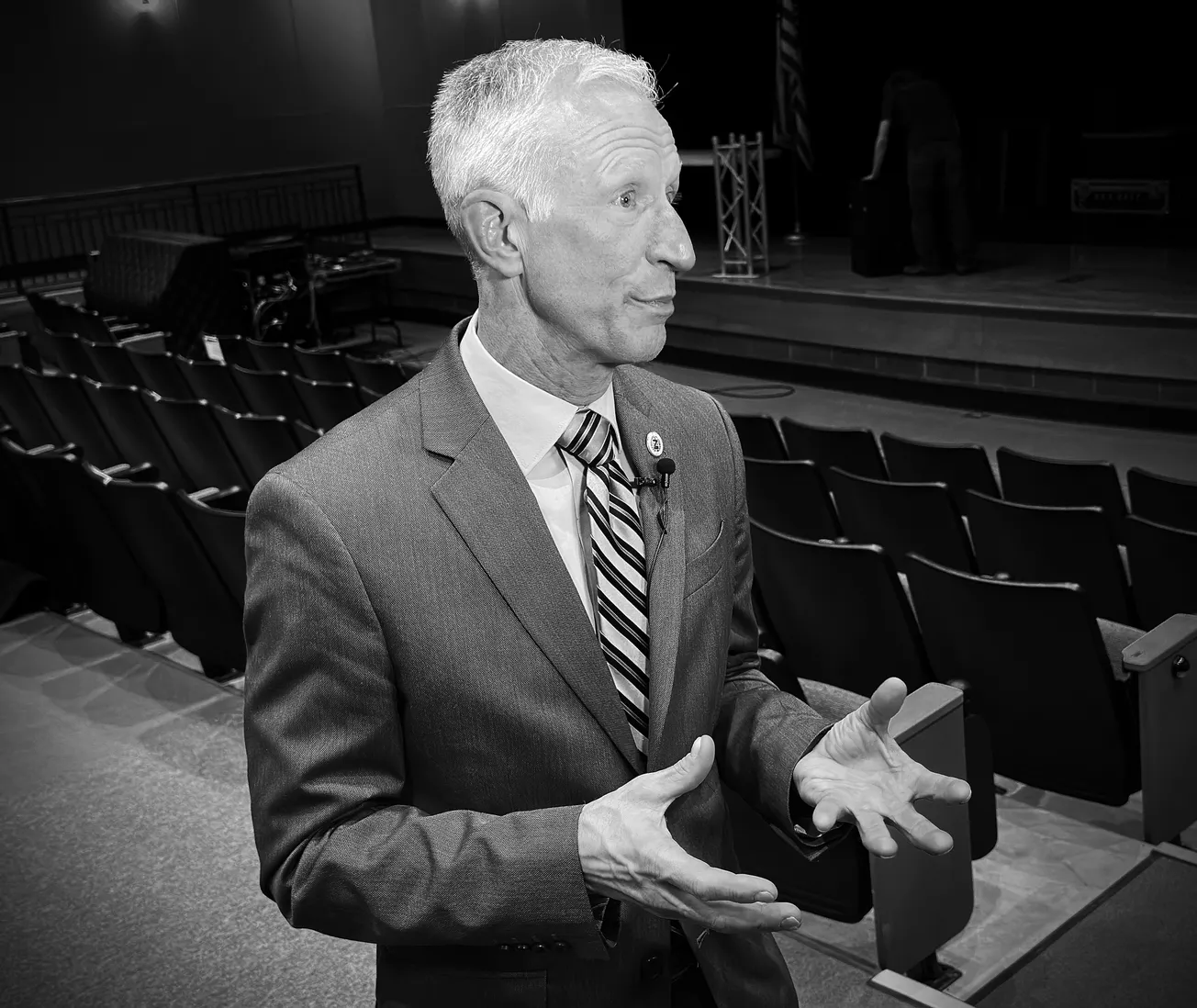
That assessment framed the night more clearly than any prepared line from the podium. Reinert did not deliver a traditional State of the City address filled with optimism and forward-looking promises. Instead, speaking before a packed audience at Lincoln Park Middle School, he presented a detailed, often sobering examination of Duluth’s structural challenges — financial, physical and civic — and made clear that the decisions ahead will require trade-offs the city has long avoided.
“Duluth is strong,” Reinert said early in the address. “But friends, the state of our city is being tested.”
He defined that test in concrete terms, pointing to “serious underlying fiscal challenges that have been building for years — aging infrastructure, deferred maintenance, rising service costs, and flat revenues,” and describing Duluth as “a post-industrial Great Lakes port that has too much of just about everything, and that bill is coming due.”
The speech, which unfolded more like a classroom lecture than a political address, was interrupted multiple times by audience members raising concerns about homelessness, policing and transparency — disruptions that underscored Reinert’s broader warning about civic strain.
He acknowledged the interruptions directly, folding them into his message about a “growing lack of trust in institutions” and “challenging behavior in our public spaces,” which he said are now testing cities across the country, including Duluth.
Reinert then pivoted to what he called a necessary grounding in facts.
“Math is hard,” he said. “And Duluth is facing some hard math in 2026 and beyond.”
He proceeded to lay out that math in detail. The city, he said, must add roughly 9,000 housing units over the next decade — about 900 per year — to meet demand driven by population growth and workforce needs. At the same time, Duluth maintains nearly 600 lane miles of streets and roads, with reconstruction costs reaching approximately $5 million per mile, alongside water and sewer systems that in many cases exceed their expected lifespan.
Those physical realities are matched by fiscal pressure. City expenses are rising at roughly 5% annually, driven largely by wages, benefits and operational costs, while revenue growth — primarily tied to property tax base expansion — remains closer to 1.5% per year. The result is a widening structural gap that cannot be closed through incremental adjustments.
“There’s simply no property tax large enough,” Reinert said, emphasizing that the city cannot tax its way out of the imbalance.
He framed the implications in stark terms.
“We will either pay substantially more for things, or we will do far fewer things,” Reinert said. “But status quo is not an option.”
Throughout the address, Reinert returned repeatedly to the idea that Duluth must fundamentally change how it operates. He cautioned against relying on past practices, arguing that “continuing to do what we’ve always done in the way we’ve always done it may be the easy button, but that’s the wrong button to push.”
He outlined progress across the five priorities that defined his administration — housing, commercial tax base growth, infrastructure, downtown revitalization and property tax stability — citing nearly 800 housing units added in recent years, significant industrial investment, and ongoing street and utility improvements.
Yet he made clear that those gains, while meaningful, do not resolve the underlying imbalance between the city’s obligations and its resources.
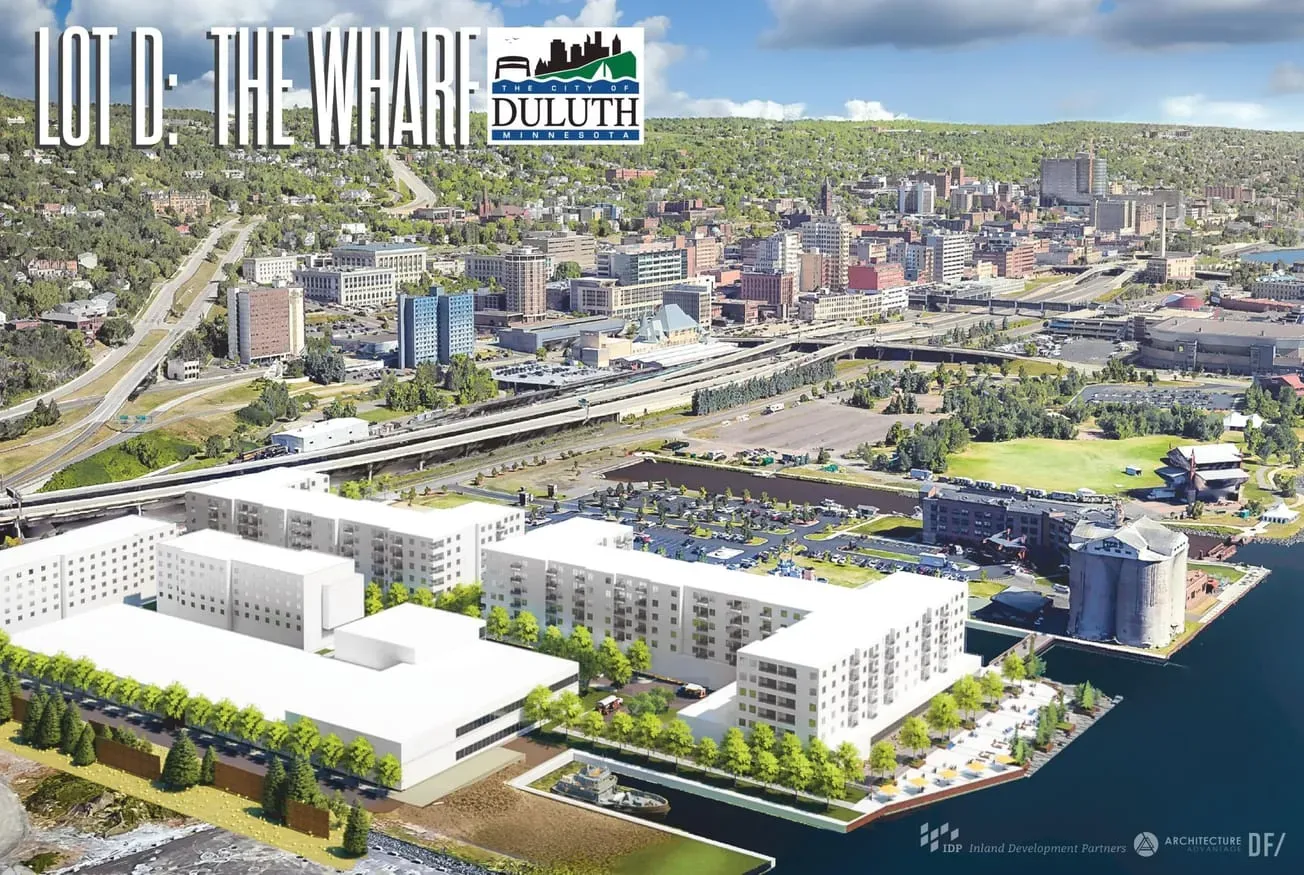
Nowhere is that tension more visible than in downtown Duluth, which Reinert described as central to the city’s long-term strategy. He argued that the future of the downtown core lies in residential development, particularly through converting underutilized commercial properties into housing that can support density and reduce infrastructure strain.
“Downtown’s future is residential,” Reinert said, noting both the existing base of housing units and the potential for significant expansion.
But Patronas, reflecting on decades of firsthand experience as a downtown property owner and developer, offered a more skeptical view of that path forward.
“Downtown Duluth has needed attention for a long time,” he said. “It’s become worse every year and I really don’t think it’s going to get any better.”
He pointed to regulatory and financial barriers that, in his view, continue to limit redevelopment.
“You can’t basically build downtown unless you get some kind of subsidy from the city and/or the state,” Patronas said. “The city inspectors made it so difficult… they increased things 30, 40% more than it should have been.”
The contrast between Reinert’s long-term vision and Patronas’ lived experience highlights the central challenge facing Duluth: aligning policy direction with practical execution in a way that produces measurable results.
Reinert acknowledged those complexities, noting that much of downtown is privately owned and that the city’s role is limited to influencing, rather than controlling, redevelopment decisions. He emphasized the need for partnerships — with neighboring communities, private developers, nonprofit organizations and state agencies — as a key strategy for addressing both fiscal and operational constraints.
“If we’re not growing… if we’re not expanding our commercial tax base, then the burden shifts to the folks who are already here,” Reinert said, underscoring the risks of stagnation in a city with aging infrastructure and a fixed population base.
He closed the address with a call for civic responsibility, urging residents to engage constructively despite disagreements and to focus on shared outcomes rather than division.
“The math is real,” Reinert said. “The decisions… will not be easy.”
Patronas, in a post-speech interview, extended that challenge beyond City Hall, directing criticism toward state leadership and calling for greater advocacy on behalf of Duluth.
“Our legislators… are doing a terrible job and they have to do better to help the citizens of Duluth,” he said.
Taken together, the speech and the reaction that followed outlined a city at a critical point — one confronting longstanding structural issues with increasing urgency, and one whose path forward will depend on its willingness to accept difficult trade-offs.
For one night, at least, there was little ambiguity about the stakes.
The numbers were presented. The limits were acknowledged. And the choices, Reinert made clear, can no longer be deferred.