Table of Contents

Howie's column is powered by Lyric Kitchen · Bar
The newly named Minnesota Monsters — formerly the Duluth Harbor Monsters — officially announced their move into the Arena Football League’s AF1 on Wednesday, pledging loyalty to Duluth while stepping into a national spotlight that stretches from New York to Texas.
CEO Steve Walters, new majority owner Jake Lambert, and league pioneer Jerry Kurz outlined a sweeping vision: a faster, louder, televised brand of indoor football that blends entertainment and community in equal measure.
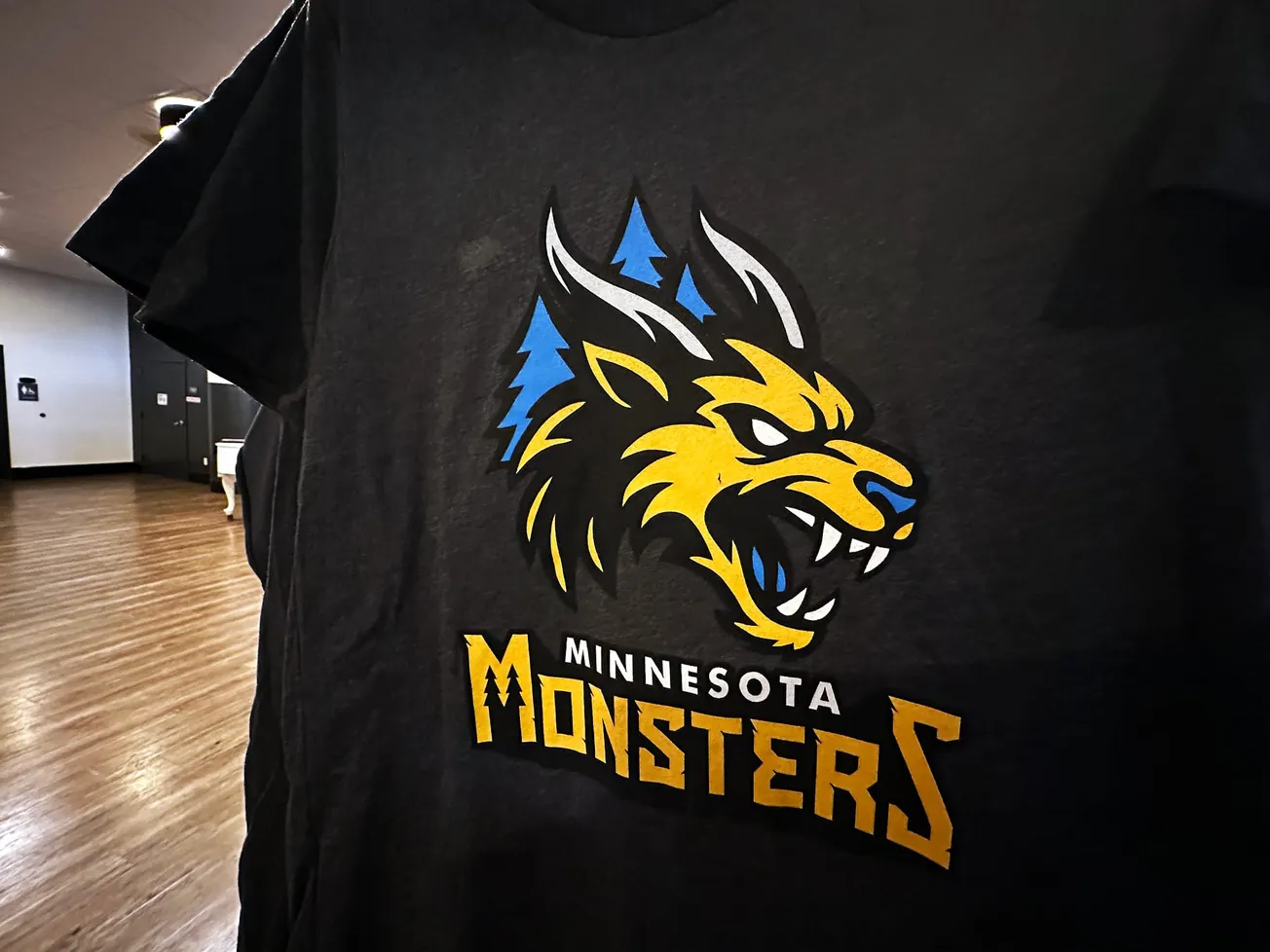
“This is still Duluth’s team,” Walters said, standing before a backdrop of the new logo, which he called a deliberate nod to local roots. “We deliberately designed this logo to feel familiar to all of our fans. We did not want a single moment when they walk into that arena where they feel alienated. When I wear this logo, I was here from the beginning. I’m part of the legacy.”
GOOD READ: Howie: Monsters’ leap to Arena Football One marks a defining moment for Duluth sports
The Monsters’ new name and league membership reflect growth, Walters said — not relocation.
“We are not going anywhere,” he told the crowd. “We are Duluth’s team. We came from Duluth, and Duluth got us to where we’re at right now.”
Lambert echoed that sentiment but underscored his commitment to scale up the operation.
“My job coming in was to stabilize this organization, put it on a bigger platform and to give these players a better chance,” he said. “You won’t see me much and I won’t do a lot of talking, but I’ll write the checks and make sure we always have a place to play.”
Lambert, a former athlete and businessman who purchased the franchise earlier this fall, admitted the sport is a financial risk — but one he’s prepared for.
“It is expensive,” he said. “But at the same time we know what it can be, and these guys have made my job easy. I’m so blessed to know them. I know it’s not going to fail. This is my baby. I’ve wanted this for 15 years.”
The Arena Football League — often called simply “arena football” — was born in the 1980s as a hybrid between professional football and show business. Played indoors on a 50-yard field, it’s famous for high scoring, padded walls, and its rebound nets that keep the ball live.
Kurz, a league founder and AF1’s current vice president, spoke about that history with pride and humor.
“When we invented the game, people thought we were crazy,” he said. “I asked the guy who created it what he was smoking. It was the eighties — he was correct, and I was wrong.”
The AF1’s return in 2025 under commissioner Jeff Fisher, the former NFL coach, has revived the original model: a league of community-based teams that mix family entertainment with professional-caliber play.
“We throw a party and the game happens to break out,” Kurz said, drawing laughter. “From the time the doors open to the time they close, we want to entertain. We’re the originator of fans on the field after the game. There are other indoor leagues out there, but there’s only one Arena Football League.”
Kurz noted that AF1 demands community engagement as a condition of membership.
“We don’t want an organization to come, roll out their field for six months, then put out their hand and say, ‘Give me money for tickets,’” he said. “We want teams involved in the community year-round. That’s what drew us to Steve and Jake — their roots here.”
When asked whether the Monsters’ commitment to Duluth was firm, Walters and Kurz both answered yes without hesitation.
“The old league had the lease with the DECC,” Walters explained. “We’re making a brand new lease agreement because we’re a brand new team in a brand new league.”
Kurz added that the team’s franchise agreement specifically locks it to the Twin Ports region.
“Their membership agreement is for this market, with a 90-mile territorial protection,” Kurz said. “They can’t pick up and move to another market without legal approval.”
AF1, he said, typically encourages three-year leases.
“Sometimes if you don’t get the lease terms you want, you start with a one-year deal,” Kurz said. “But our recommendation is always three years. And this building already knows how much money they’ll make off concessions. You’re in a good place.”
Kurz, now one of the most recognizable names in arena football, recounted the sport’s early years, when players taped down turf in basketball arenas and invented the game on the fly.
“It’s an intimate game,” he said. “It’s for the fans who want to be close enough to smell the turf.”
He pointed out that the AFL’s DNA runs deep through the sport — and through the NFL.
“We average about 68 players going to NFL training camps,” he said. “In our players’ contracts, it says if you get an opportunity with an NFL team, we’ll drive you. We want you to develop.”
He cited one notable graduate: Kurt Warner, who went from stocking groceries to winning a Super Bowl.
“We sent up Kurt Warner because he was a quarterback and didn’t have to play both ways,” Kurz said. “Now our players specialize in positions — that’s why this league works.”
The AF1’s 2026 season will run April 12 through August 9, with six home games scheduled for Duluth.
“We’ll start right after Easter,” Kurz said. “Buildings want something in their arenas. They don’t want dark days. We’re not selling 80,000 seats — we’re selling 5,000 or 6,000, and we can fill them.”
Player pay will remain flat across positions — a deliberate measure, Kurz said, to keep teams financially balanced.
“Each player that’s active makes the same money,” he said. “We pay $400 for the game for active players, $200 for inactive, $300 for injured reserve.”
Teams are also allowed to arrange separate Name, Image, and Likeness (NIL) deals with local sponsors.
“It’s unlimited,” Kurz said of NIL support potential for players. “But it has to be separate from game pay.”
Lambert said that structure allows his players to focus on opportunity.
“We want to have a feeder program within our organization,” he said. “We’re giving these guys life-altering chances. We’re changing people’s lives because of this.”
Head coach Daron Clark, a former CFL standout who won the Grey Cup, will lead the Monsters into AF1.
“My players are confident — they’re going to embrace the community and they’re ready to compete,” he said.
Lambert highlighted Clark’s resume as a key factor in the transition.
“Coach played 12 years,” Lambert said. “He’s won four championships as a player and one as a coach. We have a championship leader who knows what it takes.”
Walters said the AF1’s brand of football will be relentless.
“We’ve all gotten used to this fast-paced, ADHD version of football that we love so much,” he said. “You’re at point-blank range with the players. You’re catching balls the entire game. I don’t want to give you a moment to breathe.”
The league’s rebound nets and kicking game are back — along with new scoring wrinkles.
“If you kick it through the goalposts on a kickoff, you actually get two points,” Walters said.
Clark grinned and added, “We’d love to hear the crowd scream ‘Deuce!’ every time we kick off.”
Kurz summed it up: “We want you to drink from a fire hose.”
For the league, Duluth’s scale and enthusiasm make it a model market.
“Small building, intimate,” Kurz said. “We want to be in your face. I’d rather have a sellout and kiss the first scalper than have an empty building.”
He said mid-size cities like Duluth often outperform large metros.
“Years ago, our smaller AF2 markets did better than the large markets,” Kurz said. “Sometimes when you’re in a big city, you’re fighting for awareness. Here, this is your team. People drive two hours for a concert — they’ll do it for this.”
AF1’s media reach will be wider than any previous iteration of arena football.
“Vice came back and said, ‘We want arena football,’” Kurz said. “All our games are streamed, no paywall. Butts in seats are important, but eyeballs on the screen are even more important.”
The league also counts NFL veterans John and Jay Gruden among its ownership group.
“Having the Gruden family involved has not hurt us at all,” Kurz said.
Walters said Duluth’s upgraded national exposure will ripple across the community.
“Now we have teams flying in from New York, Washington, and Texas,” he said. “There’s going to be so much more spotlight on this community. It’s better across the board for everybody.”
Kurz, who has been part of arena football since its inception, said the AF1 is built differently from other short-lived indoor ventures.
“We have professionals helping teams stay in market and do business the right way,” he said. “We bring new and existing teams together at Arena Football University, three days of intensive participation. We teach them how to run a team, not just play games.”
He smiled as he compared the process to fast food.
“We took the idea from McDonald’s,” he said. “McDonald’s doesn’t just give you a store. You go to their university. We do the same thing.”
Walters ended the press conference with a reflection on why the Monsters matter.
“We didn’t want this to just be hidden under a bushel and have this be about Duluth,” he said. “We wanted the entire state to see us. But we’re not leaving Duluth. This is home.”
Lambert nodded beside him.
“We’ve got the players, the league, the support, and the fans. There’s no way we’re going to fail,” he said.
For Duluth’s football faithful, the message was clear: the Monsters may have a new name and national league, but their roots will remain here.