Howie's column is powered by Lyric Kitchen · Bar | eMail Howie
The walk down a hospital corridor looks the same in St. Paul, Duluth, Bemidji or Sleepy Eye — polished floors, fluorescent light, the quiet shuffle of families caught between hope and uncertainty. But what happens beyond those hallways is not the same in every zip code.
In greater Minnesota, health care isn’t just a service line — it’s the community’s heartbeat, its workforce, its safety net and its future.
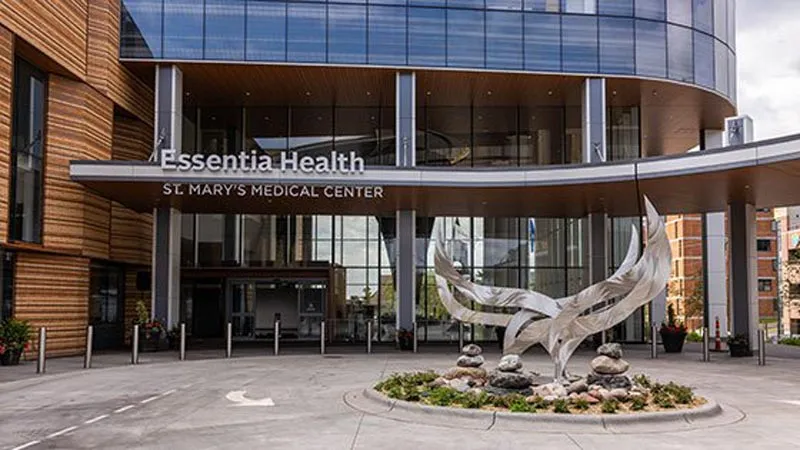
On Tuesday, inside the gleaming new St. Mary’s Medical Center, Minnesota lawmakers saw it up close — not through policy briefs or campaign literature, but through windows overlooking Lake Superior and the reality of what it takes to deliver care hours from the Capitol.
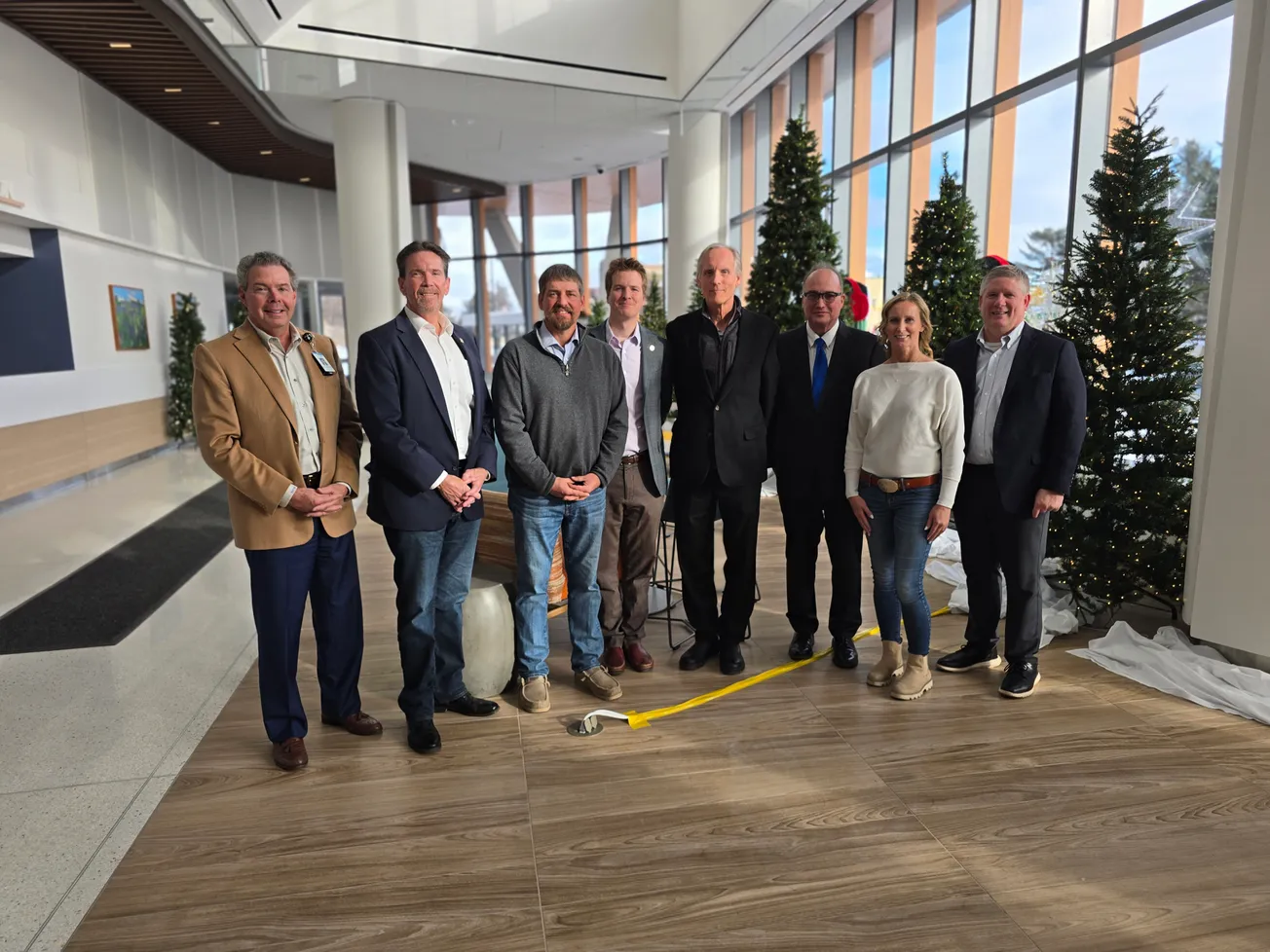
Essentia Health and the Minnesota Business Partnership hosted a bipartisan group of legislators — urban, rural, metro-suburban, Iron Range, farm country — for MBP’s first “HQExperience” visit outside the Twin Cities and its first visit to a health system. It felt less like a tour and more like a moment of alignment long overdue.
At the center was Essentia Health CEO Dr. David Herman — again, and fittingly — the same voice who has been quietly, insistently ringing the alarm that rural health care is not drifting; it is approaching a cliff.
And if Minnesota chooses not to lead this national conversation now, the consequences will not be felt first in the metro — they will be felt in towns that have already watched their elevators shutter, their schools consolidate and their grocery stores close.

Rural Health Isn’t Just an Issue — It’s an Imminent Breakpoint
At national conferences, Herman is the person rural systems listen to. He doesn’t speak in abstractions — he speaks in models, outcomes, workforce data and economic impact. He has described rural care as the “canary in the national health care coal mine,” warning that when systems falter, the ripple is generational, not cyclical.
That’s because there are two separate health care Americas now — one measured in transit time, one measured in confidence that help will arrive.
“When a hospital closes in the Twin Cities, another option is measured in blocks,” Herman has told civic leaders before. “When a hospital closes in rural Minnesota, another option is measured in hours.”
Those hours matter — medically, mentally, economically, psychologically. They shape the decisions families make about whether to stay, whether to try, whether to risk pregnancy locally, whether aging parents can remain at home.
The conversation Tuesday wasn’t simply about operating margins — though margins matter when the cost of providing care is rising faster than reimbursement can track. It wasn’t simply about workforce — though workforce is the first domino in any collapse. It wasn’t simply about sustainability — though sustainability is now a word spoken with the weary tone once reserved for inevitability.
It was about proximity. Proximity to care. Proximity to home. Proximity to dignity.
If Minneapolis lost its Level I trauma capability for a week, the state would treat it as a crisis. In rural Minnesota, the fear is that closures will be met with resignation.

Minnesota Cannot Be the State That Shrugs
Herman spoke Tuesday as the leader of a system that delivers the region’s only Level I trauma services — but also as a realist, unpretentious in framing what’s needed next.
“As a nonprofit health system and national leader in value-based health care, Essentia is proud to call Duluth home,” Herman said.
Then he made the case that policymakers must digest with urgency: “As a major employer, dedicated community partner and the region’s only Level I trauma center, we invest in the health and economic strength of the communities we serve.”
And finally, a challenge that should be printed and taped to the door of every committee room come February: “We look forward to continue partnering with state lawmakers to strengthen health care, support the next generation of health care workers and explore new ways to ensure all Minnesotans have sustainable access to high-quality care close to home.”
Close to home. That phrase is doing heavy lifting.
We say it casually, as if access is a guarantee. Ask communities in Iowa where maternity wards have closed. Ask towns in South Dakota driving 90 minutes for dialysis. Ask families in Wisconsin where opioid treatment is 100 miles away. The Upper Midwest is mapping the future of American rural health — whether we are proactive or reactive.
Minnesota now finds itself at the front of that national curve — not by accident, but because Herman and others have refused to let this issue fade after the camera crews left the pandemic.

The Workforce Problem No One Wants to Own
Here is where the conversation becomes difficult — because solving rural health care requires two politically uncomfortable truths:
1️⃣ We must train workers for rural practice.
2️⃣ We must incentivize them to stay.
Not hope. Not encourage. Not suggest.
Incentivize.
That means rethinking residency location, tuition reimbursement, nurse pipeline strategies, broadband-enabled telehealth, and the financial models of small and mid-sized hospitals that cannot be judged by the spreadsheet metrics of multibillion-dollar metro systems.
Urban Minnesota needs rural Minnesota — for food, energy, water, manufacturing, tourism and the cultural DNA of the state. The reciprocal must now be true: rural Minnesota needs the full political, financial and moral force of the state.
Affordability vs. Sustainability — This is the Tornado We Ignore
Every lawmaker wants to make health care more affordable. Every health system wants to remain open and solvent. These goals are not mutually exclusive — but they are not automatically aligned.
Affordability without sustainability is a countdown, not a strategy.
The pressure to reduce cost cannot eclipse the structural cost reality of serving widely dispersed populations with aging demographics and higher chronic illness rates. That isn’t inefficiency — that’s geography and physiology.

Minnesota Business Partnership Frames It Plainly
MBP CEO Kurt Zellers didn’t mince words.
“Essentia Health shows the vital role Minnesota-headquartered companies play in communities across our state,” he said. “This visit gave legislators a firsthand look at how policy decisions impact access to quality health care for rural and Tribal communities.”
And then — the line that should change how this state talks to itself: “By connecting lawmakers directly with the business leaders and frontline operations that drive our economy, we’re building the relationships and understanding needed to keep Minnesota competitive.”
Competitive. Not just compassionate. Competitive.
States are competing for health care workers, for expanded residency slots, for federal designations, for philanthropic capital and for the companies and families who decide where they can build a life.
Minnesota can either lead that race or watch it from the skyway.
This Is No Longer Essentia’s Conversation Alone — and That’s the Point
For years, Dr. Herman and Essentia Health have stood at the center of this conversation not because they wanted to own it — but because somebody had to.
Today, Minnesota lawmakers — Republican and Democrat — joined that conversation not as spectators, but as stakeholders.
That is not small. It should not be fleeting.
If Minnesota emerges as a national leader — if we expand rural residencies, if we innovate value-based models that work at scale, if we build sustainable pipelines from Cloquet to Crookston to Cambridge — it may be because a group of lawmakers walked a hallway in Duluth and realized the urgency in real time.
In the end, the biggest risk rural communities face is not shortage. It is acceptance.
The quiet belief that fewer services are inevitable. That fewer options are normal. That distance is destiny.
It isn’t.

Minnesota Has a Chance to Lead — Not Patch, Not Stall
This is the moment — one of those hinge points history reveals only in hindsight.
If Herman has carried the banner of rural health for years, he deserves credit. But Minnesota leaders now carry a corner of that banner too — and the people of this state should demand they carry it all the way.
Because health care in greater Minnesota is not a favor — it is a promise.
Not charity — but equity. Not nostalgia — but necessity.
If we are truly “one Minnesota,” it isn’t measured in slogans or stadium chants. It is measured in whether a mother in International Falls feels the same confidence as a mother in Edina.
And until that is true, the work is not done.

Howie, 71, is a veteran Duluth print journalist and publisher of HowieHanson.com, which he has operated for 21 years. He is the region’s first and only full-time online daily columnist, covering local news, politics, business, healthcare, education and sports with an independent, community-centered voice. Hanson has spent more than five decades reporting on issues that shape the Northland.