
Howie's column is powered by Lyric Kitchen · Bar
There are moments in sports when a city quietly realizes it did something right. Not by accident. Not by luck. But by showing up, staying steady, and treating a team like it belonged before it ever proved it deserved to.
This is one of those moments for Duluth.
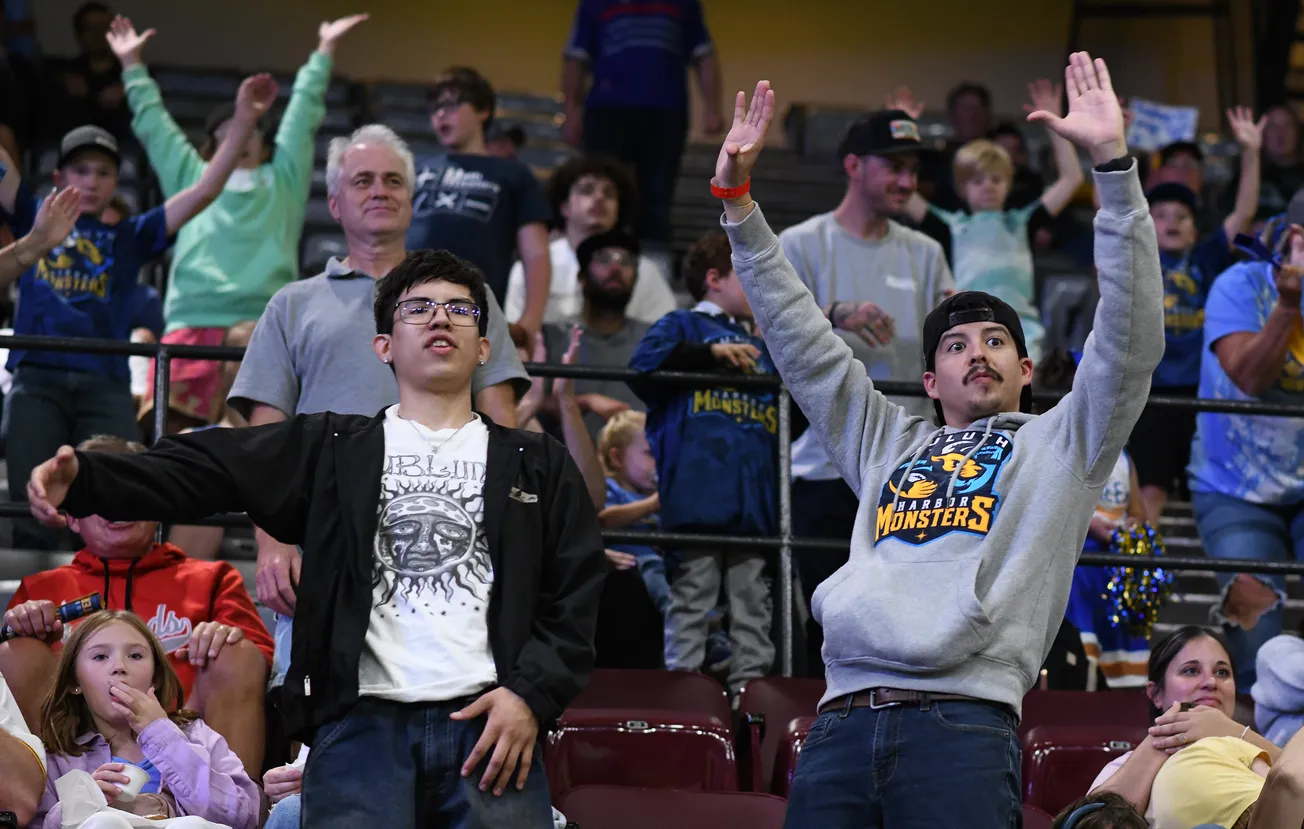
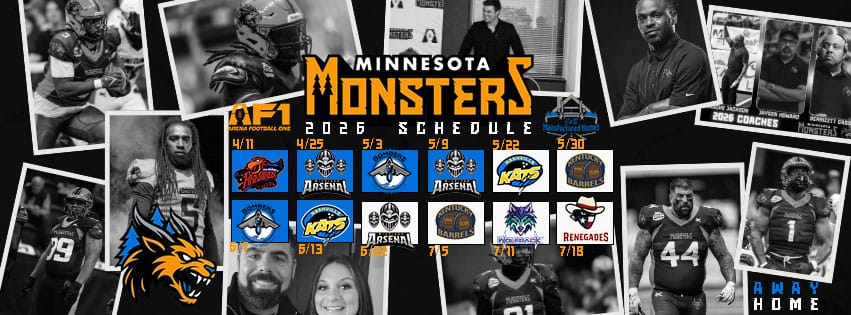
The Minnesota Monsters didn’t just survive their two TAL championship seasons here. They were embraced — first as the Duluth Harbor Monsters, and now as something bigger, broader and more ambitious. And in a rising sport where franchises too often feel temporary, disposable or one bad lease away from disappearing, that matters more than standings.
New majority owner Jacob Lambert doesn’t dodge the truth of it. He says it plainly, without varnish.
“The city of Duluth embraced this team when they were the Duluth Harbor Monsters,” Lambert said. “Going to all these games — for me to take that away from them would have been selfish.”
That word lands hard. Selfish.
Lambert said the conversations weren’t hypothetical. Owners at this level always have to look. Markets get compared. Buildings get measured. Spreadsheets get opened.
“My wife Brianna had a big say in that,” Lambert said, “just keeping me grounded.”
Because this wasn’t just a business decision. It was a community decision.
“It’s not like I want to take anything away from Duluth,” he said. “We just had to look at options.”

He paused, then acknowledged the reality that owners are expected to be pragmatic.
“I’m a businessman,” Lambert said. “So you have to look at all facets, all options. And no matter the cost, I can’t take this away from Duluth.”
That’s not a soundbite. That’s a conclusion.
What changed things, Lambert said, wasn’t a pitch deck or a financial incentive. It was people. It was relationships. It was the realization that Duluth wasn’t treating the Monsters like a tenant — it was treating them like its own.
“Once I got to know Dan Hartman (DECC Executive Director),” Lambert said, “and got to know the local people and the surrounding areas and got more embraced into the city of Duluth, I’m thinking — wow, why would I even consider moving the team?”
Options stayed open. Duluth stayed louder.
And eventually, the decision stopped being complicated.
Minority owner and general manager Steve Walters sees that same embrace from the day-to-day grind of making arena football work here — a job that usually involves far more duct tape than glamour.
Working with the Duluth Entertainment Convention Center, Walters said, has been a separator.
“Whether it be Dan or Kim or Olivia or Lucy or Walt — all of them — it’s been wonderful to work with them,” Walters said. “They don’t have to do what they do for us, but they do.”
One small example says a lot.
“I love when we drive by and DECC, out of their own pocket, put the huge banners on the parking lot for us,” Walters said. “They don’t have to do that. But again, out of their own expense, to promote us and our logo and our name and help draw people in to come see us — it’s a big deal.”
That’s not contractual. That’s belief.
“This space in general,” Walters said, “being able to play here the last two seasons, to be able to practice in this facility, to be able to name this facility as our home — it’s a big deal.”
He’s watched visiting teams arrive guarded, skeptical, conditioned by years of underwhelming stops.
“They don’t know what to expect,” Walters said. “They’re expecting kind of like Waterloo, Iowa. Peckville.”

Then they arrive.
“When they come into our city and they see how beautiful our city is,” he said, “they’re impressed. They think it’s beautiful and wonderful.”
They were impressed by the old Duluth Arena, too.
“They would look up and say, ‘Steve, this is really something else. I didn’t really expect how cool this was,’” Walters said.
And now, the next arena reveal is coming.
Lambert doesn’t frame the move into Amsoil Arena as an upgrade that leaves anything behind. He frames it as recognition.
“Coming to Amsoil just shows the appreciation for the city of Duluth,” Lambert said. “That’s my slogan. ‘Good job, Duluth. You got us promoted.’”
He was careful to say what this is not.
“The Duluth Arena is great,” Lambert said. “I love playing there too. There’s nothing wrong with that beautiful, historic facility.”
This is about scale. Visibility. Sending a message — inside and outside the league.
“The Amsoil is just bigger,” he said. “It’s newer. That’s all.”
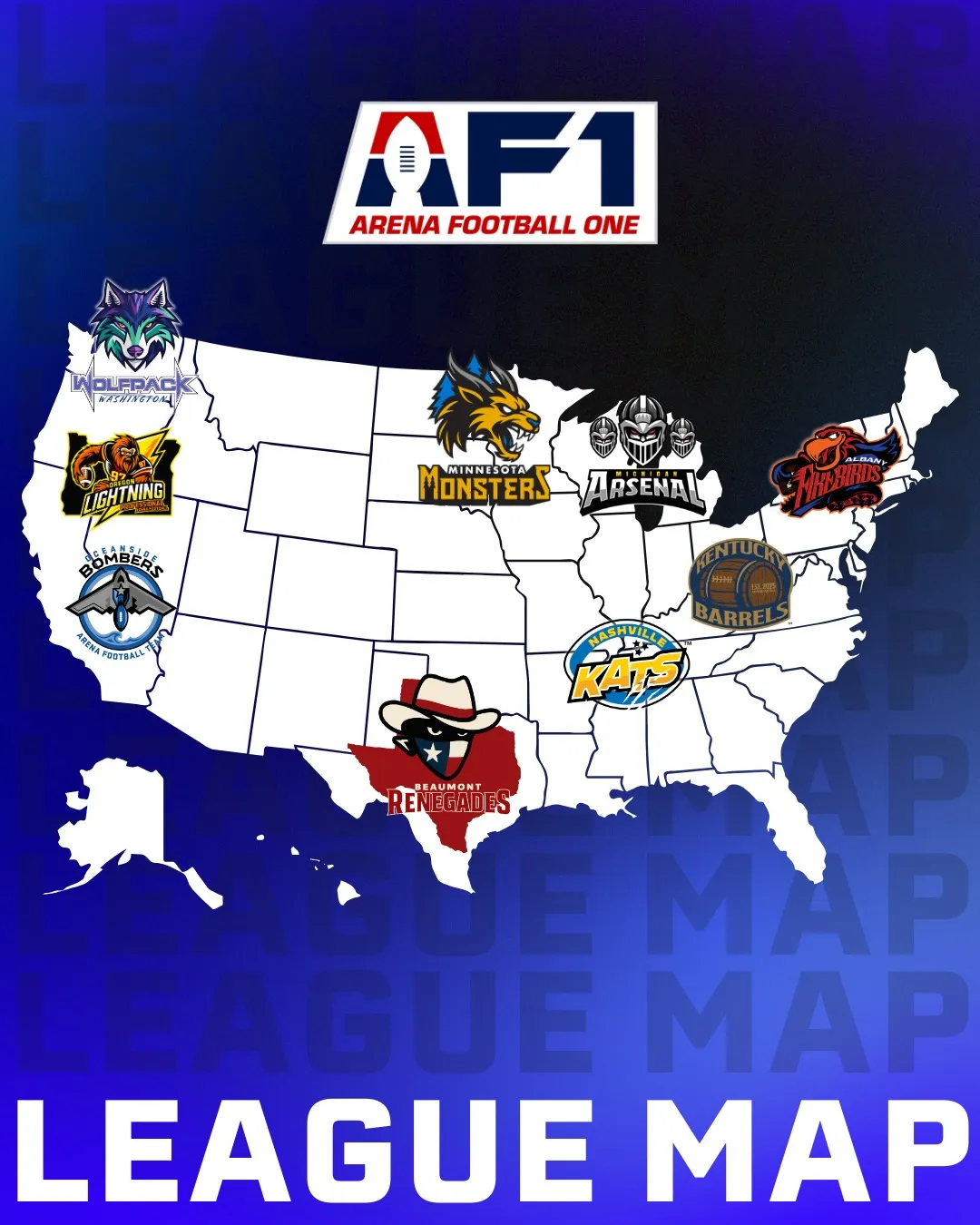
That flexibility is part of why Duluth has become one of the most stable, respected franchises in the nine-team Arena Football One.
It’s also why the Monsters brand matters beyond city limits.
“This team is very important,” Lambert said. “We brand it as Minnesota Monsters because we want people from the Iron Range, Cities, up the shore and from our many friends in Wisconsin to come too.”

Duluth is the anchor, not the ceiling.
“I know Duluth wants its own team, and I get that,” Lambert said. “We’ve got to get the Iron Range. The people from Pine City. From Minneapolis.”
He didn’t hide the ambition.
“Our goal is to sell out the Amsoil,” Lambert said. “We want 7,000 people here for every home game.”
Walters believes the product deserves it — and that Duluth fans are only beginning to realize what they have.
“So many people don’t realize how powerful this product is,” Lambert said, echoing conversations the two owners have often shared.

“These guys,” Lambert said, “a lot of these guys — NFL. They’ve been in NFL camps.”
Walters has made the comparison himself, watching elite events struggle for attention while high-level talent competes in near anonymity.
“Some fans don’t realize what they’re watching,” Walters said. “And that’s the challenge — and the opportunity.”
The opportunity is now squarely Duluth’s.
Because this isn’t just about banners or buildings or branding. It’s about competence. It’s about trust. It’s about a city proving it can be a reliable partner in a league that desperately needs them.
When owners look at every option and still say, I can’t take this away from Duluth, that’s not sentimentality. That’s earned.
Duluth didn’t stumble into this moment. It built it.
And in a league defined by churn, Duluth has quietly become something rare — a franchise other teams notice, respect and talk about when they leave town.
That’s what a premier team looks like.
And Duluth, unmistakably, has become one.
Howie, 71, is a veteran Hermantown print journalist and publisher of HowieHanson.com, which he has operated for 21 years. He is the region’s first and only full-time online daily columnist, covering local news, politics, business, healthcare, education and sports with an independent, community-centered voice. Hanson has spent more than five decades reporting on issues that shape the Northland.