
Howie is a longtime Minnesota journalist, independent columnist and author covering sports, power and civic life. His daily column is sponsored by Lyric Kitchen . Bar.
The Minnesota Monsters opened training camp Monday morning at the Duluth Heritage Sports Center, beginning their first full evaluation period ahead of a move into Arena Football One, a league that will immediately test whether their recent success translates beyond The Arena League.
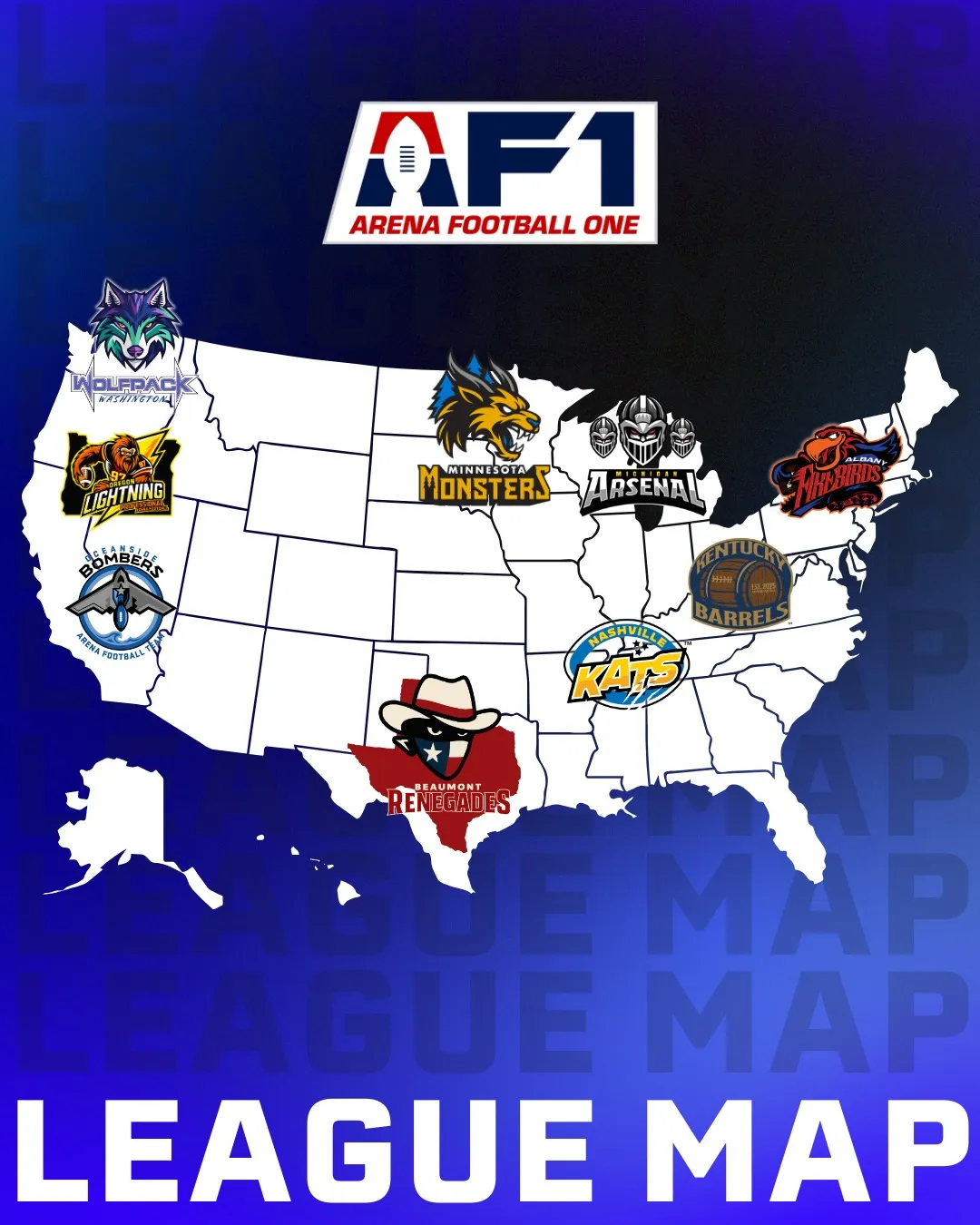
The Monsters enter 2026 after consecutive TAL playoff championships, but that resume carries limited value in a new structure. Arena Football One, now in its second season, has settled into a nine-team league built less on expansion volume and more on roster stability, scheduling discipline and competitive balance — all areas where past arena leagues have historically struggled to hold ground.

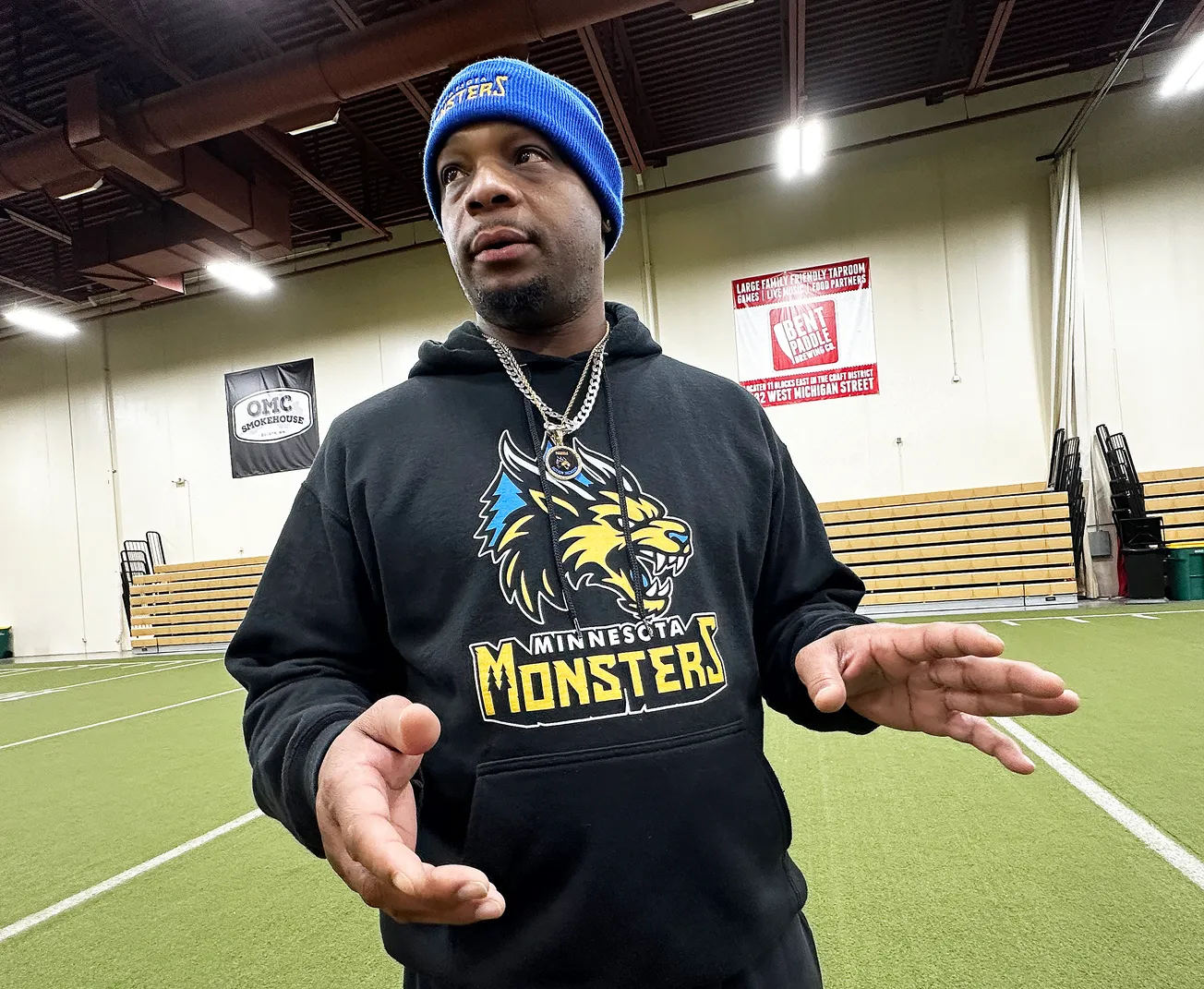
Monsters head coach Daron Clark Jr. said the opening session focused on conditioning and tempo, with players working without pads as the staff began sorting a roster that will be required to play faster and more efficiently than it has in previous seasons.
“We came out fast, in shape," he said after the 90-minute workout. "Just excited.”
Clark identified several players who separated themselves early, offering a first look at what could become the team’s core rotation as camp progresses.

“Donovan Johnson and Clarence Williams, receivers," Clark said. "Javonte Johnson, my quarterback, Claude Davis and Robert Fuentes. They all stood out to me today.”
Ja’Vonte Johnson remains the central figure after leading Minnesota to back-to-back titles, but the transition to Arena Football One will require quicker decision-making and tighter execution within a game that compresses both space and time.
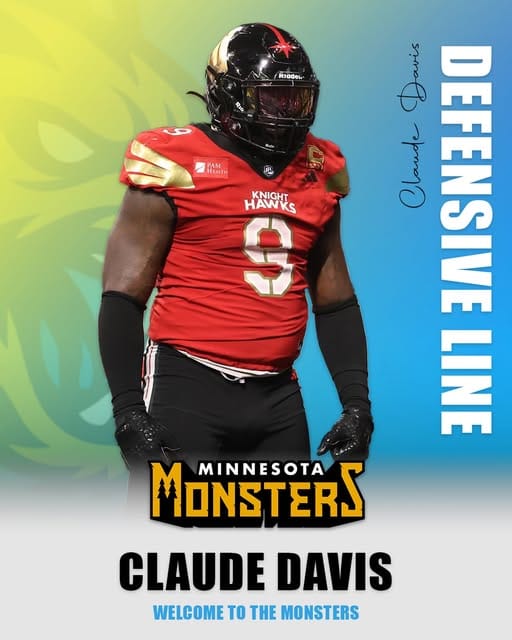
Davis adds veteran stability on the defensive front. The 36-year-old defensive end has spent more than a decade in indoor football, including multiple championship runs in Sioux Falls, and represents the type of experienced presence teams rely on when the margin for error narrows.
Clark said roster construction will reflect one of the defining realities of the indoor game — versatility.
“Some guys will play on both sides of the ball,” Clark said.
That structure is not optional. Arena Football One’s format demands players who can function in multiple roles, and early camp periods are used as much to identify adaptability as they are to install systems.

Minnesota has been preparing for the transition to the AF1 since the fall, building its roster with the expectation that the jump in competition would be immediate.
“It's been a long off-season, and it's nice to hit the ground running,” Clark said.
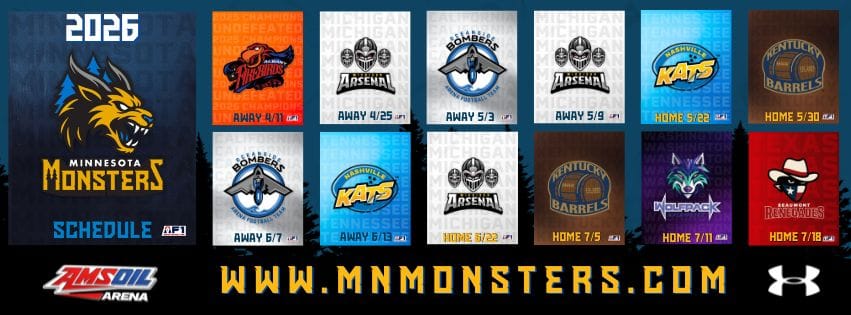
The league the Monsters are entering reflects that urgency. Arena Football One’s 2026 lineup includes the Albany Firebirds, Nashville Kats, Washington Wolfpack, Oregon Lightning, Beaumont Renegades, Kentucky Barrels, Michigan Arsenal, Oceanside Bombers and the Minnesota Monsters.
The regular season opens April 11–12, with Minnesota traveling to face defending league champion Albany in the opening weekend.

Clark said the team’s experience gives him confidence, but not certainty.
“We've got a lot of veterans that have been playing a long time – a lot of past arena league champions,” he said. “So joining the AF1, it's a great move for us. We expect to be a top-four team going into the playoffs.
“In the meantime, we're taking it a day at a time, making sure that we're coaching them the right way and everybody's studying their playbooks and leading by example.”
Clark said many roster decisions will be made as camp progresses.

“The guys are expected to play fast, know what they're doing, communicate, make sure they stay in the weight room, eat well, and take care of their bodies because you can't make the club in the tub,” Clark said.
The first practice established a baseline — not for results, but for readiness. The evaluation will accelerate once pads are introduced early next week.