

Editor's Note: HowieHanson.com is launching A Pathway Home: Duluth's New Response to Homelessness, a continuing special report examining one of Duluth’s most ambitious efforts to confront homelessness, hunger and housing insecurity through the development of the new Mission Engagement Center. Beginning with an in-depth conversation with Union Gospel Mission Executive Director Katie Hagglund, the series will explore the vision, leadership and community partnerships behind the project, including the critical roles of the Union Gospel Mission, Duluth Housing and Redevelopment Authority, CHUM, Damiano Center and other public, private and nonprofit supporters. Upcoming columns will examine the proposed Mission Heights supportive housing development, the financial commitments making the project possible, the contributions of health care organizations and philanthropic foundations, the potential impact on downtown Duluth, and the volunteers and frontline workers serving those most in need. Above all, A Pathway Home will tell the human stories behind this extraordinary community undertaking, recognizing the organizations and individuals working together to create not simply a new building, but a more coordinated, compassionate and lasting response to homelessness in Duluth.
DULUTH — For more than a century, the Union Gospel Mission has been a lifeline for people who have nowhere else to turn. A hot meal. A warm place to escape the cold. Clean clothing. A friendly face. And, perhaps most importantly, the reassurance that somebody still cares.
Now, under the leadership of Executive Director Katie Hagglund, one of Duluth's oldest nonprofit organizations is preparing for what could be the most significant transformation in its 104-year history — a development project that promises to reshape not only the Mission's future but the way this community responds to homelessness, poverty and human suffering.
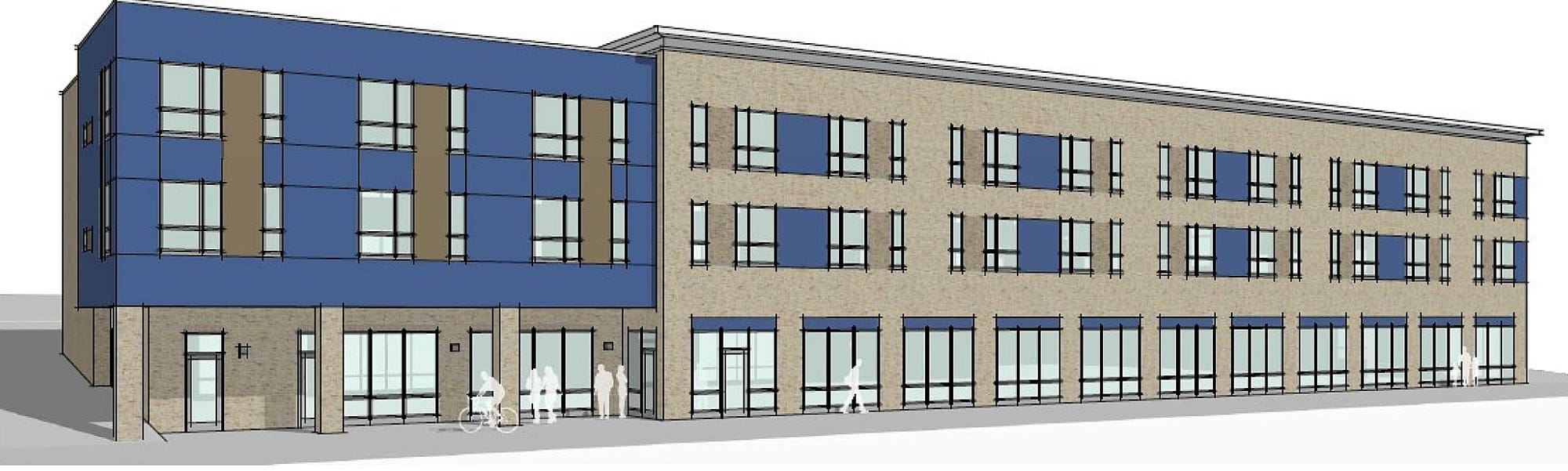
The centerpiece is a proposed three-story Mission Engagement Center on West Second Street, directly across from the St. Louis County Government Services Center. Its first floor will bring emergency services, health care, social workers and outreach professionals together under one roof. Above it, the Mission Heights Housing development will provide 40 efficiency apartments offering permanent supportive housing for people facing some of the greatest obstacles to finding a home.
Construction is targeted for 2027, with the new facility expected to open in 2028, contingent on remaining development and financing milestones.
This is much more than a relocation. It represents a fundamental rethinking of how Duluth cares for people who have fallen through the cracks of an increasingly complicated social services system.
And Hagglund, a Duluth native who took over the Mission four years ago, understands both the possibilities and the limitations of what she is attempting.
"I always view us as the last resort, the safety net. We're here to keep people alive," Hagglund said during an extensive interview Friday afternoon.
"We're not going to solve homelessness at Union Gospel Mission," she said. "Housing solves homelessness, but we can keep people alive until that housing becomes available and we can continue to make sure that people feel like they matter and that they should be a part of this community until those resources are available to them."
Those words help explain why this project matters.
Hagglund is not promising that a beautiful new building will somehow erase decades of poverty, addiction, mental illness and an inadequate supply of affordable housing. She is proposing something more practical: a coordinated system that meets people where they are, helps them survive their immediate circumstances and gives them a realistic opportunity to move forward.
The existing Union Gospel Mission operates from a building originally designed as an automobile repair shop. It has served its purpose, but the demands placed on the organization have long exceeded what the facility was built to accommodate.

"This (building) was never necessarily designed to be handling the volume of needs in our community that we see here day in and day out," Hagglund said.
Rather than simply adding more programs to an outdated building, Hagglund and the Mission's board began asking a much larger question: What would an emergency services organization look like if it could be designed from the ground up for today's realities?
Their answer became the Mission Engagement Center.
The building's first floor will offer expanded meal services, showers, laundry facilities, clothing, hygiene resources and space for people who need immediate refuge. An overnight warming center will operate year-round, absorbing the Lincoln Park Warming Center's function and accommodating individuals who cannot readily access more traditional shelter arrangements.
It will be a low-barrier environment, including overnight sleeping accommodations on mats rather than conventional shelter beds, intended to reach people who are often excluded from or unable to use other services.
But the real innovation may be the professionals working alongside those basic services.
Social workers, medical providers, mental health professionals, addiction specialists and housing navigators are envisioned as part of a coordinated effort to help guests address multiple problems without constantly moving between agencies and appointments.
Hagglund knows firsthand why that matters.
Before becoming the Mission's executive director, she worked in adult social services for Douglas County, Wisconsin. She regularly encountered people facing homelessness, mental health challenges, substance abuse and other crises, only to discover that government rules, eligibility requirements and limited appointment times made comprehensive assistance extraordinarily difficult.
The experience left a lasting impression.

"I want them to be able to come, share their story, share their goals, and for our person to devote that time to them so that they can reach them," Hagglund said of the new center's intended approach.
She added: "I don't want that ever to be a thing for our folks coming through the doors."
The Mission's proposal also recognizes an essential reality too often lost in public discussions about homelessness: Not everybody experiencing homelessness has the same circumstances or requires the same assistance.
Some people have recently lost housing after an unexpected medical expense or missed rent payment. They may still have employment, transportation and other resources that could help them regain stability relatively quickly.
Others have experienced homelessness for years, sometimes while struggling with serious mental health conditions, addiction or persistent barriers to obtaining housing.
"We're not meeting people where they're at," Hagglund said of the existing system. "We're meeting people with kind of the same resource across the board."
The Mission Engagement Center is designed particularly for the latter population — people with the greatest needs and the fewest available options. And that is where the 40 permanent supportive housing apartments become critically important.
Located on the second and third floors, the efficiency units will provide stable housing for individuals who have experienced prolonged homelessness or face significant barriers to maintaining a home. Supportive services, including case management, will help residents remain housed and address other challenges.
It is not a temporary shelter arrangement. It is housing, with ongoing support.
Hagglund readily acknowledges that 40 apartments cannot begin to satisfy the broader demand for affordable housing across Duluth. But for the people who eventually occupy those apartments, the difference could be life-changing.

"We really tried to encompass a plethora of resources into the building, but again, we're not solving anything in that building. We're helping people get to the next step," she said.
There is another important dimension to the project that deserves considerable attention: cooperation among Duluth's major homeless service providers.
For years, organizations including Union Gospel Mission, CHUM and the Damiano Center have worked to address many of the same problems, sometimes with overlapping responsibilities and always with limited resources.
Their developing partnership, known as Pathway Forward, seeks to establish a more coordinated system in which agencies complement rather than duplicate one another's services.
The Mission's relocation and the planned improvements involving Chum and Damiano have created an unusual opportunity to reconsider how the entire downtown network operates.
Hagglund said the three organizations' executive directors recognized that the moment demanded more than protecting traditional programs or institutional identities.
"We better take advantage of this potentially once in a century opportunity to really do things differently because what we're doing now isn't working well and the need is just continuing to grow," Hagglund said.
That willingness to rethink longstanding practices could prove as important as the bricks and mortar.
The Mission's relocation also carries considerable implications for downtown Duluth. Concentrating essential services in a purpose-built facility near existing government and nonprofit resources could improve the experience of people seeking help while reducing some of the pressures associated with delivering emergency assistance from buildings never intended for such intensive use.
Hagglund has been particularly encouraged by the willingness of government officials, health care organizations and business leaders to embrace that broader vision.

“What I find particularly encouraging about this project is the recognition that addressing homelessness requires more than simply meeting someone’s immediate needs," said Classie Dudley, Executive Director of Community Action Duluth. "Emergency services are essential, but lasting change happens when we connect people to housing, employment, financial stability, and the resources they need to move forward.
"At Community Action Duluth, we see firsthand how interconnected these challenges are. No single organization can address them all, which is why collaboration across our community is so important. I’m excited to see Katie and the Union Gospel Mission thinking beyond traditional service models and creating opportunities for organizations to work together more effectively. Ultimately, the success of this project won’t just be measured by the building itself, but by the opportunities it creates for people to achieve lasting stability.”
The Housing and Redevelopment Authority of Duluth has emerged as a central development partner, bringing the technical expertise and institutional support necessary to turn an ambitious concept into a viable construction project.
Hagglund reserves special praise for HRA Executive Director Jill Keppers, whom she credits with helping the Mission navigate the complicated world of real estate development and public financing.
Hagglund described Keppers as "a lifeline" and a mentor.
"It gave credibility to it. It gave us the resources to even understand how to go through the process of developing and building a building," Hagglund said of the HRA's involvement.
That partnership helped attract additional support.
Minnesota lawmakers approved approximately $8.85 million in state funding for the engagement center in May 2026. Essentia Health, which Hagglund identified as the project's first major donor, contributed $500,000. The city of Duluth, St. Louis County, business organizations and other community partners have also supported the initiative.

The housing component remains dependent on additional financing, including an application under consideration by Minnesota Housing. Project leaders are looking toward a December funding decision that could help determine whether the anticipated construction schedule remains on track.
Hagglund credits advocates including Lynn Nephew, a Duluth city councilor, and Downtown Duluth Executive Director Kristi Stokes with helping advance the project and making the case that its benefits extend beyond the Mission itself.
"Our mission is always to work with our guests and to provide those resources for the people that we see day in and day out. But I think it was important for us to acknowledge that a part of that story also includes the economic redevelopment of downtown," Hagglund said.
The breadth of that support is particularly noteworthy in a community where difficult conversations about homelessness can quickly become divided between the interests of downtown businesses and the needs of people living in poverty.
The Mission's proposal suggests that those interests do not necessarily have to be in conflict. For Hagglund, the undertaking also brings together an unusually varied professional background.
She grew up in Duluth's Hillside neighborhood, graduated from Duluth East High School and was raised in a family that operated Last Chance Liquor on Fourth Street. Her father, Dave Katosky, was part of a family whose business helped shape her early understanding of hard work and community relationships.
Her professional journey eventually included studies in advocacy and political leadership at the University of Minnesota Duluth, an internship with Chum, approximately five years working with Second Harvest Northern Lakes Food Bank and another five years in Douglas County social services.
Each experience contributed something different to her present responsibilities — nonprofit management, fundraising, public policy, government systems and direct experience working with people in crisis.
When she arrived at Union Gospel Mission in September 2022, Hagglund began by meeting with leaders of other community organizations, asking where services were missing and how the Mission could become more useful. She has never been particularly interested in maintaining programs simply because they have always existed. Her philosophy is grounded in the belief that an organization must continually evolve without abandoning its purpose.
"I think at the core though, we've always stood for food, shelter and hope. How we deliver those resources has changed and evolved with the needs of the community," Hagglund said.
The Mission's Christian heritage remains part of that identity, but Hagglund is equally emphatic that religious participation is not a condition for receiving help.
"Our doors are open to everybody, every walk of life, whatever their beliefs are, whatever their demographics are, all of those things don't matter when you come to Union Gospel Mission," she said.
The organization will continue offering spiritual support when requested, she said, while ensuring that every guest receives dignity, compassion and practical assistance regardless of religious beliefs.
Looking ahead, Hagglund also envisions bringing employment assistance into the new center, potentially including job training, job fairs, career counseling and coaching through partnerships with workforce development organizations. Those services could help people move beyond emergency assistance toward greater economic stability.
But she refuses to suggest that one development project, regardless of its ambition, can overcome the larger structural problems contributing to homelessness. Treatment facilities remain strained. Affordable housing is scarce. Waiting lists can extend for years. People who complete treatment and follow every recommended step can still find themselves without a place to live.
"We don't have enough room for people even when they are ready," Hagglund said.
It is a sobering observation from someone who has spent years working inside the systems intended to provide those opportunities.
The Mission Engagement Center will not eliminate those shortcomings. It cannot manufacture treatment beds or create enough affordable housing to satisfy the needs of an entire region. What it can do is change what happens when someone walks through the Mission's doors.
Instead of simply receiving a meal and returning to the street, that person could encounter a social worker, receive medical attention, meet a housing specialist or begin the process of reconnecting with employment and community resources. And for 40 individuals, the journey could eventually lead upstairs to a permanent apartment.
That is the larger promise of this downtown redevelopment.
Hagglund has no illusions about how difficult the work ahead will be, and she is careful about making guarantees.
"We're going to bring in every tool that we have in the toolbox. Absolutely, that is my promise," she said.
Duluth has spent many years debating the causes of homelessness, the limitations of social services and the responsibilities of government, nonprofit organizations and the broader community. Union Gospel Mission is now attempting to demonstrate what a more coordinated response might look like.
Its future building will be measured in square feet, construction costs and housing units. Its lasting value, however, will be measured in people who find safety, stability and a reason to believe their lives can improve.
For an organization built around food, shelter and hope, that may be the most important development of all.