By Christopher Ingraham, Minnesota Reformer
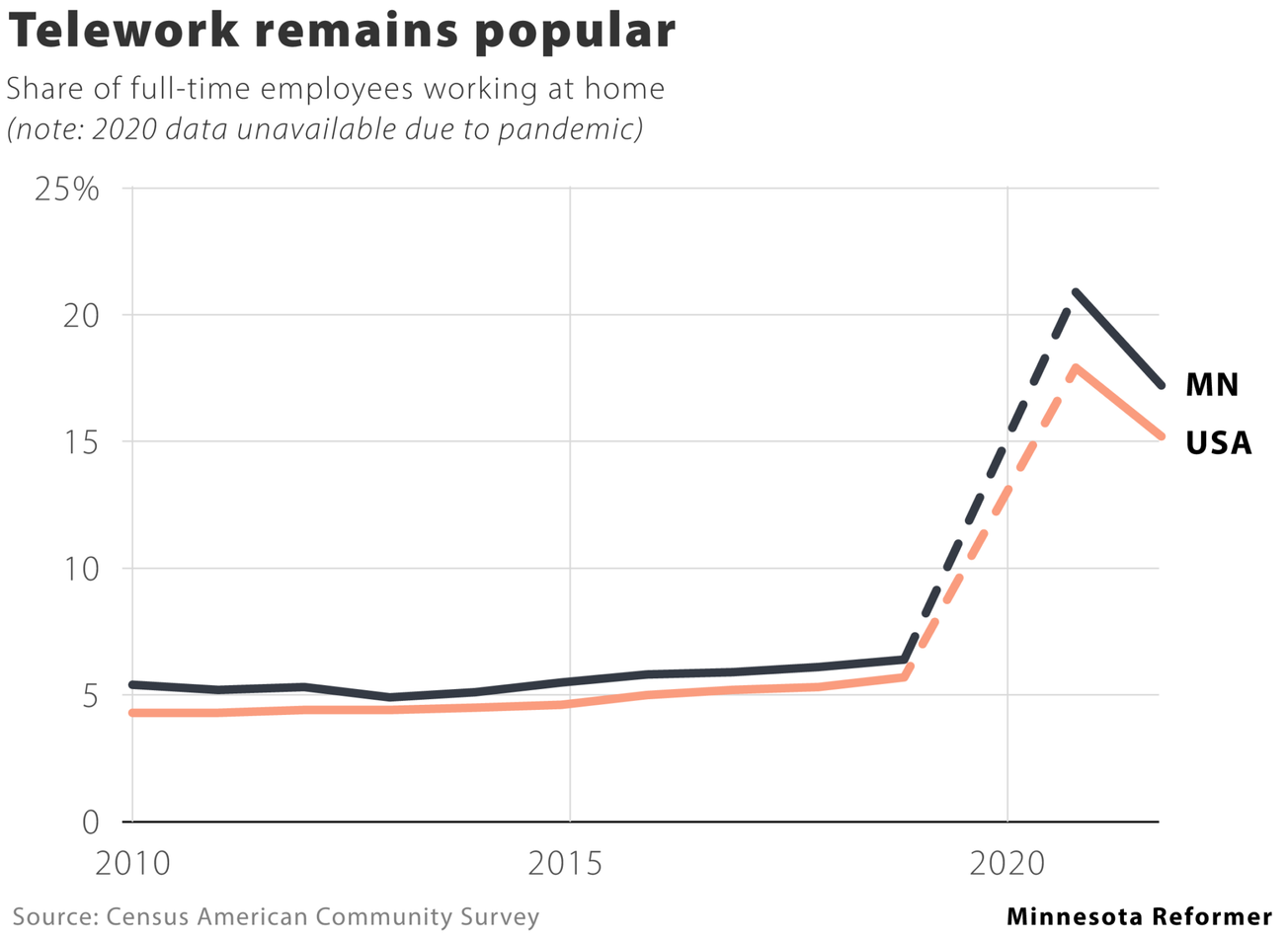
The share of Minnesotans working from home during the pandemic skyrocketed, from 6.4% in 2019 to 20.9% by 2021.
There was some hope — particularly among CEOs, managerial types and commercial landlords — that this was just a one-time disruption that could be reversed via a delicate dance of cajoling, amenity-dangling and threats. Many of the pandemic’s other economic disruptions, like the unprecedented spike in unemployment, the stock market crash or the increased generosity of government aid, were only temporary.
But the latest data from the Census underscores just how hard it is to renege on what many employees now see as a non-negotiable perk. In 2022 the share of remote workers declined, but only modestly, suggesting that the shift to remote work represents more of a durable trend than a transient disturbance.
In Minnesota 17.2% of employees worked from home last year, according to data released last week. While statistically significant, that 3.7 percentage-point drop from 2021’s high shows that the pleading from politicians, business leaders and workers’ own bosses is being met with stiff resistance.
In the Twin Cities, employers have expressed frustration at the slow pace of the return to the office. Office vacancy rates continued to rise into the first half of the year. While most major employers have directed their workers to return to in-person schedules at least part-time, Target still hasn’t.
Many state and local governments also remain in hybrid or remote mode, despite tepid calls from some civic leaders to return to the office.
The changing work patterns create important public policy challenges for urban politicians. Unused office towers will eventually mean steeply lower property tax revenues, which could mean higher taxes or fewer services for residents — or both. Fewer people and eyes on the street often exposes neighborhoods to increases in crime.
The high vacancy rates affect not just corporate landlords and their political allies, but also small businesses — like restaurants and convenience stores — that cater to downtown employees.
The new normal could also create opportunities, however, if office vacancies can be turned into badly needed housing.
Looming behind all these trends is a simple reality: Many workers prefer to do their jobs from home if they’re able. The financial and well-being benefits of eliminating the daily commute — which people consistently rank as the least satisfying part of their lives — cannot be understated. Remote work also makes it easier to run personal errands, care for sick family members, and avoid awkward small talk and other office irritations.
While managers may fret, the research on the productivity effects of remote work is mixed. Some studies find remote workers get more done, while others show the opposite.
All in all, the return to work is a tough sell for employees who’ve become accustomed to the remote lifestyle. The tight labor market means that employees have considerable leverage to set the terms of their employment. The pendulum may eventually swing the other way, which could give employers the power to call more workers back to the office without fear of them walking off the job.
But the latest Census data suggest that many workers won’t do that without a fight.
Minnesota Reformer is part of States Newsroom, a network of news bureaus supported by grants and a coalition of donors as a 501c(3) public charity. Minnesota Reformer maintains editorial independence. Contact Editor Patrick Coolican for questions: info@minnesotareformer.com. Follow Minnesota Reformer on Facebook and Twitter.