
By Christopher Ingraham, Minnesota Reformer
More than half of Minnesota’s mental health professionals report seeing anxiety, depression and chronic psychological distress related to climate concerns among their patients, according to a study by researchers at the University of Minnesota.
Most concerning, more than one-fifth of the surveyed mental health professionals reported “sometimes” or “often” observing signs of suicidal ideation or attempts linked to climate anxiety.
“I work mainly with adolescents — who often express a sense of hopelessness about their future due to the overwhelming and seemingly ‘unfixable’ climate crisis,” one professional said.
The 2022 survey was conducted among 517 active and licensed mental health professionals in the state, including social workers, family counselors, psychologists and other therapists. The sample, while not representative of every mental health professional in the state, included a mix of respondents who worked with children and adults, in inpatient and outpatient settings, and in rural, suburban, urban and tribal areas.
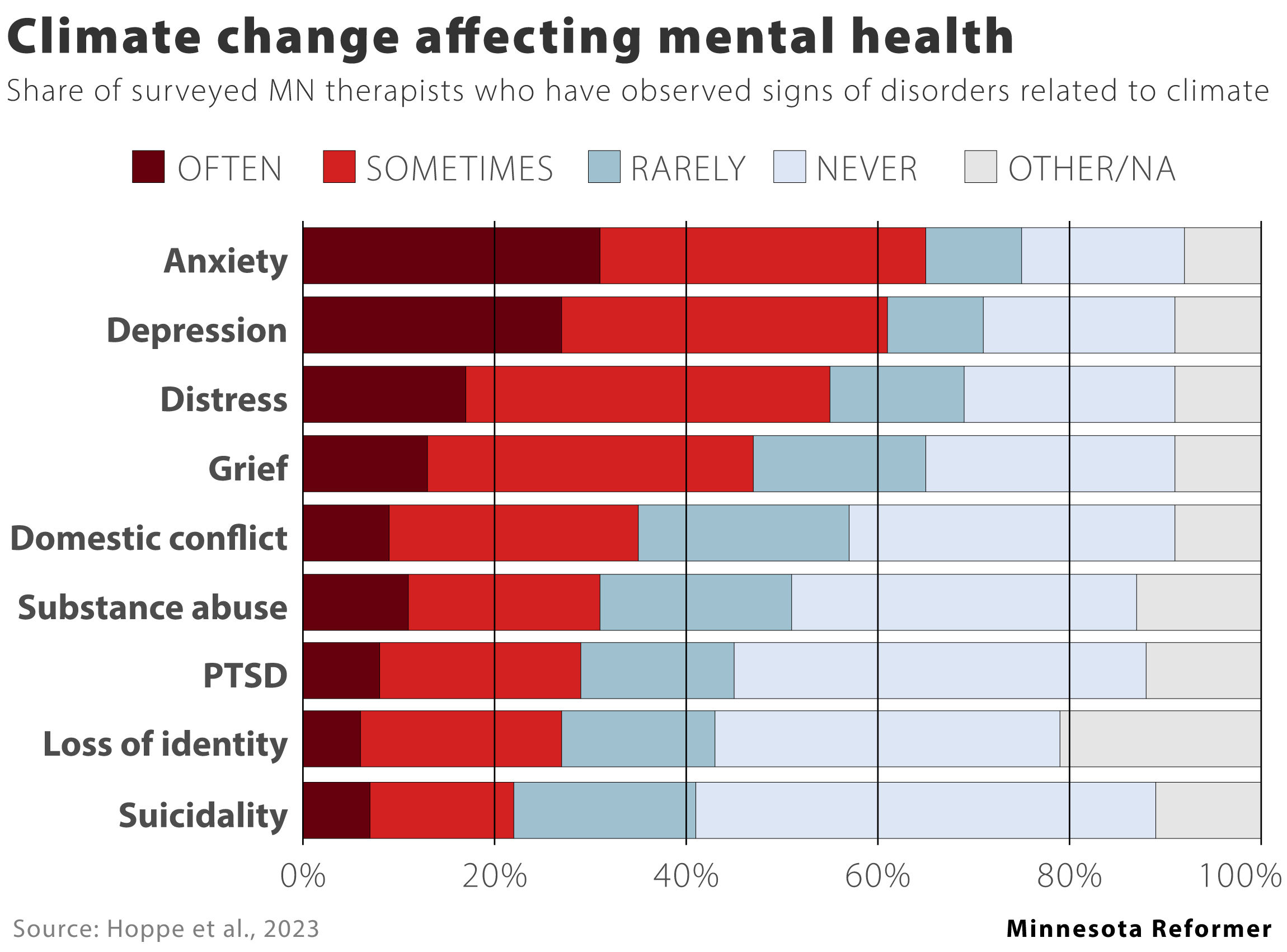
Therapists were asked about their own climate concerns, how clients addressed the topic in practice, and climate-related mental health struggles they observed. In addition to anxiety, depression and distress, the therapists reported seeing signs of substance abuse, post-traumatic stress disorder and other mental ailments driven by climate worries among their patients.
Some of these issues are driven by direct personal experience with climate-driven natural disasters like floods and droughts. But other research has found evidence of a more diffuse sort of anxiety or dread over steadily ratcheting temperatures, their effects on the global environment, and the frustratingly slow pace of efforts to reverse the trend.
Many researchers believe the links between climate and mental health are severely understudied. In one recent systematic review of the existing literature, authors found only one report containing direct evidence on a possible link between climate-driven emotions and suicidality: the Minnesota mental health professionals survey.
“This scarcity underscores the urgent need for more comprehensive studies exploring the potential connection between eco-emotions and suicidality at an individual level,” the authors of the literature review wrote.
There are also many caveats to the Minnesota data. The therapists’ own attitudes toward climate could influence their recollections of their clients’ behaviors, for instance. Plus, the overwhelming majority of adults and children do not receive mental health care, so their attitudes aren’t captured at all in this study.
Still, mental illness and suicidality are growing problems in Minnesota and the U.S. as a whole. Understanding potential links to climate anxiety could help improve the situation.
“Climate change is no longer a psychologically distant, future problem,” the study’s authors conclude.
Minnesota Reformer is part of States Newsroom, a network of news bureaus supported by grants and a coalition of donors as a 501c(3) public charity. Minnesota Reformer maintains editorial independence. Contact Editor Patrick Coolican for questions: info@minnesotareformer.com. Follow Minnesota Reformer on Facebook and Twitter.