
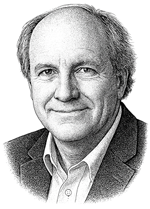
Howie is Minnesota’s Columnist, writing about power, money, sports and civic life across the state. His daily column is powered by Lyric Kitchen · Bar of Duluth.
MINNESOTA LIKES TO TELL ITSELF comforting stories. We are pragmatic. We invest wisely. We lead. We fix problems before they metastasize. Those narratives have carried this state a long way, and for a long time they were close enough to true to pass without challenge.
They are no longer sufficient.
Across sports, health care, tourism, media and local government, Minnesota is running the same play again and again: concentrate power, subsidize the outcome, manage the message, and call the result progress. The details change. The pattern does not.
Take sports, where public money is routinely framed as civic pride rather than a financial transaction. Stadium deals are sold as inevitabilities. Development districts promise ripple effects that rarely ripple as advertised. Labor realities are treated as background noise. When the bills come due, they arrive quietly, long after the ribbon cuttings, and rarely at the feet of the decision-makers who approved them.
Or consider health care, where consolidation is marketed as stability and scale is confused with access. Rural hospitals strain or close while urban systems grow taller and more sophisticated. Prices rise. Wait times lengthen. The public is told the system is complex, which is true, but complexity has become a shield against accountability. Minnesota prides itself on outcomes, yet spends less time asking who is being priced out along the way.
Tourism offers another instructive case. The state spends heavily to promote itself as a destination, often with public dollars, while communities absorb the consequences. Housing tightens. Service workers commute farther. Infrastructure wears faster. Criticism is treated as disloyalty. Success is measured in visitor counts, not in whether the people who live there are better off.
Media, too, plays a role in maintaining these narratives. Coverage tends to follow access and advertising gravity. Institutions fluent in public relations enjoy smoother treatment than those without it. Stories are framed politely, sometimes cautiously, and rarely revisited once the initial announcement cycle passes. None of this requires bad actors. It only requires incentives.
The common thread is not malice. It is comfort. Minnesota is governed by people who generally mean well and systems that reward continuity over correction. The result is a state that manages decline gracefully in some places and growth unevenly in others, all while insisting the model still works.
This column is not about tearing down institutions. It is about naming patterns that have gone unexamined for too long. Power in Minnesota is often quiet, professional and confident. Money moves through public-private partnerships that diffuse responsibility. Civic life is shaped less by debate than by process, and process has a way of outlasting scrutiny.
None of this is radical. It is observable. It is measurable. And it affects people well beyond any single city or county.
Minnesota does not need more outrage. It needs clearer accounting. It needs fewer slogans and more follow-through. It needs to revisit old assumptions with open eyes and accept that a reputation earned decades ago does not guarantee results today.
The work ahead is not about choosing sides. It is about asking better questions, earlier, and refusing to accept that “this is how it’s always done” is an answer.
This column will do that work, one case at a time, across the state.