
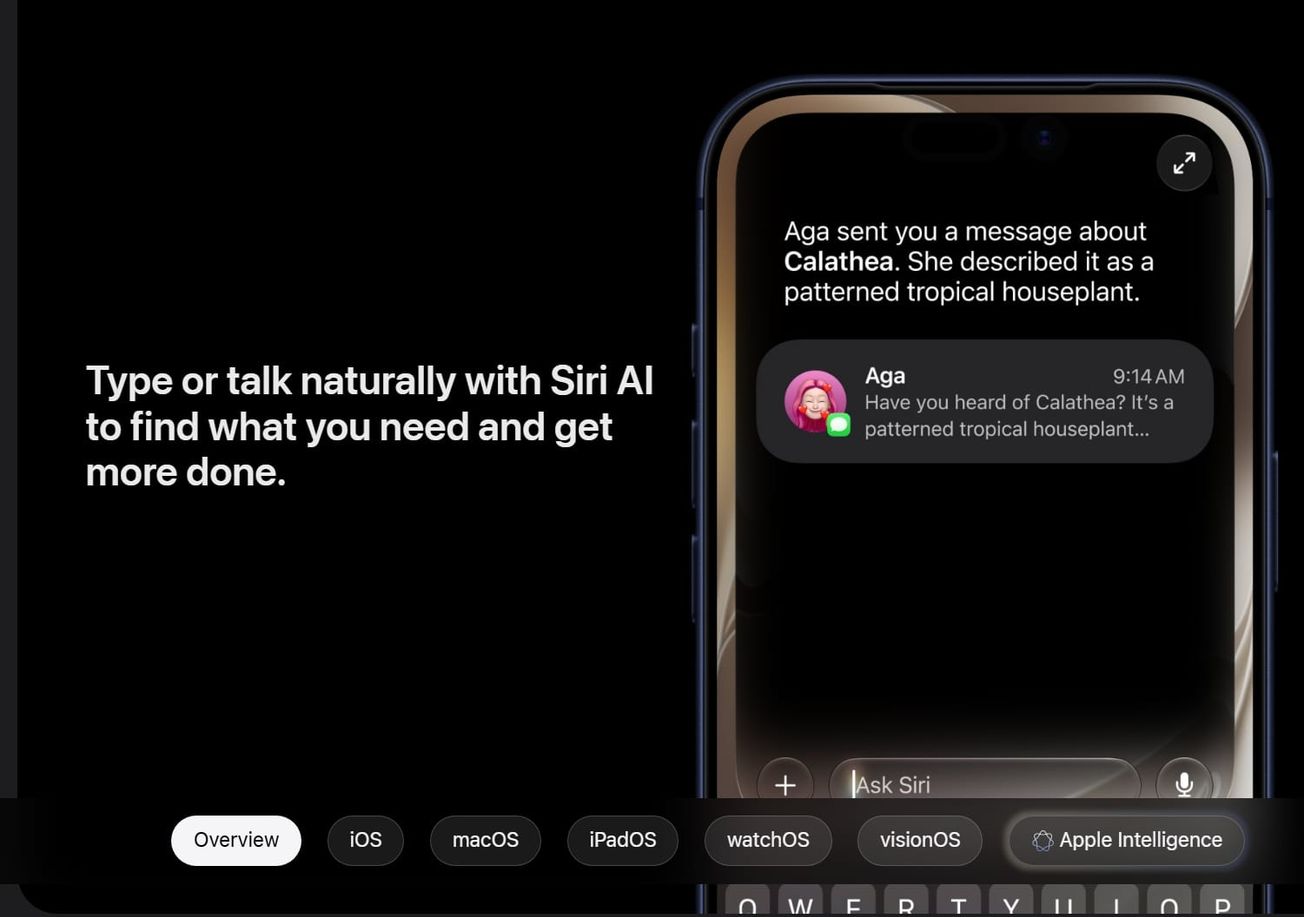

The most important thing Apple announced this week was not a product. It was a surrender. Not a surrender to a competitor. Not a surrender to regulators. Not a surrender to Wall Street. A surrender to the simple reality that the smartphone itself is beginning to show its age.
That may sound absurd. More than a billion people still carry iPhones. Consumers spend hours every day staring at screens. Entire industries remain dependent upon mobile applications. The smartphone is still the most successful consumer technology product ever created. But that is precisely why Apple's announcement matters.
When a company that built one of the most influential products in human history begins redesigning the way people interact with that product, it is worth paying attention. What Apple unveiled this week was presented as a dramatically improved Siri. Most coverage has focused on artificial intelligence, voice commands and software features. Those stories miss the larger point.

Apple is not trying to build a better smartphone experience. Apple is trying to build a world where users need smartphones less. The distinction is enormous.
For nearly 20 years, the smartphone has been organized around a simple concept. Open an application. Find information. Complete a task. Repeat. We have become so accustomed to the process that we no longer notice it. Need directions? Open an app. Need a restaurant? Open an app. Need to communicate? Open an app. Need to book a flight, order dinner, buy tickets, read the news or check the weather? Open another app.
We have spent two decades learning how machines want us to behave.

Artificial intelligence changes that equation. The promise of AI is not that it makes phones smarter. The promise is that it removes the need for users to navigate the phone at all. Instead of opening applications, people will make requests. Instead of searching, they will ask. Instead of managing information, they will delegate the management of information.
The screen becomes less important. The assistant becomes more important. That is where Apple believes the future is heading. And I think Apple is right.
The biggest mistake people make when evaluating technology is assuming tomorrow will simply be a faster version of today. History suggests otherwise. The personal computer did not simply improve the typewriter. It replaced it. The internet did not simply improve newspapers. It transformed the economics of information. The smartphone did not simply improve the personal computer. It fundamentally changed where and how people accessed technology.

Now artificial intelligence is beginning to challenge the smartphone's central role in daily life. Not today. Not next year. But eventually. The companies that understand this are no longer competing to build better devices. They are competing to build better assistants.
That is why Apple, Google, Microsoft, OpenAI and nearly every major technology company are pouring billions of dollars into artificial intelligence. They understand something much of the public does not yet fully appreciate. The next great technology platform may not be a device. It may be an assistant.
Think about what that means. The winners of the smartphone era became some of the most powerful companies in human history because they controlled access to applications. The winners of the AI era may control access to information itself. That is a much bigger prize.

For years, Siri was little more than a technological novelty. Users joked about it. Many ignored it. It could set alarms, place calls and answer simple questions, but it rarely felt intelligent. While competitors raced ahead, Siri often seemed trapped in another era.
Apple's challenge today is not merely technical. It is existential. The company that perfected the smartphone now faces a future in which the smartphone may no longer be the center of the digital universe.
That is why this week's announcement felt different. There was an urgency behind it. Apple understands that artificial intelligence is not another feature. It is not another app. It is not another product category. It is the next user interface.

The keyboard was a user interface. The mouse was a user interface. The touchscreen was a user interface. Conversation may be next.
If that prediction proves correct, future generations will view today's app-centric world the same way modern consumers view filing cabinets and fax machines — useful technologies that eventually became unnecessary.
The irony is remarkable. Nearly 20 years ago, Apple introduced the device that transformed modern computing. This week, the company effectively acknowledged that the future of computing may require people to spend less time interacting with that very device. That is why Apple's announcement deserves attention far beyond Silicon Valley.

This is not a story about Siri. It is not even a story about Apple. It is a story about what happens when one of the world's most successful companies begins preparing for a future beyond the product that made it famous.
The age of the smartphone is not over. But for the first time, we can see what comes next. And Apple just placed its bet.

Howie's daily column is powered by Lyric Kitchen Bar in Downtown Duluth. Contact Howie at HowieHanson@gmail.com