
Howie's daily column is powered by Lyric Kitchen Bar in Downtown Duluth. Contact Howie at HowieHanson@gmail.com
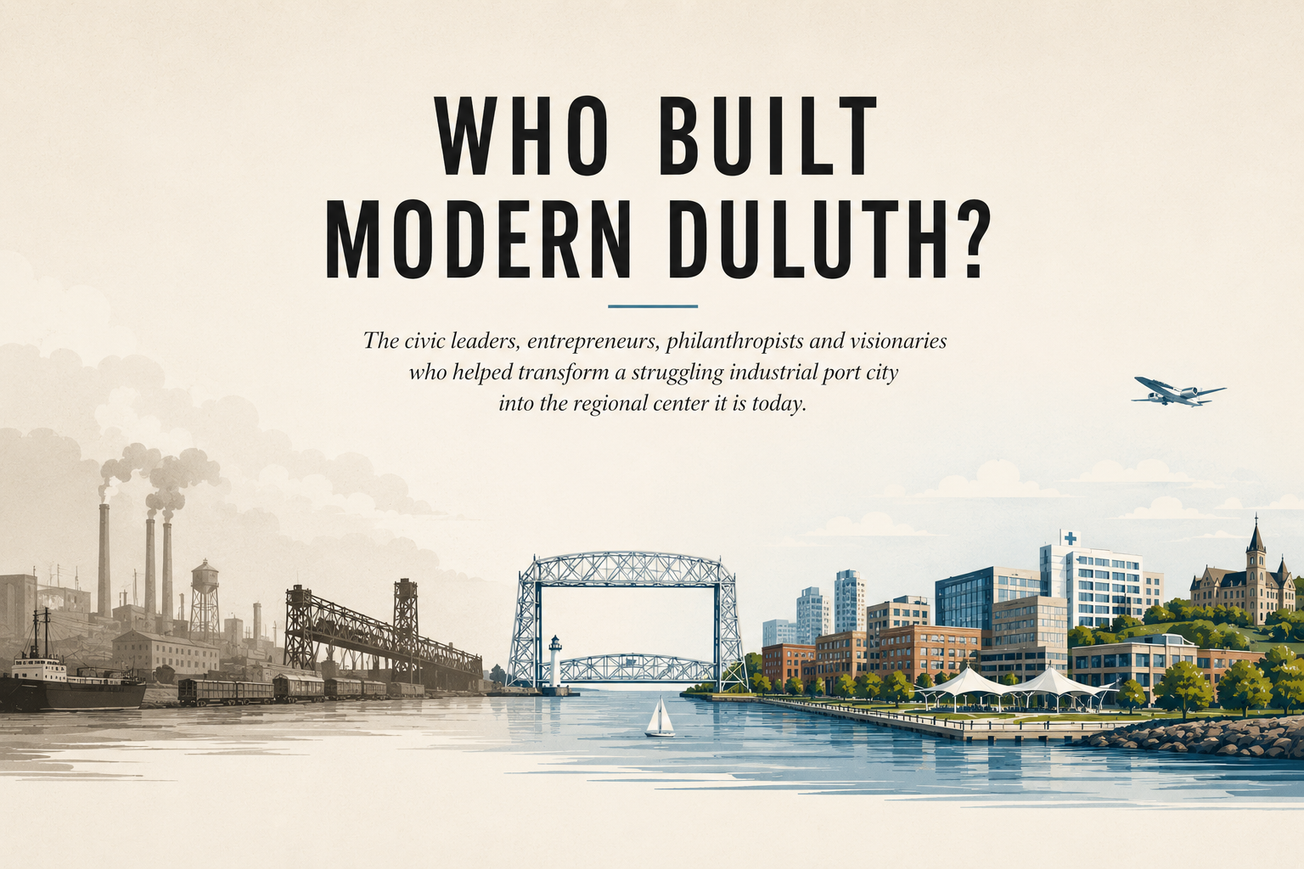
Fifty years ago, Duluth stood at a crossroads. The city's industrial economy, built on shipping, manufacturing, railroads and natural resources, faced mounting challenges. Population growth had stalled. Major employers were disappearing.
Like many Great Lakes cities, Duluth faced difficult questions about its future. The answer would not come from a single mayor, business leader or civic organization. It would emerge through the collective efforts of visionaries who saw possibilities where others saw decline.
This list is not a ranking of the most famous Duluthians, the wealthiest residents or the most powerful elected officials. Instead, it seeks to answer a different question: Who did the most to transform Duluth from a struggling industrial port city into the tourism, healthcare, education, outdoor recreation and business center it has become today?
The individuals on this list built companies, launched institutions, guided public policy, supported philanthropy and helped create the modern identity of Duluth. Together, they helped write one of the most remarkable civic comeback stories in the Upper Midwest.


Few individuals have exerted a greater influence on modern Duluth than Labovitz. As a businessman, civic leader and philanthropist, Labovitz helped shape the economic and cultural foundation upon which much of contemporary Duluth was built. His impact extended through retailing, real estate development, higher education, philanthropy and community leadership, touching nearly every aspect of civic life.
The Labovitz family's influence on retailing became legendary through Maurices, which grew from a small women's clothing store founded in downtown Duluth into one of the nation's most successful specialty apparel chains. The company expanded across the United States while maintaining deep roots in Duluth. Maurices demonstrated that a nationally recognized retail brand could be built and managed from northeastern Minnesota, creating jobs and economic opportunity while enhancing the city's reputation as a center of business innovation.
Labovitz also understood that successful communities require strong institutions. His support for education, healthcare, cultural organizations and civic initiatives helped strengthen the city's social infrastructure. Whether through philanthropy, board leadership or community partnerships, he consistently invested in projects that improved the quality of life for future generations.
Perhaps his greatest contribution was helping instill confidence in Duluth itself. At a time when many communities were losing corporate headquarters and struggling to attract investment, Labovitz demonstrated that major enterprises could thrive in the Northland. His legacy remains visible in the businesses, institutions and community organizations that continue to shape Duluth today.
If Labovitz helped establish Maurices, Goldfarb helped transform it into a national powerhouse. During his decades of leadership, Maurices grew into one of America's largest women's specialty retailers while maintaining its headquarters in Duluth. Few executives have had a greater impact on the city's private-sector economy.
Goldfarb's success came during a period when many corporations were abandoning smaller cities in favor of major metropolitan areas. Under his leadership, Maurices continued to expand nationally while remaining firmly committed to Duluth. The company provided thousands of jobs and became one of the city's most important economic engines.
Beyond Maurices, Goldfarb emerged as one of the most respected voices in the regional business community. He served on corporate boards, advised nonprofit organizations and participated in economic development initiatives that helped shape Duluth's future. His influence often occurred quietly, away from public attention, but his counsel was widely sought by civic and business leaders.
Goldfarb helped prove that Duluth could compete in a modern, knowledge-based economy. His leadership strengthened confidence in the community and reinforced the idea that world-class companies could succeed while remaining headquartered on the shores of Lake Superior.

- Jeno and Lois Paulucci
Few names are more closely associated with civic generosity than Jeno and Lois Paulucci. Their influence extends across the city through parks, public spaces, charitable giving and countless community improvements that continue benefiting residents decades later.
Jeno Paulucci built one of America's great food-industry success stories, transforming a small business venture into an international enterprise. Rather than distancing himself from his hometown, he chose to invest heavily in Duluth's future. Lois became an equally important partner in that effort, supporting numerous philanthropic and civic initiatives.
Their most visible contribution may be Bayfront Festival Park, which transformed a portion of the waterfront into one of the city's most beloved public gathering spaces. The park hosts concerts, festivals and community celebrations that attract thousands of residents and visitors each year.
The Pauluccis understood that quality of life matters. Their investments helped make Duluth more attractive to families, businesses and visitors alike. Their legacy remains woven into the city's physical landscape and civic identity.

Ness inherited a city facing significant challenges and left office having helped redefine its future. During his tenure as mayor, Ness championed a vision of Duluth centered on growth, innovation and opportunity.
One of his most important accomplishments involved addressing longstanding financial challenges, such as the unfunded $300-plus million retiree health care obligation, that threatened the city's stability. Difficult decisions regarding budgets and public spending helped position Duluth for future investment and growth. Those decisions were not always popular, but they provided a stronger foundation for the years ahead.
Ness also became one of Duluth's most effective ambassadors. He promoted the city nationally, encouraged entrepreneurship and worked to attract young professionals. His message was simple: Duluth was not merely surviving; it was becoming a destination for talent, investment and innovation.
Even after leaving office, Ness remains one of the city's most influential civic leaders. His relationships across government, healthcare, business and education continue to shape discussions about Duluth's future.

Modern Canal Park begins with Fedo. Long before waterfront redevelopment became commonplace, he recognized the potential of Duluth's shoreline and championed efforts to transform underutilized industrial land into a thriving destination.
The redevelopment initiatives launched during his administration created opportunities for private investment that would eventually reshape the city's economy. Hotels, restaurants, attractions and public spaces followed, creating one of the most successful waterfront districts in the Midwest.
Fedo's vision required persistence. Many residents questioned whether tourism could ever become a major economic driver. Yet he continued advocating for projects that connected residents and visitors with Lake Superior and the harbor.
Today, Canal Park stands as one of the defining features of modern Duluth. Millions of annual visitors experience a waterfront district that owes much of its existence to Fedo's leadership and long-term vision.

Borg helped build more than a successful restaurant company. He helped create a cornerstone of modern Canal Park and Duluth's visitor economy.
As co-founder of Grandma's Restaurants, Borg recognized the growing potential of waterfront tourism and invested accordingly. Grandma's became one of Duluth's most recognized brands, drawing visitors from across the Midwest while helping establish Canal Park as a destination.
The company's success encouraged additional private investment in the district and demonstrated that locally owned businesses could thrive by embracing Duluth's unique identity. Grandma's became synonymous with hospitality, community and the North Shore experience.
Through decades of leadership, Borg helped strengthen the tourism economy that now supports thousands of jobs and generates significant economic activity throughout the region.

Few individuals have promoted Duluth more effectively than Keenan. Through Grandma's Marathon, he created an event that introduced countless visitors to the city while generating millions of dollars in annual economic activity.
What began as a modest road race evolved into one of North America's premier marathons. Under Keenan's leadership, the event grew in stature and became an annual tradition that draws participants from around the world.
The marathon's impact extends well beyond race weekend. Thousands of runners return to Duluth repeatedly, bringing family members, supporting local businesses and becoming ambassadors for the community.
Keenan's achievement demonstrates how a single idea, pursued with persistence and vision, can reshape a city's reputation and economic future.
- Monnie and Erv Goldfine
The Goldfine brothers were among the earliest champions of a tourism-based future for Duluth. Through business leadership, civic involvement and community advocacy, they helped position the city for long-term success.
Monnie became one of Duluth's most effective promoters, championing projects ranging from Spirit Mountain to waterfront development. His ability to bring people together around common goals helped advance numerous initiatives that remain important today.
The brothers understood that Duluth's greatest assets were its natural beauty, harbor and unique character. Their efforts helped shift the community's focus toward tourism, hospitality and visitor experiences.
Many attractions and institutions that now define Duluth's visitor economy benefited directly from the Goldfines' leadership, support and vision.
Few individuals have influenced both healthcare and higher education in Duluth as profoundly as Sister Hofer. Her leadership helped guide major institutional changes during critical periods of growth and transformation.
Through her work with St. Mary's Medical Center and later healthcare partnerships, Sister Kathleen helped strengthen one of the sectors that now serves as a cornerstone of the regional economy. Her ability to bridge mission, leadership and organizational change proved invaluable during periods of significant transition.
Her influence also extended to The College of St. Scholastica, where she served in key governance and leadership roles. Her commitment to education helped strengthen one of Duluth's most important institutions and contributed to workforce development throughout the region.
Sister Kathleen's legacy reflects the power of servant leadership. Through faith, vision and collaboration, she helped build institutions that continue serving thousands of residents throughout northeastern Minnesota.
Stender's contributions to Duluth span education, business, philanthropy and civic leadership. Few individuals have influenced as many sectors of community life over such an extended period.
As the first lay president of The College of St. Scholastica, Stender guided the institution during a period of growth and modernization. His leadership helped strengthen academic programs, expand facilities and elevate the college's profile throughout the region.
Stender later became a leading figure in the business community through Labovitz Enterprises, ALLETE and numerous civic organizations. His leadership helped strengthen relationships between the private sector, higher education and community institutions.
Like many of the individuals on this list, Stender's greatest contributions often occurred behind the scenes. Through thoughtful leadership, strategic vision and a lifelong commitment to community service, he helped shape the modern Duluth that residents know today.
The modern Duluth enjoyed by residents and visitors did not emerge by accident. It was built by people willing to invest their talent, resources and leadership in a city they believed could become more than its industrial past.
Some built businesses. Others guided public policy. Some created events, strengthened institutions or invested philanthropic resources. Together, they transformed Duluth into a city known for tourism, healthcare, higher education, entrepreneurship and quality of life.
History may debate the precise order of these rankings. What is far more difficult to debate is their collective impact. Without these individuals, the story of modern Duluth would be dramatically different.