
Howie is Minnesota’s Columnist, writing about power, money, sports and civic life across the state. His daily column is sponsored by Lyric Kitchen . Bar of Duluth.
When a new professional sports franchise appears in a community, the public explanation is usually simple: someone bought a team. That's not what happened in Duluth.
The Minnesota Monsters — a new Arena Football One franchise that will open training camp March 23 and play its home games at beautiful Amsoil Arena — did not begin as a business purchase. It began as a sponsor believing in an idea.
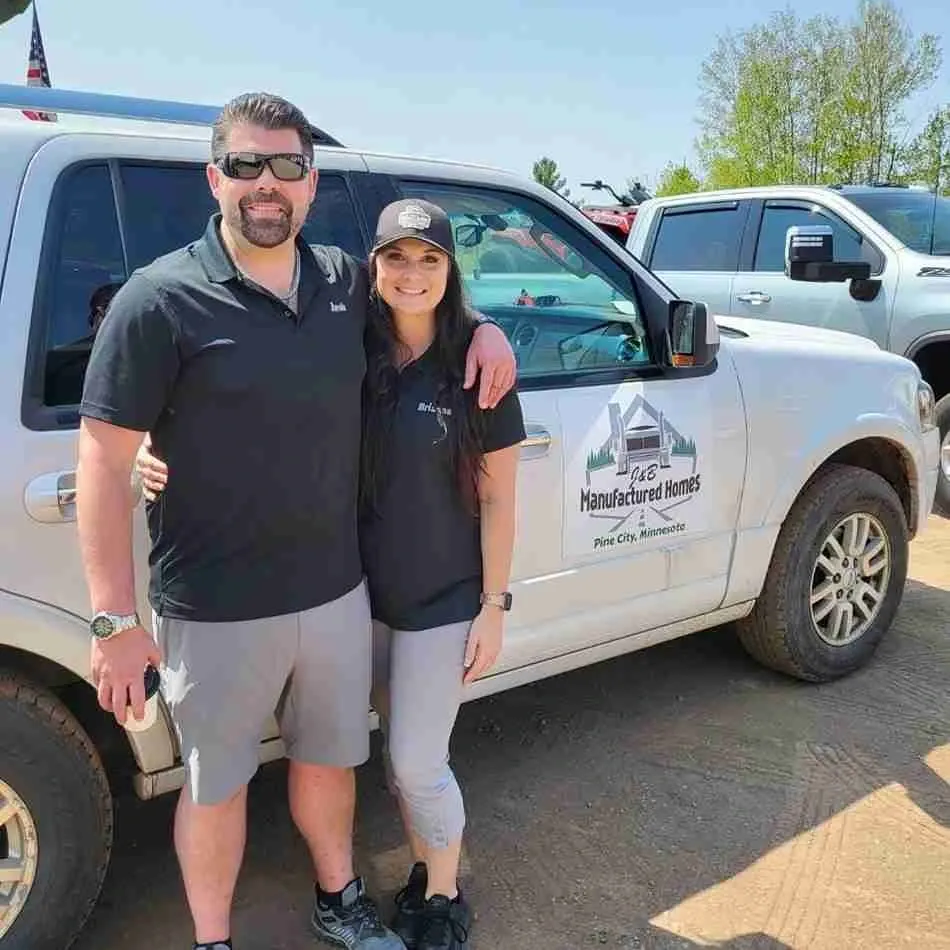
Jacob and Brianna Lambert were two of several Northland business leaders who stepped forward last year to support an arena football concept that had taken root in Duluth, as their company, J&B Manufactured Homes, joined other sponsors willing to help give the sport a foothold in the region.
“Like many in our business community, I believed in the idea,” my close, personal friend Jake Lambert wrote in a detailed report distributed during the Minnesota Monsters’ kickoff event this week in Duluth. “I believed in what it could mean for this city.”
Lambert’s professional life has largely been spent building businesses in transportation, manufacturing and development ventures. Ownership of a sports franchise was not part of his original plan.
But the opportunity — and the responsibility — began to grow.
“I am a businessman. I understand risk. I also understand responsibility. When you give your word, you honor it. When people put their trust in you, you protect it,” he wrote.
Lambert also brought with him the instincts of someone who spent much of his younger life competing in athletics before moving into the business world. Arena football, with its compressed field, relentless pace and close proximity between players and fans, rekindled something he recognized immediately.
“I have been an athlete my entire life,” Lambert wrote. “Competition has always been part of my DNA. The flicker of childhood passion turned into a roaring furnace. I realized I did not just want to support arena football. I wanted to build it the right way.”

That decision led Lambert to take a step few local sponsors ever consider. He acquired the arena football rights to the Duluth market and began building a professional franchise from the ground up.
The next move was aligning the new organization with Arena Football One, a league attempting to bring stability back to a sport that has experienced repeated boom-and-bust cycles since the original Arena Football League launched in 1987. The indoor version of the game has produced NFL talent — most famously quarterback Kurt Warner — but it has also struggled at times with league fragmentation and financial instability.
Lambert believes the AF1 model is designed to restore credibility.
One of the franchise’s first practical decisions involved securing a home venue that matched Lambert’s vision for a professional operation. The search quickly led to Amsoil Arena, the modern downtown Duluth facility best known as the home of University of Minnesota Duluth hockey.


“We will play all home games at Amsoil Arena,” said Lambert. “It is intimate. It is electric. It is built for this brand of football.”
Arena football transforms a hockey rink into a tight, high-energy football environment. The glass is removed, padded walls surround the playing surface and artificial turf is rolled across the arena floor. The field measures 50 yards long with rebound nets behind the goalposts, creating a fast, unpredictable style of play where scoring can happen almost instantly.
“We play on a rink,” Lambert wrote. “We take down the glass. We pad the walls. We roll turf over the cement floor. And then we unleash what we proudly call the fastest game on turf.”
Lambert believes the style of play fits naturally in northern Minnesota, where sports culture has long been shaped by hockey’s speed and physicality.

“This is high-scoring, fast-paced football,” Lambert wrote. “Fifty yards of controlled chaos. Rebound nets. A real kicking game. You can score from anywhere on the field. It feels like hockey and football had a collision in the best possible way.”
The identity he envisions for the franchise reflects that blend of toughness and regional pride.
“Minnesota understands grit,” he wrote. “Minnesota understands toughness. That is why our identity is simple. Minnesota Tough. Monster Strong.”
While the public unveiling of the Minnesota Monsters only occurred recently, much of the work required to launch a professional franchise has been happening quietly for months. Lambert hired Meadow Lemon as general manager, assembled a coaching staff and began recruiting players for the inaugural roster.
Those efforts now shift into a new phase.

On March 23, players will begin arriving in Duluth for the organization’s first training camp — the moment when the franchise stops being a concept and begins becoming a team. Training camp is where systems are installed, rosters begin to take shape and the personality of an organization starts to emerge.
For Lambert, that moment carries particular significance.
“For me, this is not a hobby,” Lambert wrote. “It is not a vanity project. It is a promise. A promise that we will operate with integrity. A promise that players and staff will be treated with respect. A promise that sponsors will see value. A promise that fans will get an experience worth their time and money.”
Lambert also understands the complicated history of arena football. The sport has produced electrifying entertainment and memorable players, but it has also endured instability as leagues formed, collapsed and reorganized.
The current moment, he believes, represents an opportunity to build something more durable.

“The Arena One Football League is committed to restoring arena football to the energy and credibility it had in the days when stars like Kurt Warner rose from the indoor game to the highest level,” Lambert wrote. “We are serious about doing this right.”
Whether the Minnesota Monsters ultimately succeed will depend on factors that extend far beyond ownership enthusiasm — fan support, sponsorship stability and the ability to become a lasting part of Duluth’s sports culture. Lambert knows that.
But as training camp approaches and the first players prepare to arrive, he believes the foundation is finally beginning to take shape.
“There is a buzz in the air right now,” he wrote. “You can feel it. Something special is building.”