Table of Contents
I've covered the Vikings long enough to know that the most important stories in training camp are rarely the ones people are talking about in June. Every summer brings excitement, predictions and a handful of players who supposedly look better than ever. Then September arrives, the games start counting, and reality takes over.
I've watched enough Vikings training camps to know that championships are not built on offseason optimism. They are built on answers. Teams that contend answer difficult questions before opening day. Teams that spend January cleaning out their lockers usually discover too late that they never solved them.
The Vikings enter the 2026 season with one of the most talented rosters they have assembled in years. There are fewer obvious holes than there were a year ago. The offensive line appears stronger. The defense remains aggressive and disruptive under Brian Flores. Justin Jefferson is still capable of changing a game with a single route. Yet despite all of that, the most important question facing the organization is the same one that has followed this franchise for most of its history.
Who is the quarterback? The names change. The question never does.

I've watched Vikings fans convince themselves that Tommy Kramer was the answer. Then Wade Wilson. Then Warren Moon. Then Randall Cunningham. Then Daunte Culpepper. Then Brett Favre. Then Teddy Bridgewater. Then Kirk Cousins. Some enjoyed success. Some delivered unforgettable moments. A few came painfully close to taking Minnesota to the Super Bowl. None ultimately finished the job.
Now the organization finds itself standing at another crossroads.
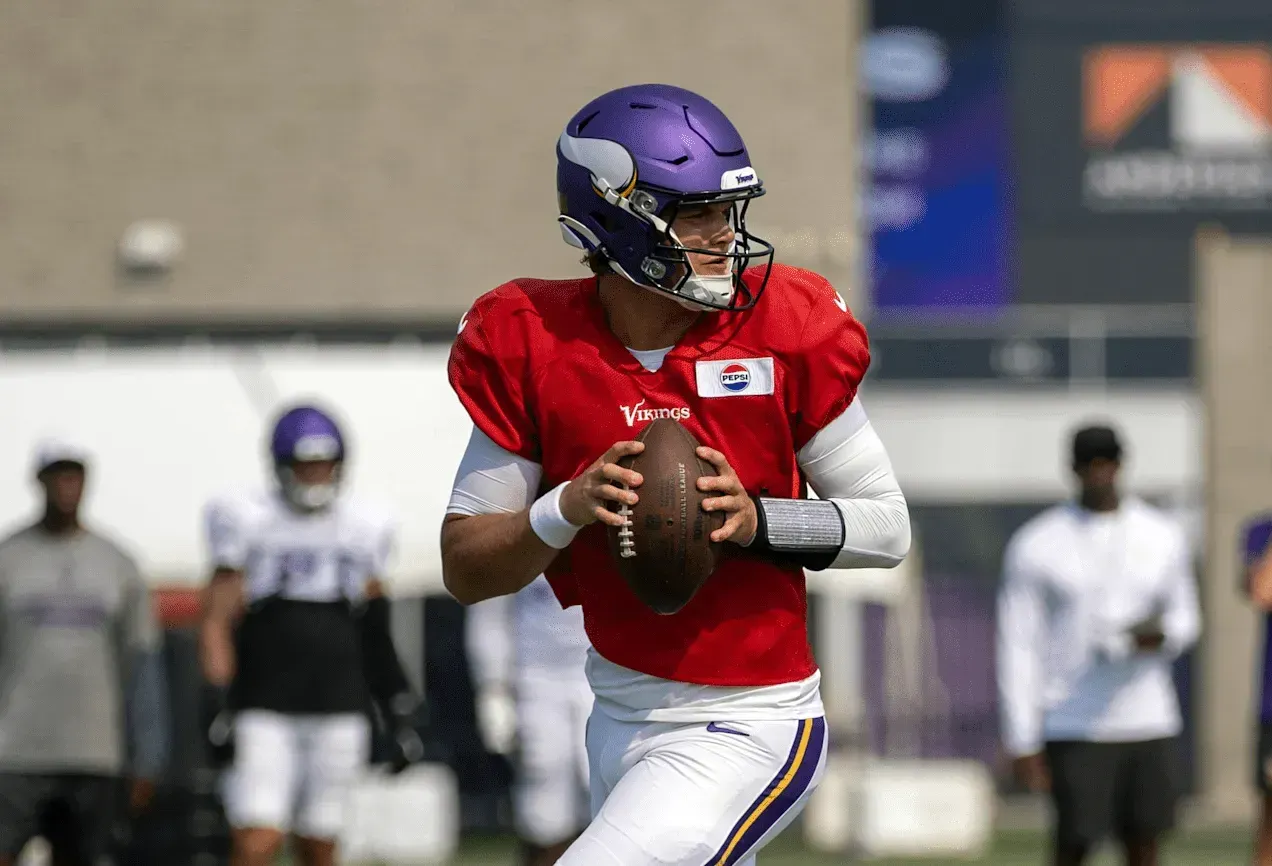
Kyler Murray wasn't acquired to provide leadership in the quarterback room. He wasn't brought here to mentor J.J. McCarthy. He was acquired because the Vikings believe this roster is capable of winning immediately and because they wanted a quarterback with a proven NFL résumé. McCarthy, meanwhile, represents the future. At least that is the plan. What happens in training camp, starting at the end of July, in Eagan may determine whether the future arrives sooner than expected.
If Murray wins the job, the Vikings will move forward with an experienced veteran they believe can compete in a difficult NFC. If McCarthy forces the coaching staff into a difficult decision, the franchise may discover it is further ahead than expected. Nothing else that happens in training camp will matter more.

My buddy Fred Friedman wonders if Murray was let go by Phoenix for a reason and said, "Watch what Harrison Smith decides to do.
"If Harrison thinks the team is a legitimate contender, he will come back to help out. If he does not, he will retire to his home in Knoxville," said Friedman. "His appraisals of talent and the Purple's immediate potential are far more informed than all the fans and journalists combined."
The second battle involves a position group that has frustrated Vikings fans for much of the last decade. Too often, promising seasons have unraveled because the offensive line could not hold up against elite competition. The Vikings have spent years trying to solve that problem through draft picks, free agents, coaching changes and scheme adjustments. Some solutions worked temporarily. Others failed entirely. This year's group arrives carrying more promise than most.
Christian Darrisaw and Brian O'Neill provide stability at tackle. Donovan Jackson arrives with first-round expectations. Will Fries was brought in to strengthen the interior. The Vikings are betting heavily that they have finally assembled a unit capable of protecting the quarterback and controlling games at the line of scrimmage. If they are right, the offense becomes significantly more dangerous. If they are wrong, Minnesota may once again find itself searching for answers in the middle of the season.

The third battle may not generate the same headlines, but it will become important by October. Every defense that faces the Vikings begins with the same objective: limit Jefferson's opportunities. Defensive coordinators know they are not going to stop him completely. The goal is to make somebody else beat them. Jordan Addison has already proven he can capitalize on that attention.
The next question is whether a reliable third option emerges. Jauan Jennings was signed for a reason. Tai Felton has attracted attention during offseason workouts. Dillon Bell is attempting to force his way into the conversation. The Vikings don't necessarily need another star receiver. They need a player who consistently wins one-on-one matchups when defenses commit extra resources elsewhere. That role has often determined whether good offenses become great ones.
Defensively, much of the focus belongs on Dallas Turner. Flores has demonstrated repeatedly that he can manufacture pressure through scheme, disguise and personnel packages. What separates elite defenses, however, is the presence of pass rushers who can win without assistance. Andrew Van Ginkel has already established himself as one of the NFL's most versatile defenders.

Turner now faces the challenge of turning potential into production. The physical tools are obvious. The expectations are equally obvious. The Vikings invested heavily in him because they believe he can become a cornerstone defender. This training camp represents an important step in that process. Minnesota doesn't need flashes. It needs consistency. It needs evidence that Turner is ready to become a player opposing offenses must account for every week.
The final battle involves Caleb Banks, and in many ways it speaks directly to how championship defenses are constructed. The NFL has always valued pass rushers, but interior pass rushers occupy a category of their own. When pressure comes directly up the middle, quarterbacks lose their ability to step comfortably into throws. Entire offensive game plans change.
The Vikings drafted Banks because they believe he possesses those rare traits. The organization saw enough athletic ability, enough explosiveness and enough upside to make a significant investment. Training camp won't provide a final verdict, but it should provide the first meaningful clues. If Banks develops into the disruptive interior force the Vikings envision, the entire defense benefits.
What strikes me most about this roster is not how many questions remain. It's how few remain, and that's a good sign.

A year ago there were uncertainties throughout the lineup. This year the concerns are concentrated in a handful of important areas. The foundation appears stronger. The expectations are higher. The Vikings believe they have assembled a roster capable of competing with the best teams in the conference. The challenge now is proving it.
"The Vikings need an interior rush and the interior offensive line to prevent the rush," said Friedman. "Our guards and center have been below average for over a decade. The draft failures outside of Jefferson have been epic. Either a quarterback delivers points behind decent protection, or I am going for Sunday afternoon walks by early October. Companions are welcome."
I've seen talented Vikings teams before. I've seen teams that looked terrific on paper. I've seen teams that won training camp headlines and offseason championships. What I haven't seen is a Vikings team raise the Lombardi Trophy.
Training camp won't determine whether the Vikings win a Super Bowl. It will determine whether the questions that have haunted this franchise for decades have finally been answered. And until those answers arrive, every prediction, every projection and every expectation remains exactly that — a projection.