Duluth voters should approve both Duluth Public Schools operating referendum questions on Nov. 3. The district’s finances are strained, its unrestricted reserves are dangerously thin, and another sequence of large reductions would reach more deeply into classrooms, student services and the people who deliver them.
The financial evidence supporting the referendum is not clean or comforting. Duluth Public Schools finished fiscal 2025 with General Fund expenditures and other financing uses nearly $15 million above its final budget, its fund balance declined by $11.5 million, and auditors repeated material weaknesses involving account reconciliations and financial-statement preparation. The School Board then approved a 2026-27 budget projecting another deficit of approximately $3.9 million after the district identified more than $4.2 million in reductions and reallocations.
Those weaknesses cannot be dismissed, but neither will they disappear if the referendum fails. A no vote would not restore depleted reserves, reduce special education costs, lower insurance premiums or make transportation less expensive. It would require the district to attack the same structural deficit with fewer resources and less time, increasing the likelihood that the next reductions would fall directly on teachers, support staff, class sizes and programs.
The two questions represent a substantial commitment. Question 1 would authorize $438 per pupil in the first year and $933 per pupil beginning in the second year. Question 2, which would take effect only if Question 1 passes, would add $382 per pupil. Both authorizations would continue for 10 years and increase annually with inflation.
Using the district’s projected enrollment as a working measure, the questions could initially generate approximately $6.7 million, increasing to a base of about $10.75 million in the second year. Before inflation and enrollment changes, that produces a working estimate of roughly $103.5 million over the authorization period. Voters should be shown the district’s official combined 10-year calculation, but the size of the request should be acknowledged plainly: This is a major local investment, not a small one disguised by monthly figures.
The district estimates that Question 1 would cost approximately $8 per month on a $300,000 home and Question 2 would add approximately $7. Existing building debt is scheduled to decline, which is expected to moderate the second-year change on tax bills. That does not make the operating levy free. It means voters are being asked to preserve part of a tax burden that otherwise would recede and redirect that household capacity toward daily school operations.
That trade is worthy of support because the district’s operating problem is immediate and documented. The fiscal 2025 audit reported that General Fund expenditures and other financing uses exceeded the final budget by nearly $15 million, largely because of special education and transportation costs. The district entered a new 10-year transportation contract that increased fuel and employee costs, while special education continues to impose expenses that are not fully covered by state and federal revenue.
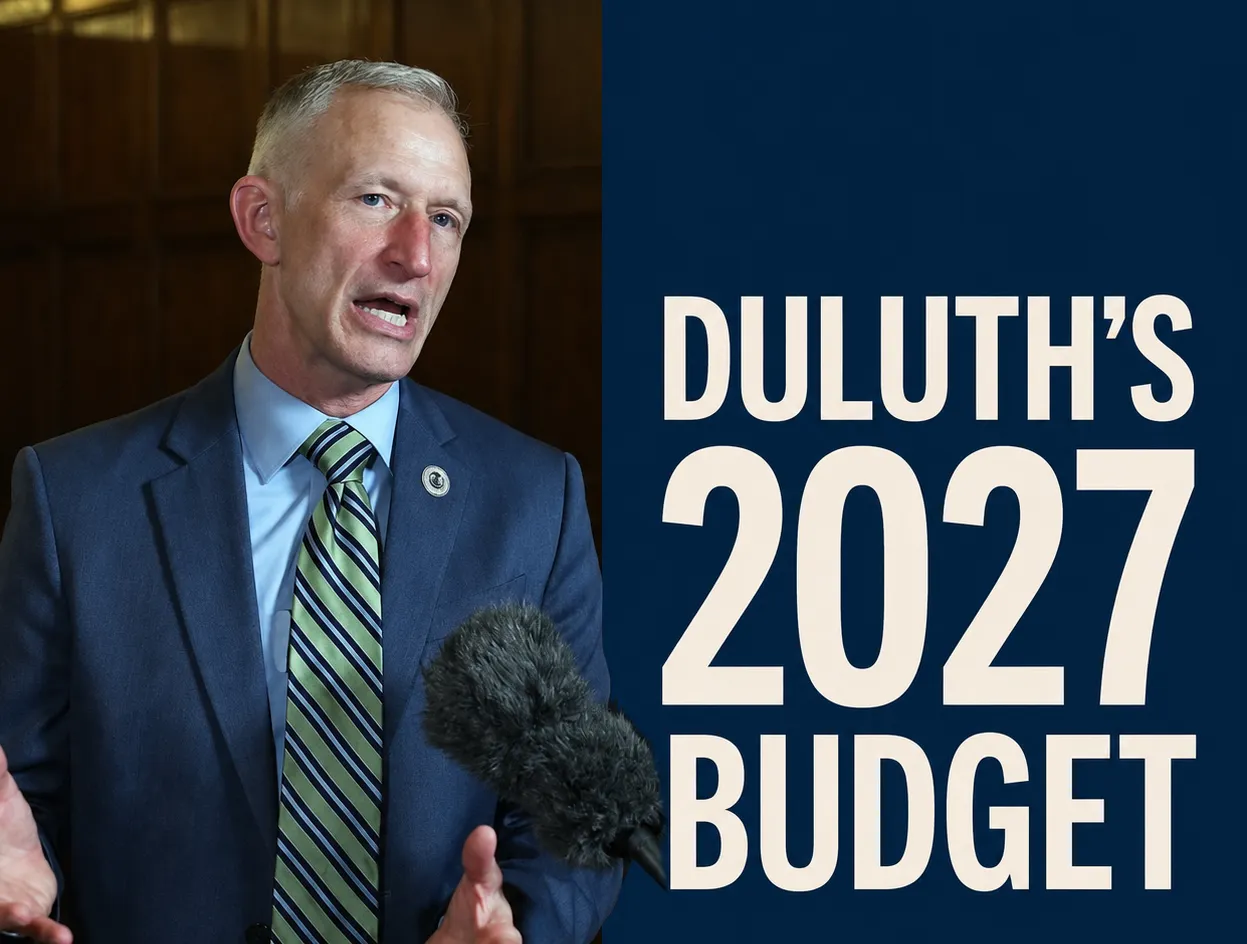
Asked about the expenditure variance, Superintendent John Magas wrote: “The district continuously monitors expenditures against our budget to ensure financial stability. The variances noted in the 2025 audit reflect the complexities of balancing rising operational costs with student needs, including special education, insurance and transportation requirements.”
That response does not provide a line-by-line reconciliation, which the district still should publish. It does, however, identify cost pressures consistent with the audit and with the district’s current budget reporting. Special education, insurance and transportation are not optional services that can be eliminated without consequences for students or without violating contracts and legal obligations.
The district also must account for the deterioration of its 2025-26 projection from a planned $249,000 surplus to a projected $4.1 million deficit. That reversal is too large to explain only through generalities, and taxpayers deserve a schedule showing each revenue change, expenditure increase and revised assumption.
Magas wrote: “The shift in our budget projections—from a planned $249,000 surplus to the current $4.1 million deficit projection—is driven by several factors, including inflationary pressures, adjustments in state and federal funding, and unexpected shifts in operational costs, such as those listed above.”
The missing reconciliation remains an accountability issue, but it does not erase the deficit. It establishes the urgency of improving the district’s forecasting while giving administrators and the School Board enough financial room to make responsible adjustments. Requiring better financial reporting and supporting sufficient operating revenue are complementary positions, not contradictory ones.
The audit findings require the same distinction. Duluth received an unmodified audit opinion, meaning its financial statements were fairly presented in all material respects after the necessary adjustments. The audit did not report theft, fraud or illegal spending, but it identified material weaknesses involving unreconciled accounts, year-end adjustments and the district’s reliance on its outside auditor to prepare generally accepted financial statements.
Magas wrote: “We take all audit findings seriously and have been working to address identified weaknesses. Correcting these involves improving internal controls regarding account reconciliation and financial statement preparation. MDE receives a corrective action plan for any findings. Material weaknesses are common throughout the state as most schools never have enough staff.”
The weaknesses cannot be minimized because they may occur elsewhere. Repeated findings must be corrected, deadlines should be public, and the School Board should receive regular reports documenting progress. But stronger internal controls will not generate the millions of dollars needed to close the structural gap, just as new revenue by itself will not correct weak controls. Duluth needs both.
The district’s credit position also requires a measured reading. Moody’s maintained Duluth’s A3 underlying rating and Aa1 state-enhanced rating in October 2025. Those are not the ratings of an insolvent school system, but Moody’s also noted that available fund balance remained below the firm’s 30% benchmark. The district can meet its obligations and continue borrowing, but its day-to-day operating position is stressed and its unrestricted flexibility is extremely limited.
The referendum projections should therefore be judged against the scale of the problem. Magas wrote: “The revenue projections for the referendum are based on conservative enrollment estimates to ensure fiscal responsibility. The figures mentioned in our presentations have prioritized local tax impact analysis to provide clarity for voters. (See Baird's grid. 1st year $3,900,000 and 2-10 $8,300,000.)”
The Baird figures cited by Magas appear to address Question 1 rather than the combined value of both questions. The district should publish one table showing the first-year revenue, later annual revenue, inflation assumption, enrollment assumption and complete 10-year total for each question. Even without that final presentation, the available figures show that the referendum is sized to confront a recurring multimillion-dollar gap rather than finance an unrelated expansion.
The district has reported approximately $12 million in reductions over three years, representing about 8% of expenditures. Its 2026-27 plan included a 16% reduction at the administrative level and reductions of approximately 5% at school sites, affecting 48 teaching and support positions. Those are not theoretical efficiencies. They are evidence that the district has already begun reducing operations and that the remaining choices will become progressively more damaging.
Magas offered the clearest description of what passage would and would not accomplish: “The proposed referendum is intended to be a stabilization plan, not an immediate cure-all, as we work to right-size district operations. Even with the passage of the levy, we must continue to identify efficiencies. Currently, we are evaluating all programs, services, and staffing models, with an emphasis on protecting student learning priorities. Since we have already cut $12 million in the past three years, we will need to consider more serious options as we implement deeper reductions. Any specific reductions considered for 2027-28 will be part of our public board budget discussions.”
That is not a promise that new revenue will make every problem disappear. It is an acknowledgment that passage buys stability, protects more of the classroom and gives the district time to align staffing and services with enrollment and recurring revenue. The continuing reductions are not evidence that the referendum is unnecessary; they show that the district is attempting to combine new revenue with lower spending rather than place the entire burden on taxpayers.
Question 1 deserves approval because it addresses the immediate operating deficit and reduces pressure for another round of abrupt classroom reductions. Question 2 deserves approval because the district’s problem extends beyond a single fiscal year. Approving only the first question would provide partial stabilization while leaving the district closer to the same financial edge when costs rise again.
The alternative carries consequences that should not be treated as a negotiating tactic. Once a district enters statutory operating debt, it must submit a multiyear recovery plan to the Minnesota Department of Education, operate under increased state scrutiny and eliminate its negative balance. State oversight imposes financial discipline, but it does not arrive with new money to protect programs or employees.
Magas wrote: “The warning regarding "significant state oversight" refers to the regulatory requirements mandated by Minnesota law should a district fall into statutory operating debt (SOD). We are currently at 1.8%, posted at MDE.”
The district should clarify whether the 1.8% figure is negative, identify the fiscal year and expenditure denominator used, and show the precise distance from Minnesota’s negative 2.5% statutory threshold. The essential point is already clear: Duluth’s remaining operating margin is narrow. Waiting until state intervention becomes mandatory would transfer control over the timetable for reductions without creating the revenue needed to soften them.
Support for both questions does not require approval of every past budget, contract or administrative decision. It requires a judgment about the choice now before voters. The district has thin spendable reserves, a recurring deficit, rising mandated costs and additional reductions ahead even if the referendum passes. Rejecting the revenue would accelerate the damage without correcting the underlying management weaknesses.
Passage should carry firm expectations. The district should publish monthly budget-to-actual reports, complete its reconciliation of the 2025-26 reversal, identify every corrective action for the audit findings, disclose the combined 10-year referendum value and present the 2027-28 reductions through open School Board deliberations. Taxpayers providing long-term support are entitled to long-term transparency.
Duluth Public Schools is not asking voters to finance a cure-all. It is asking for enough stability to protect student learning while the district continues the harder work of controlling costs, correcting financial procedures and reshaping operations. The documented condition of the district makes that request legitimate, and the educational cost of refusing it would be greater than the tax savings.
Vote yes on Question 1. Vote yes on Question 2. Then require Duluth Public Schools to account publicly for the investment it has asked the community to make.