Listen to this story
Audio reading for accessibility.
Ready to play.
Table of Contents
By Kyle Davidson
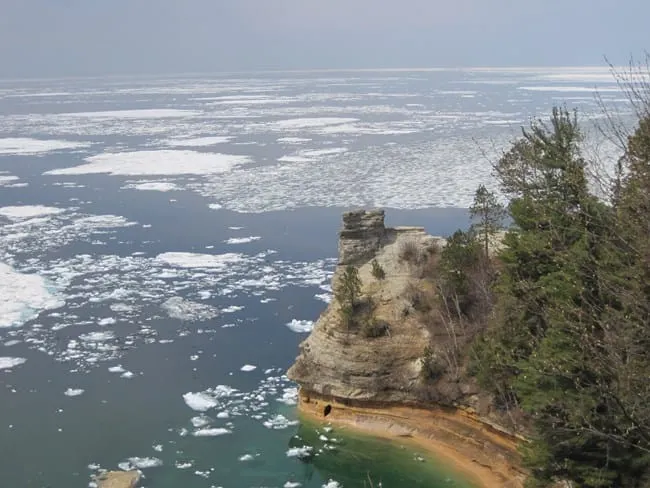
The National Oceanic Atmospheric Administration said this year marked a record low in ice coverage on the Great Lakes, which comes as no surprise to Minnesotans who experienced the warmest winter in well over a century.
In a post to its blog, NOAA’s Great Lakes Environmental Research Laboratory said this year’s average ice coverage across all of the lakes came out to 4.3%, the lowest recorded average since records began in 1973.
Maximum ice coverage on the Great Lakes for this winter was recorded on Jan. 16 at 16%, the fourth lowest annual maximum recorded. The lowest annual maximum was recorded in 2002, at 11.9%.
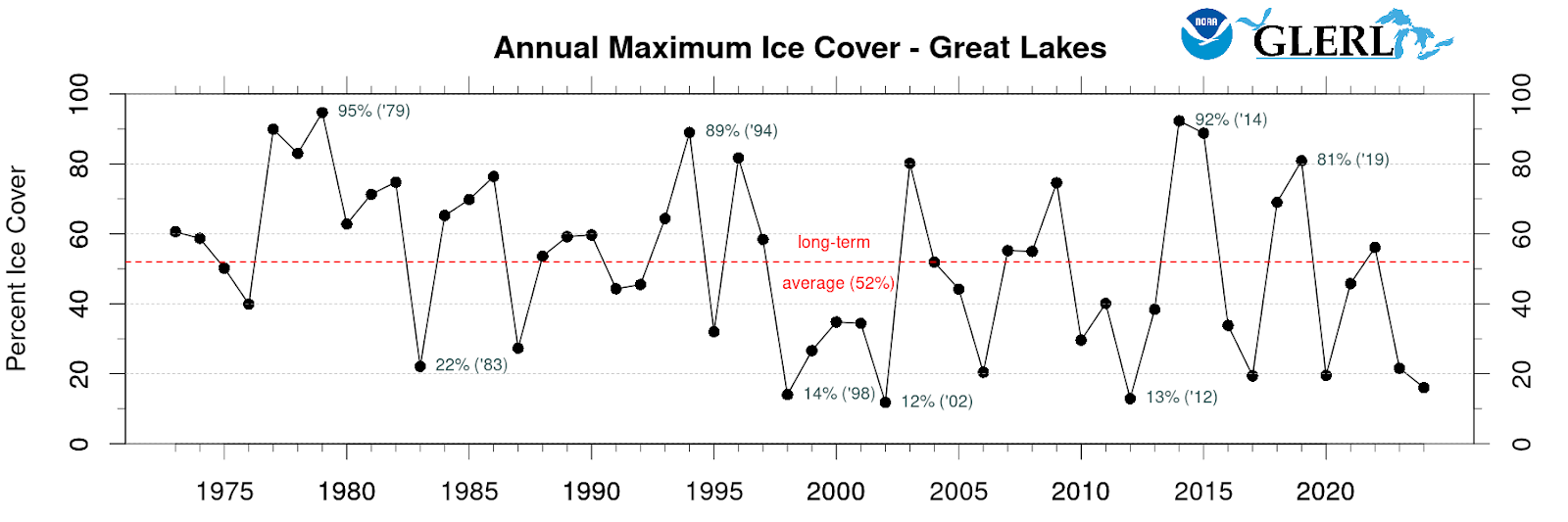
NOAA also reported record low seasonal ice coverage in Lake Superior, Lake Huron and Lake Michigan, with Lake Huron also recording its lowest annual maximum ice coverage.
Average ice cover on Lake Superior for this winter was 2.6%. On Lake Michigan, it was 4.4%. Lake Huron recorded an average of 7.8% ice cover, as well as an annual maximum of 22.7% coverage.
In a previous interview with the Advance, Ayumi Fujisaki-Manome, an associate researcher at the Cooperative Institute for Great Lakes Research, explained that this year’s record-lows in ice coverage were the result of long-term warming trends alongside anomalous weather conditions.
El Niño conditions contributed to a warmer and wetter winter than normal. Due to a warm December, coupled with above average air and water temperatures throughout the winter, the conditions needed for ice did not develop, Fujisaki-Manome said.
Like Minnesota Reformer, Michigan Advance is part of States Newsroom, a nonprofit news network supported by grants and a coalition of donors as a 501c(3) public charity. Michigan Advance maintains editorial independence. Contact Editor Susan J. Demas for questions: info@michiganadvance.com. Follow Michigan Advance on Facebook and Twitter.
Minnesota Reformer is part of States Newsroom, a nonprofit news network supported by grants and a coalition of donors as a 501c(3) public charity. Minnesota Reformer maintains editorial independence. Contact Editor J. Patrick Coolican for questions: info@minnesotareformer.com. Follow Minnesota Reformer on Facebook and Twitter.