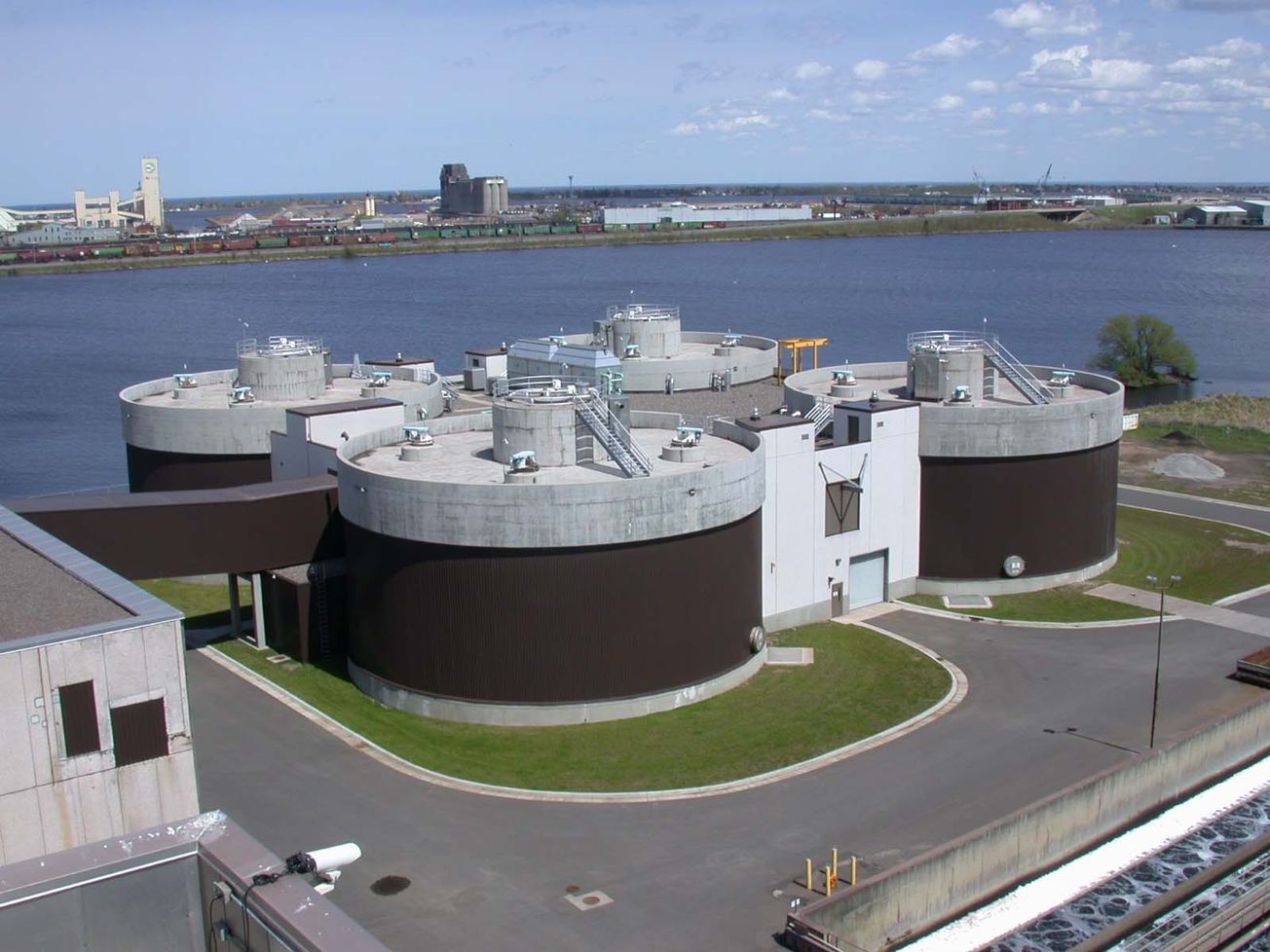
NOTICE IS HEREBY GIVEN, that the Western Lake Superior Sanitary District (“WLSSD”), will meet on Monday, September 11, 2023 at 4:15 p.m., in the WLSSD Board Room, located at 2626 Courtland Street in Duluth, Minnesota, for the purpose of conducting a public hearing to consider a resolution establishing the amount of the Solid Waste Management Fee to be collected by solid waste haulers and on a resolution imposing a Solid Waste Management Service Charge to be collected against real property (based on a fixed line item fee method rather than ad valorem method) to recover costs incurred by the Western Lake Superior Sanitary District for Solid Waste Management services within the boundaries of the Western Lake Superior Sanitary District. All persons interested may appear and be heard at the time and place set forth above.
Latest
Howie: Duluth moved $695,000 in tourism decisions out of City Hall. Now the public deserves to see the scorecard.
If tourism funding is now driven by measurable return, then measurement should not stop at the application stage. Duluth should see which organizations applied, which received funding, how proposals scored against criteria, what outcomes were promised and what results were delivered one year later.
Howie: Why Pete Stauber keeps winning — and what it would actually take to beat him
For now, the political formula in Minnesota’s 8th District remains remarkably consistent. Duluth votes. The Iron Range votes. Then the rest of northern Minnesota votes. And the rest of northern Minnesota is usually enough.
Howie: The Wild found a bouncer. Now they need a sniper like Boeser.
If Kirill Kaprizov ever gets a true sniper riding shotgun -- Brock Boeser? -- the rest of the Western Conference might suddenly discover something Minnesota fans have suspected for a while now. The Wild are closer than they look.
Howie: What Duluth is really asking for in St. Paul this year
Duluth and St. Louis County are not asking for luxury investments. They are asking for help maintaining systems — water treatment plants, shoreline protection, waste management infrastructure — whose costs exceed what local taxpayers alone can reasonably sustain.