Howie's daily online column is powered by Lyric Kitchen · Bar of Downtown Duluth. Purchase Minnesota Monsters season and single game tickets, here.
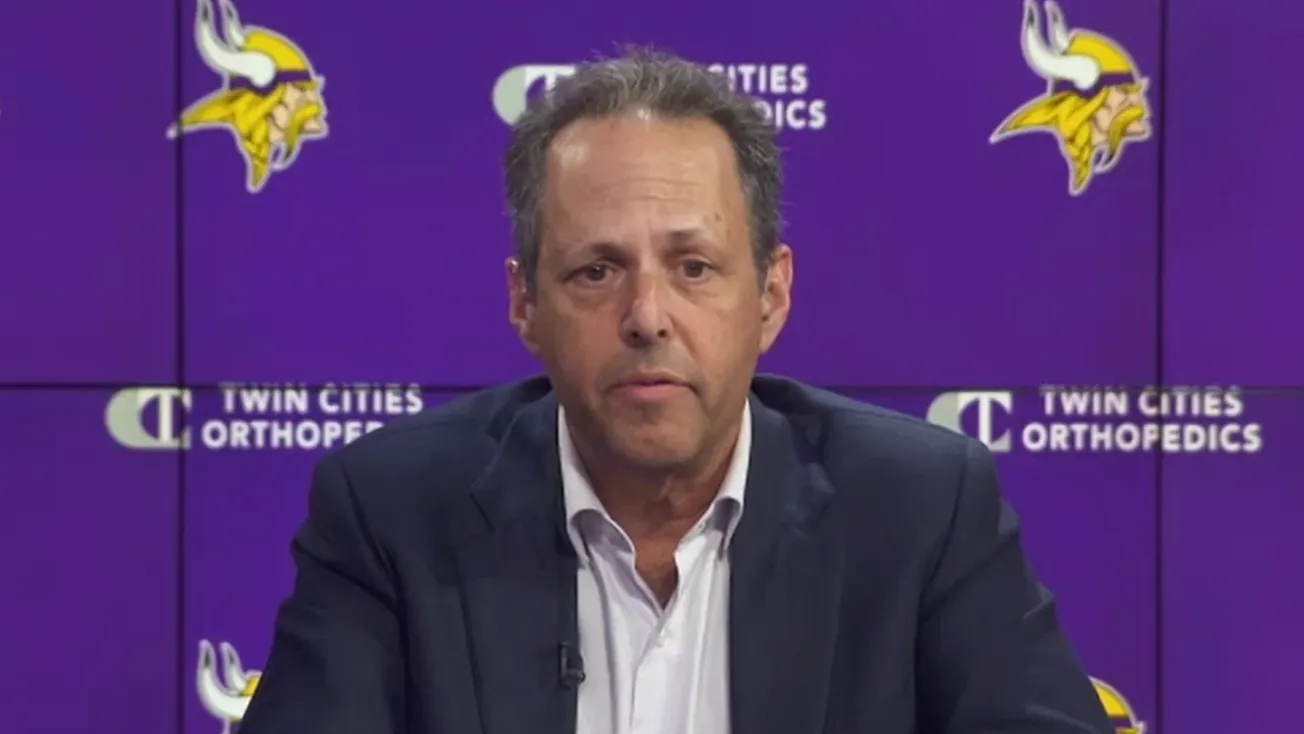
VIKINGS OWNER AND PRESIDENT Mark Wilf fired general manager Kwesi Adofo-Mensah because he believed the team needed better leadership, and then he stood in front of microphones and explained the decision the way an owner should. Direct. Measured. Unapologetic. No spin. No scapegoating. No corporate fog.
That alone set the tone. In a league where firings are often handled through leaks, silence, or lawyer-approved vagueness, Wilf took responsibility for the decision and treated it like what it was—a serious football judgment with real human consequences.
“These are never easy decisions because you know you’re impacting a person and a family and someone we care about,” Wilf said. “We understand there’ll be questions on the timing and why now.”
Wilf didn’t rush the explanation or hide behind outcomes. He walked through process, repeatedly and deliberately.
“We want to avoid knee jerk reactions, be pragmatic, thoughtful, methodical in making these decisions,” he said.
The Vikings held end-of-season organizational meetings “over a couple of weeks,” then spent the past week “as an ownership group reviewing, discussing and how best to move forward,” Wilf said.
That matters. This wasn’t a reaction to one game, one contract, or one offseason misstep. Wilf made it clear the decision was rooted in structure and confidence—or, more accurately, the lack of it.
“This is a critical off-season,” he said. “Ultimately, we felt that change was necessary in football operations and did not feel comfortable going forward into this off-season with the current leadership.”
When pressed for specifics, Wilf refused to play the blame game that so often follows front office firings.
“It’s not about any one decision or move,” he said. “We looked at the situation cumulatively.”
He repeated that theme throughout the press conference, even when the questions kept circling back to quarterbacks, drafts, and optics.
“It wasn’t about any one decision, as I said," Wilf said. "It was looking at the entirety of the last few years and not being comfortable moving forward.”
That wasn’t evasion. It was ownership saying something fans don’t always like hearing: leadership evaluations are about patterns, not moments.
Wilf consistently framed the decision around urgency without panic.
“We have an urgency to create a winning football team and establish sustainable success for our fans,” he said. “At the same time, we balance that urgency with all decisions thoroughly and methodically.”
Then he stated the organizing principle without hedging.
“Winning football, that’s what drives all our decision making and is the core of all our efforts every single day.”
Just as important was what Wilf didn’t do. He didn’t order a purge. He didn’t undermine the coaching staff. He didn’t suggest dysfunction inside the building.
“There’ll be no further moves on that front,” he said, expressing “tremendous confidence” in Kevin O’Connell, the coaching staff, and the football operations and evaluation groups. Rob Brzezinski will lead football operations through the draft, with Wilf citing his “tremendous credibility and experience” and his “innate ability to build consensus.”
“We have an excellent, strong organization,” Wilf said.
At the same time, Wilf was clear-eyed about what comes next.
“From a practical perspective of where we are on the football cycle, and in order to give ourselves the best outcome, we expect to conduct a thorough search to identify our next general manager after the draft,” he said.
Throughout the presser, Wilf separated professional judgment from personal respect—a line many owners struggle to walk.
“Adofo-Mensah’s a forward thinker, great respect for him as his person and his family,” Wilf said. “It’s a difficult day here, but going forward, it was really about a fit situation and the best path going forward.”
When asked what ownership learned from the hire, Wilf didn’t posture or pretend experience only moves one way.
“We’re going to self-scout how we’ve done it in the past,” he said. “There’s always learnings in any business when you hire, when things don’t work out, and we’re going to lean on that experience.”
Then Wilf closed where owners should always close—on responsibility.
“We always view ourselves as stewards of a franchise that a lot of people care about,” he said. “We’re all accountable here—ownership, coaches, personnel, the entire organization—to deliver a winner and championships.”
That’s how a firing should be handled. Ownership made the call, owned the consequences, and explained the reasoning without excuses. In a league full of noise, Wilf spoke plainly—and in doing so, reminded everyone what leadership is supposed to sound like.