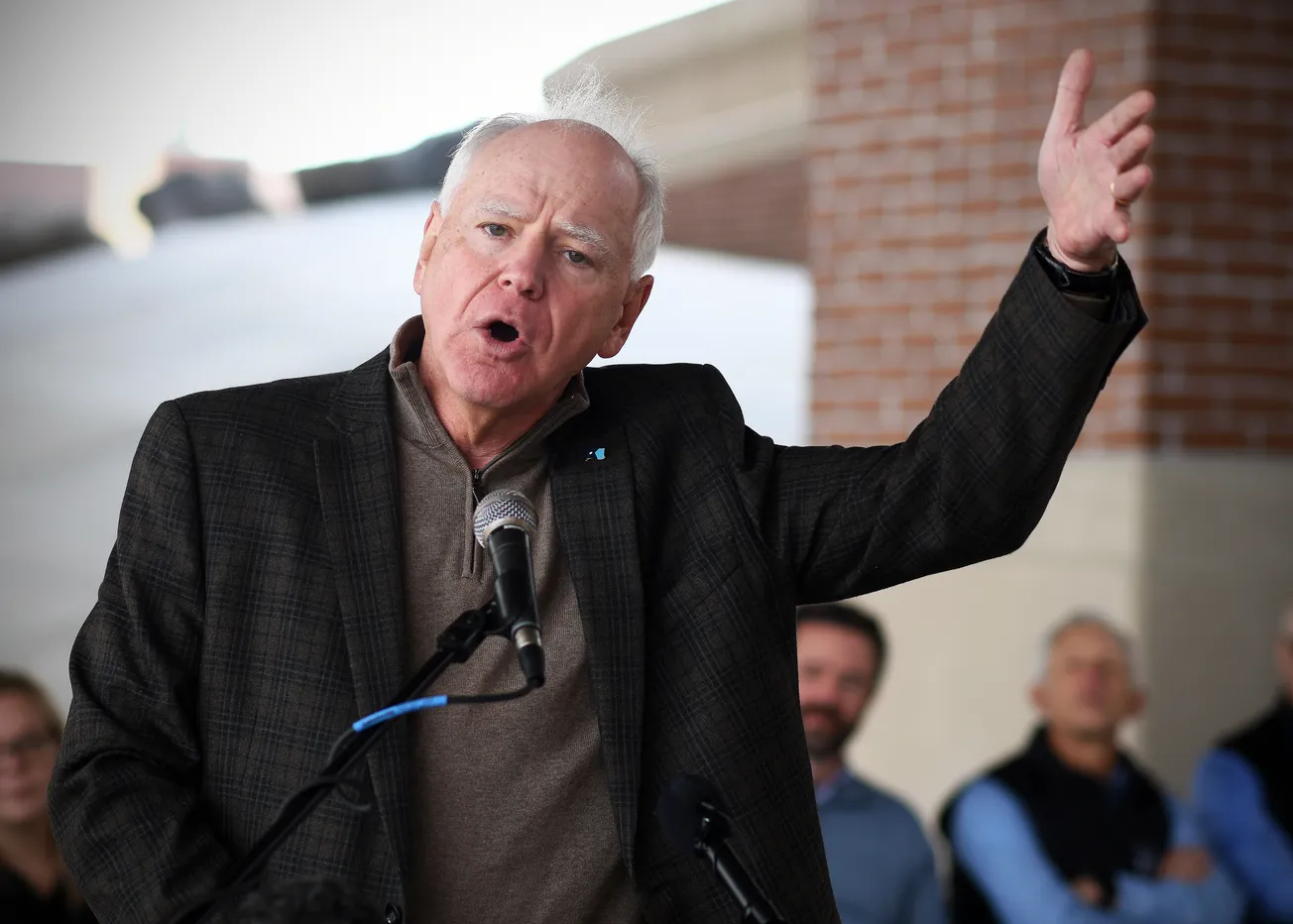

Howie Hanson is Minnesota’s Columnist, writing about power, money, sports and civic life across the state. His daily column is sponsored by Lyric Kitchen . Bar of Duluth.
Minnesota’s economic identity has quietly shifted. No longer is agriculture its backbone, or timber its defining industry, or retail its largest wage generator. Today, healthcare is Minnesota’s economy — and that reality demands public investment and competitive guardrails, not passive acceptance.
Healthcare and social assistance employ more than 600,000 Minnesotans — nearly one in six workers statewide — making it the single largest employment sector in the state. That’s not a trend. That’s structural dominance.
At the center of our healthcare economy are a handful of vast nonprofit systems whose scale now rivals that of corporate giants:
. Mayo Clinic posted roughly $19.8 billion in annual revenue, placing it among the largest health systems in the nation.
. Allina Health reported roughly $4 billion in annual revenue as a standalone system.
. Estimates suggest other major Minnesota systems rival multiple billions more in annual revenue when combined with affiliated units and clinic groups — placing our largest health institutions in the same economic stratosphere as large Fortune 500 companies when measured by turnover.
In practical terms, this means Rochester’s largest nonprofit earns far more annually than most private employers could ever dream, Minneapolis’s systems drive capital investment on the scale of major industry clusters, and healthcare payrolls saturate communities from Duluth to Mankato.
This is not just healthcare spending. This is economic weight.
With that weight comes influence — over workforce pipelines, construction markets, commercial real estate, local tax bases, legislative agendas and public budgets. The organizations that provide care also pay wages, buy property, shape labor markets and structure benefits for tens of thousands of Minnesotans. They do more than heal patients; they drive the economy.
That dual role should trouble anyone who cares about competitive markets.
The case for consolidation — whether formal mergers or broad strategic alliances — is real. Proponents argue scale drives efficiency, integrates care, and stabilizes quality. On certain metrics, that argument carries weight.
But the evidence on cost discipline is sobering. National research has repeatedly shown that hospital consolidation tends to increase prices and insurer leverage for systems, meaning higher premiums for employers and families. Minnesota cannot assume immunity from these fundamentals simply because our nonprofits are well-regarded.
Here’s the unvarnished truth: If Minnesota allows its healthcare sector to continue consolidating unchecked — functionally if not legally — we risk the emergence of a de facto monopoly system that sets prices and terms across half the state.
That outcome is neither inevitable nor desirable.
Minnesota must act.
The state already uses public investment — in research, workforce development and rural support — to maintain economic resilience in other sectors. It must do the same here, not only to support healthcare as a human good, but to protect it as the largest engine of employment and economic activity in the state.
That means:
. Investment in competitive capacity — strengthening regional systems so no single entity fully dominates labor markets or service territories.
. Proactive price transparency and antitrust enforcement — not as abstract policy goals, but as active tools to preserve competition and restrain runaway costs.
. Dedicated public funding for rural hospital innovation — because without external support, independent rural systems will disappear or become passive satellites of larger systems.
. Workforce development partnerships — ensuring Minnesota trains its own nurses, technologists and caregivers, and retains them, rather than exporting talent to other states with better pay or lower cost burdens.
These are not “policy options.” They are imperative.
A healthcare sector responsible for tens of billions in revenue and hundreds of thousands of jobs cannot be left to evolve in a vacuum. If we want competitive markets, affordable care, stable communities and broad economic participation, Minnesota must treat healthcare as infrastructure — not just a service.
The healthcare sector doesn’t just employ Minnesotans. It shapes their livelihoods and their communities. It affects state budgets and business costs. It influences policy and determines migration patterns.
That elevation of power demands public stewardship, not passivity.
Minnesota has the talent and tradition to lead here, but leadership requires more than admiration for our flagship systems. It requires strategic investment, clear regulatory guardrails, and a public strategy that treats healthcare as essential economic infrastructure.
Healthcare is Minnesota’s largest employer. It should become Minnesota’s greatest public priority — not merely in charity or philanthropy, but in economic and civic strategy.
That’s the debate our Legislature should be having — not quietly, not passively, not behind closed doors — but openly, authoritatively, with data and purpose. Because when your largest industry also doubles as your public safety net, your economy and your biggest source of jobs, the question isn’t whether it needs oversight. It’s whether Minnesota will shape its future — or have its largest employer shape it for us.