

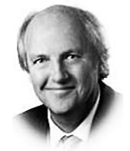
Howie Hanson is Minnesota’s Columnist, writing about power, money, sports and civic life across the state. His daily column is sponsored by Lyric Kitchen . Bar of Duluth.
Healthcare systems now hold more economic sway in parts of Minnesota than mining companies once did. In northern Minnesota, Essentia Health sits at the center of that shift. Essentia is no longer just a hospital system. It is northern Minnesota’s central economic engine. The question is not whether that is good or bad. The question is whether we understand what that means.
Essentia employs roughly 15,000 people across Minnesota, Wisconsin and North Dakota. It is the largest private employer in Duluth and one of the largest in the entire northern half of the state. Its Vision Northland project — the nearly $1 billion downtown Duluth hospital replacement — reshaped the skyline, altered traffic patterns and cemented the city’s pivot from heavy industry to health care.
That level of capital investment is not merely medical. It is civic. It is political. It is structural.

When Essentia builds, contractors hire. When it expands services, rural clinics reorganize. When reimbursement rates tighten, entire communities feel it. A health system of this size does not operate in isolation; it influences workforce housing, education pipelines, municipal planning and legislative priorities.
In the 20th century, iron ore determined the fate of northern Minnesota towns. In the 21st century, health care systems increasingly do.
The consolidation of regional medicine has been sold as efficiency — scale lowers cost, integration improves outcomes, telehealth extends reach. Much of that is true. Rural hospitals across the Upper Midwest are financially fragile. Without larger systems absorbing risk, many would close.
But consolidation also concentrates leverage.

Referral patterns shift toward the flagship campus. Specialty care migrates. Capital flows to hubs. Decision-making centralizes.
When a regional system determines where cardiology, oncology or obstetrics services will be offered, that decision carries more weight than any city council vote.
Essentia’s pending efforts to deepen its relationship with the University of Minnesota around medical education could further lock in that influence. Control the physician pipeline and you control the region’s future access to care. Training sites become workforce anchors. Research dollars follow. Federal funding follows that.
This is long-horizon strategy. Not quarterly earnings thinking.

Health system executives understand this. So do bond markets. So do state lawmakers who write Medicaid reimbursement formulas.
The broader question for Minnesota is whether communities understand that the most powerful economic actor in much of the state is no longer a mining company, a paper mill or even a tourism sector. It is health care.
And health care is uniquely complex.
Its revenue streams depend heavily on Medicare and Medicaid. Its margins are thin. Its labor costs are volatile. It carries significant debt from expansion. It operates under regulatory pressure from St. Paul and Washington.

That means the region’s economic engine is tied directly to federal reimbursement policy and demographic trends. An aging population supports demand. A shrinking workforce strains staffing. Policy shifts ripple quickly.
None of this suggests that Essentia’s growth is misguided. In many ways, it has stabilized northern Minnesota at a moment when other industries have faded. The downtown Duluth campus represents confidence. It represents permanence.
But permanence built on health care finance is not the same as permanence built on natural resources.

It is more dynamic. More exposed. More politically sensitive. That requires adult conversation.
When one institution becomes the primary employer, primary capital investor and primary health provider across dozens of communities, governance and accountability matter. Transparency matters. Long-term sustainability matters.
The future of northern Minnesota will not be determined only in city halls or at the Capitol. It will be influenced in boardrooms where capital allocation decisions are made about service lines, physician recruitment and facility investments.
Essentia Health is not merely treating patients. It is shaping the economic architecture of the region.

That reality deserves sober analysis, not cheerleading and not suspicion. Understanding it is the responsibility of citizens, lawmakers and business leaders alike.
The age of steel defined the past century in the Northland. The age of health systems is defining this one. The shift is already complete. The only remaining question is whether the public recognizes it.