
Howie's daily column is sponsored by Lyric Kitchen Bar.
THE MOST IMPORTANT sentence in the entire Pathway Forward announcement may not be the one about shelters, or buildings, or downtown pressure. It is the phrase “clear path.” Because for years, Duluth’s homelessness system often has felt less like a path and more like a maze.
A meal here. A cot there. A waiting list somewhere else. Mental health services in another building. Employment help across town. Different agencies doing good work, often heroically, but sometimes pulling in parallel directions because that is what happens when poverty, addiction, trauma and housing shortages all collide inside a city that never fully built a coordinated system around them.
That is why Pathway Forward matters. Not because it magically solves homelessness. It will not. No serious person should pretend otherwise. It matters because Duluth finally appears willing to admit something uncomfortable: emergency shelter alone is not a strategy.
For decades, communities across America — including Duluth — essentially operated homelessness response systems designed around surviving the night. Keep people warm. Keep people alive. Keep people moving. Those are compassionate goals, and necessary ones. But they are fundamentally defensive goals.
Pathway Forward hints at something more ambitious.
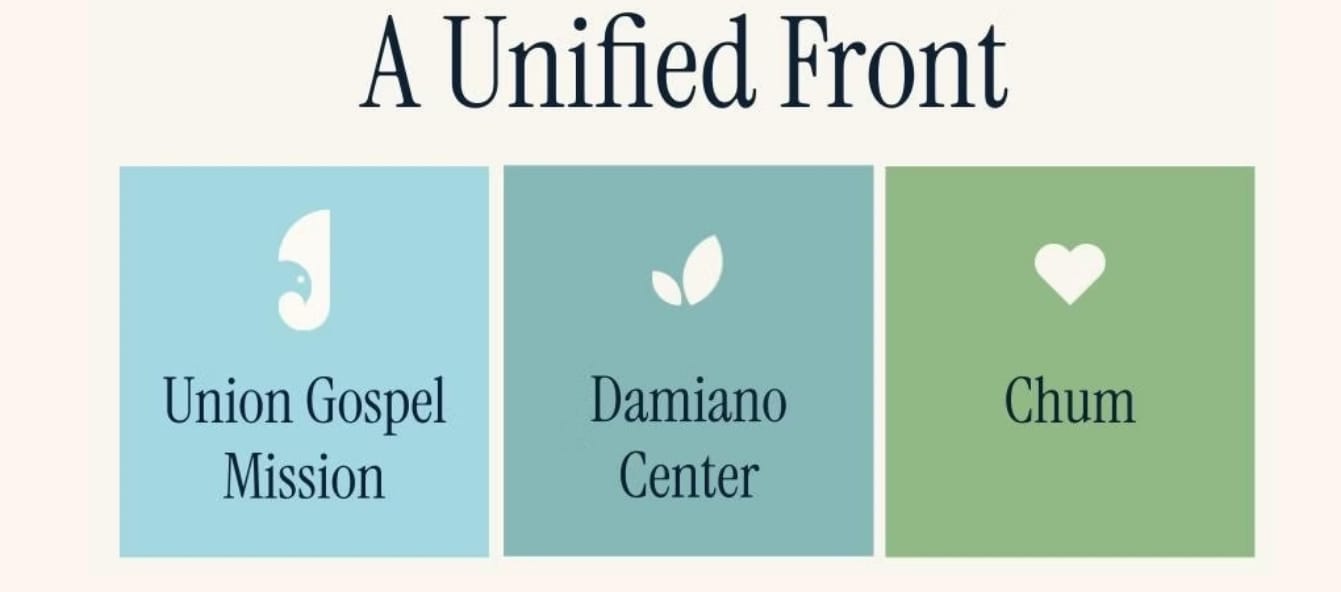
The collaboration among CHUM, Damiano Center and Union Gospel Mission Duluth signals a recognition that homelessness is no longer a collection of isolated charity problems. It is now a systems problem affecting public safety, downtown business confidence, neighborhood stability, emergency medical systems, policing, tourism, workforce development and basic civic trust.

Duluth has spent years arguing about symptoms. Now, at least potentially, three of the city’s most important frontline organizations are talking about structure. That distinction matters enormously.
The public conversation around homelessness in Duluth has become emotionally exhausted. Downtown business owners feel pressure. Residents feel frustration. Service providers feel overwhelmed. Police officers cycle through repeated calls involving the same people. Meanwhile, individuals experiencing homelessness often bounce through fragmented systems that stabilize almost nothing long-term.
Everybody ends up tired.
And tired communities start drifting toward two dangerous extremes: denial or cynicism. Denial says the problem is exaggerated. Cynicism says nothing works anyway. Neither position builds anything.

What makes Pathway Forward important is that it attempts to impose organization onto chaos.
The proposal essentially acknowledges that duplication of services and fragmented intake systems are part of the problem themselves. If Union Gospel Mission becomes a centralized entry point for services, if Damiano absorbs overnight and drop-in operations, and if Chum reshapes its shelter model toward a blend of emergency and transitional housing, the city could finally begin operating something closer to a continuum instead of disconnected islands.
That may sound bureaucratic. It is not. In homelessness response, coordination is everything.
A person battling addiction, untreated mental illness and chronic instability does not need seven front doors. They need one coherent process capable of moving them gradually toward stability without forcing them to restart their story every few days with a different agency.

The addition of mental health services and employment navigation may ultimately become the most important part of the entire initiative. Because the hardest truth in this entire debate is one many people quietly understand but rarely say aloud: housing alone does not stabilize everybody.
Some people need treatment first. Some need medication management. Some need job structure. Some need trauma care. Some need accountability. Many need all of it simultaneously. That complexity is precisely why simplistic political slogans from either side never work.
“Just build housing” is incomplete. “Just enforce laws harder” is incomplete.
Serious cities eventually discover homelessness sits at the intersection of housing costs, addiction, mental illness, family collapse, poverty and social isolation. Remove one piece while ignoring the others and the system keeps recycling human beings through crisis.

Duluth has been trapped in that cycle for years. Pathway Forward at least attempts to build something more integrated. That does not mean the project will avoid criticism. It should not.
Taxpayers deserve transparency. Downtown stakeholders deserve measurable outcomes. Neighborhoods deserve honesty about impacts. Service providers deserve accountability standards. The public deserves regular data showing whether the strategy is actually reducing chronic homelessness and improving downtown conditions.
Compassion without accountability eventually loses public trust. But accountability without compassion usually produces cruelty disguised as policy. The challenge now is whether Duluth can hold both ideas at the same time.
What makes this moment especially significant is timing. Duluth stands at a crossroads downtown. The city is simultaneously debating tourism, public safety, economic development, housing, workforce shortages and quality-of-life concerns. Those conversations are not separate from homelessness. They are deeply connected to it.

Cities do not revitalize sustainably while large numbers of vulnerable people remain trapped in visible instability. But cities also do not revitalize by pretending vulnerable people simply disappear. Sooner or later, every community must decide whether it wants an organized system or permanent crisis management.
Pathway Forward appears to be Duluth’s attempt to choose organization. That alone makes it one of the most important civic announcements this city has seen in years.