
By J. Patrick Coolican, Minnesota Reformer
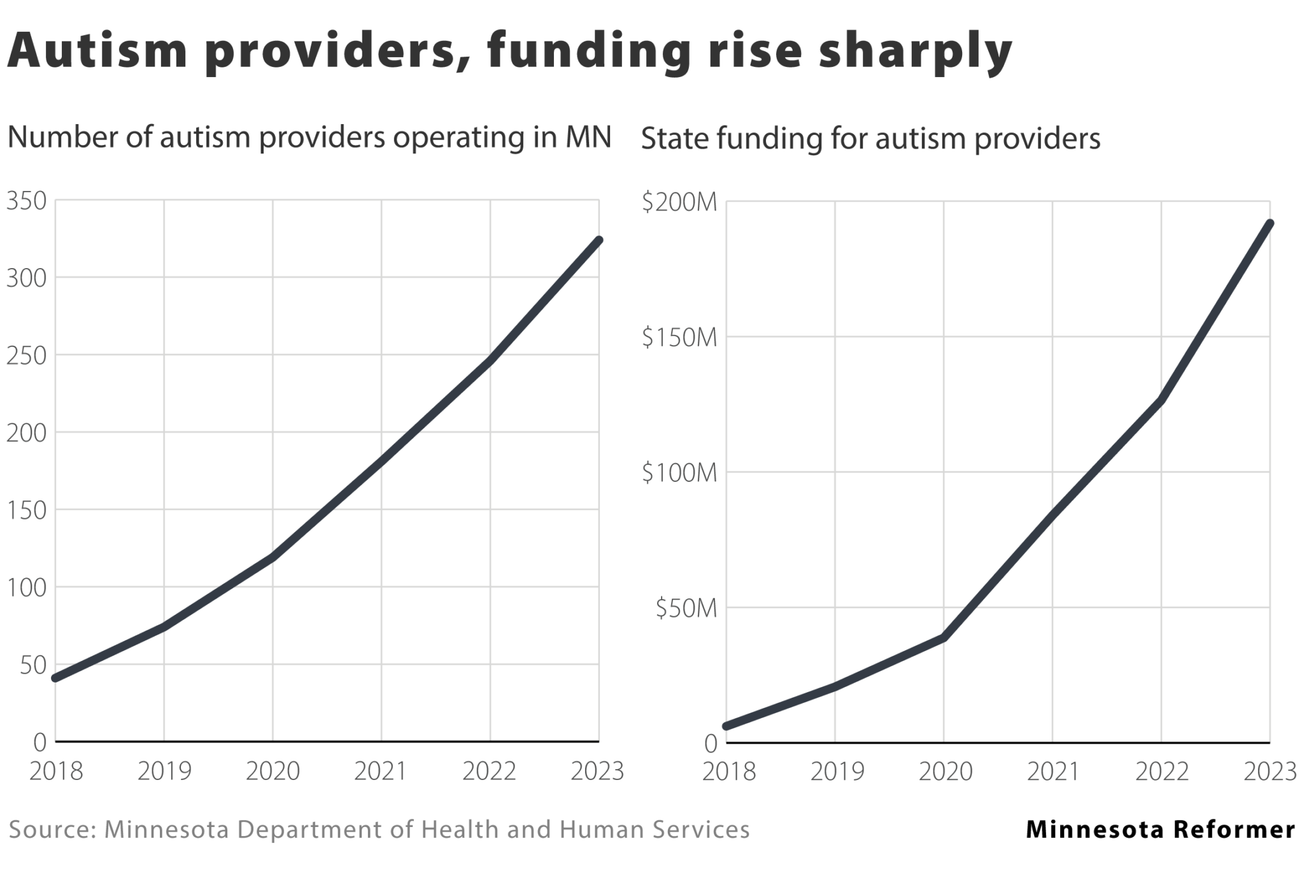
Last week Gov. Tim Walz told Minnesotans that one of the drivers of the state’s emerging “fiscal imbalance” — i.e., over the next couple years, we’ll be spending more than we’re taking in — is the rapid increase in spending on early intervention for children on the autism spectrum. He mentioned it a couple times. When a reporter asked him about concerns about program fraud — the Reformer was the first to report a federal investigation in June — he seemed caught unawares.
“As far as autism being people not claiming that they have autism?” Walz asked in his inimitable way.
The reporter clarified there’s been concern about fraud in the state’s autism program, and Walz responded: “We always investigate it and those people go to jail.”
Except there’s been no charges yet.
Life comes at ya fast though. FBI agents served search warrants at two locations Thursday, and the warrant was filled with explosive allegations of massive overbilling for services not delivered.
Walz wasted no time Thursday declaring how tough he is on the fraud that’s beset the state’s safety net programs during the past decade, starting with child care and moving into Feeding Our Future and then Medicaid.
“This pisses me off unlike anything else,” Walz told the Star Tribune in an interview. “They’re stealing from us … You’ve got to increase the penalty on these crimes. These are crimes against children, in my opinion.”
We’re all glad he’s firmly on Team Don’t Steal Public Money, but I suspect a four-year prison sentence instead of two is less important as a deterrence than the certainty of getting caught and prosecuted.
On this score, state government finally seems to be awakening from a stupor.
Just consider the evolution at the Department of Human Services since June, when then-Reformer reporter Deena Winter asked the agency about skyrocketing growth in the number of autism treatment providers and spending in the past five years.
“I don’t think we are surprised or particularly disturbed by the rate of growth,” said a DHS assistant commissioner. “We know that having early intervention and access to service is a really, really important part of putting these kiddos on a good trajectory for the rest of their lives.”
(Digression: Can we all please stop saying “kiddos”?)
Later in the summer, in response to a public records request, DHS said they were investigating 15 autism providers. Before the leaves had changed colors, the number was up to 29, or something like 9% of all providers.
And then, Thursday, DHS Commissioner Jodi Harpstead said the agency is in the process of visiting every single autism treatment provider. “We are digging further into cases where we note concerns and will conduct formal investigations if and where needed,” she said in a statement.
You’d think visiting autism treatment providers to make sure they are helping children who need it would be just, you know, part of the agency’s job. But not necessarily! The Legislature never required that the centers be licensed.
Which means you too can be an autism treatment provider.
If all this sounds vaguely familiar, like another massive fraud scheme that goes by the name Feeding Our Future, you’re on to something. At least a dozen defendants in that $250 million case have ties to autism treatment providers, according to the search warrant application.
Minnesota: Land of opportunity!
More like, Minnesota: an easy mark.
The tragedy is that many children do need help, and early intervention is important so they can have a meaningful, dignified life.
But successive DFL administrations’ failure to prevent the outrageous theft of hundreds of millions of dollars of public money from various important programs has likely eroded the people’s trust in government.
And who can blame them?
Minnesota Reformer is part of States Newsroom, a nonprofit news network supported by grants and a coalition of donors as a 501c(3) public charity. Minnesota Reformer maintains editorial independence. Contact Editor J. Patrick Coolican for questions: info@minnesotareformer.com.