Minnesota will not stumble into the future by accident. The forces shaping the state’s next 25 years are already visible— demographics that no longer replenish evenly, an economy increasingly anchored by health care, housing that determines who can work where, climate pressure that moves people quietly, and institutions built for growth now forced to adapt to limits.
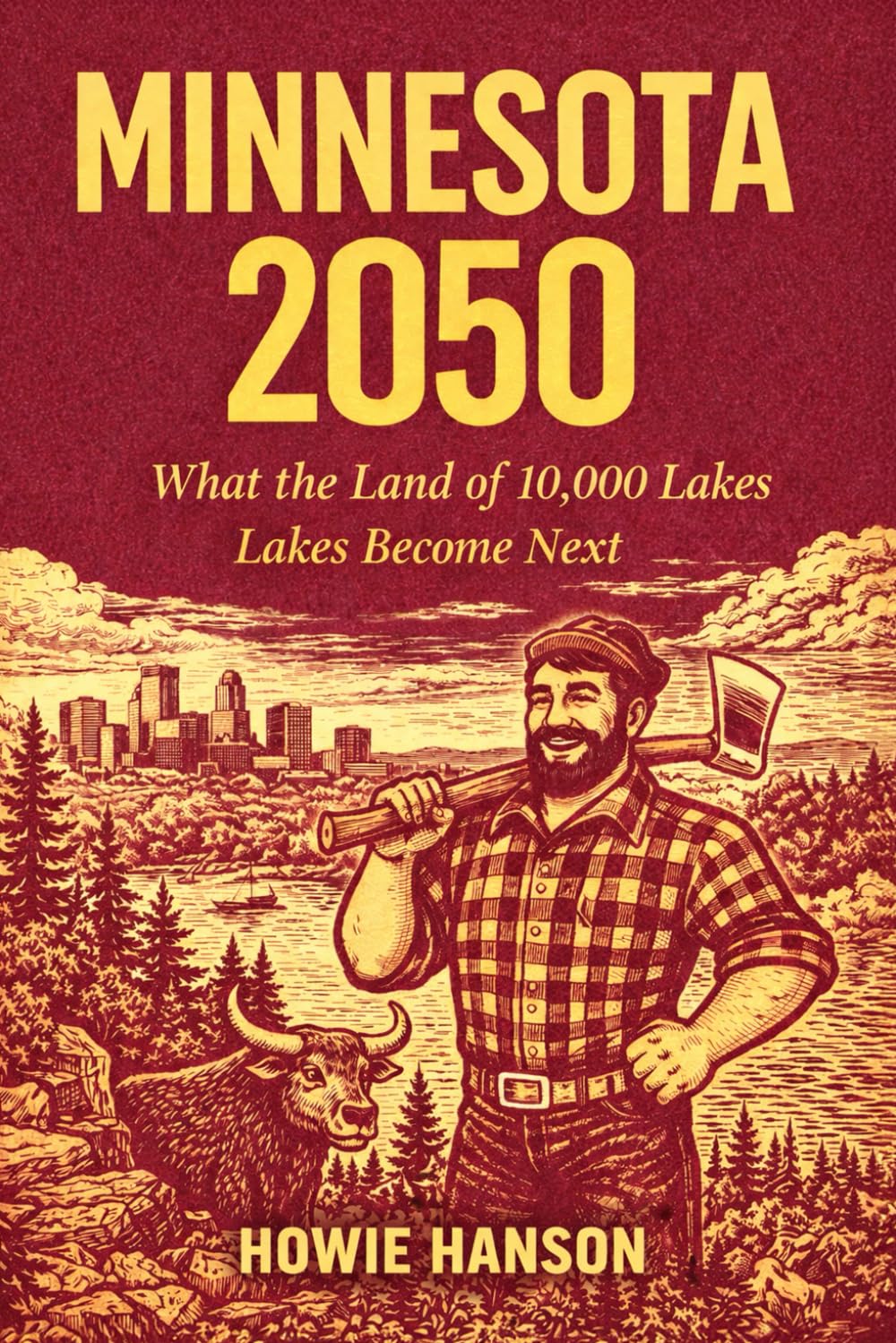
Minnesota 2050 follows those forces forward. Written in a clear, unsentimental voice, this book examines what the Land of 10,000 Lakes becomes by mid-century if current trajectories hold. It traces how population gravity re shapes cities and regions, why education and labor no longer align automatically, how tax tolerance tightens as trust becomes conditional, and why not every place can—or should—expect the same outcome.
Along the way, it makes a series of calm but consequential calls: that professional sports loyalty cannot override economics forever; that tourism becomes infrastructure rather than promotion; that housing stops being a side issue; that some cities will be forced into resets; and that Minnesota’s greatest challenge is not decline, but honest adaptation.
This is not a book of predictions meant to impress. It is an accounting of pressures already in motion. Through system-by-system analysis and city-by-city snap shots—from the Twin Cities to Duluth, Rochester, the Iron Range, and the outer ring—Minnesota 2050 explains why some communities thrive, others stabilize, and some must change shape to endure.
The book does not argue what Minnesota should be. It describes what Minnesota is becoming—and why. For readers interested in politics, economics, cities, climate, and the future of American states that still function, Minnesota 2050 offers clarity without comfort and realism without despair. Click here to order the book on Amazon.