Skip to content

Duluth’s budget debate is missing millions

Duluth residents should not accept a budget narrative built only around the bad news. Transparency requires more than explaining the size of the shortfall. It requires identifying every option, every revenue decision and every pool of existing or reasonably anticipated financial capacity.
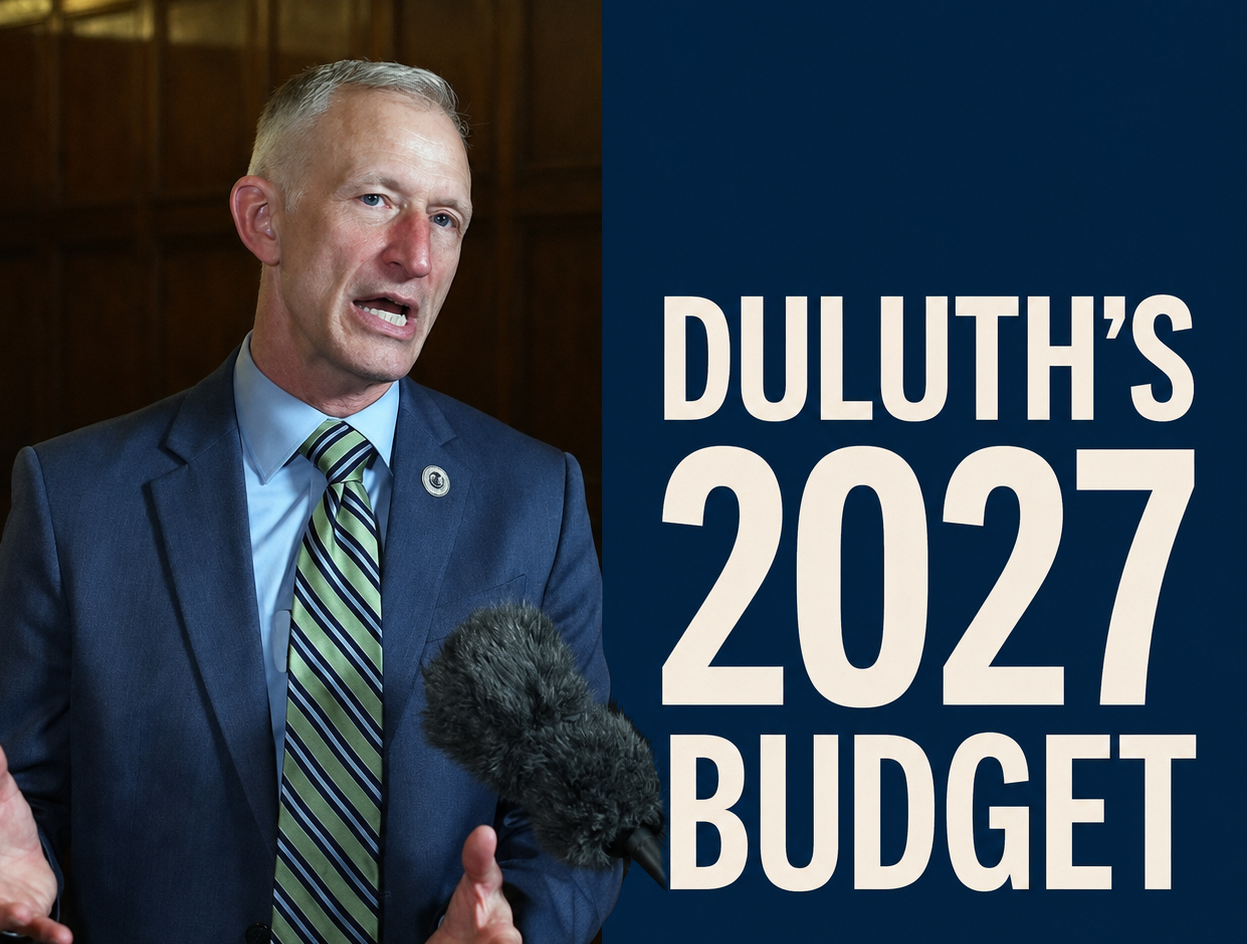
The City of Duluth has set aside $4.5 million a year in recurring public money for a proposed consolidated maintenance facility, then largely left that pot of money off the table while warning residents of a projected $5.5 million budget shortfall in 2027. That is not a complete presentation of Duluth’s financial condition.

Before City Hall raises property taxes, reduces services or again tells residents the financial cupboard is bare, the entire $4.5 million commitment must be reopened for public review. The administration also must disclose when the remaining annual retiree health care contribution will no longer be required and whether that will free approximately another $4.5 million a year for city services, property tax relief or other public priorities.

The money originated with one of the most painful financial obligations in Duluth’s modern history. In 2007, the city established an irrevocable trust to help finance retiree health care benefits. A funding framework adopted in 2014 capped the city’s annual appropriation for those costs at $9 million, with expenses above that amount paid from the trust. Nine million dollars is roughly equal to 20% of Duluth’s current city property tax levy. Year after year, that obligation consumed money that otherwise could have supported parks, libraries, buildings and other basic services.

The city made difficult choices during those years. Police and fire protection were generally preserved while maintenance, parks, libraries and public facilities absorbed much of the financial pressure, particularly in capital spending. Duluth delayed work, stretched equipment, accumulated deferred maintenance and asked departments to do more with less. Residents paid for the retiree health care obligation not only through taxes, but also through services and improvements they did not receive.

That discipline eventually produced a major financial benefit. By the end of 2024, the retiree health care trust held approximately $107 million. The city restructured the trust through the Minnesota State Board of Investment, using a portfolio of U.S. Treasury securities with maturities extending through 2054. That allowed the city to reduce its annual appropriated retiree health care amount to $3.5 million and save the General Fund approximately $4.5 million per year, according to the city’s 2025 budget book.

This was not a one-time state grant, temporary federal assistance or accounting gimmick. It was recurring financial capacity created by years of contributions and improved investment performance. It was the dividend from a long and painful financial cure.

The Reinert administration decided not to return that $4.5 million to general city operations. Instead, the city’s 2025 budget reduced the General Fund transfer for retiree medical insurance by $4.53 million and applied the savings to a consolidated maintenance facility. The same budget reduced the general operations levy by approximately $3.76 million while increasing capital funding by approximately $4.55 million. The city’s 2026 budget continued a capital projects levy of $4,547,400.

The money, therefore, is not hidden in the city’s accounting records. The more serious concern is that it has been largely excluded from the administration’s present argument about the 2027 budget. The omission is political, not clerical.

In the city’s published summary of Reinert’s 2026 State of the City address, the mayor warned of a $5.5 million shortfall and portrayed Duluth as facing an unavoidable choice between substantially higher costs and substantially fewer services. The $4.5 million annual retiree health care savings, which equals nearly 82% of that projected gap, was not included in the public explanation of the city’s available choices.

Redirecting the money would not magically make Duluth’s structural budget problems disappear. Salaries, employee benefits, medical insurance, overtime and other expenses are growing faster than many city revenues. The city’s long-range forecast projects salary and benefit costs increasing by approximately 6% in 2027, while Local Government Aid and several other revenue sources remain nearly flat. Those pressures are real.

But the $4.5 million is also real. It represents a policy choice that can be reconsidered. The money does not belong to the mayor, any department or any proposed building. The City Council approves the levy and budget each year, and the council can decide whether preserving every dollar for one capital project remains the highest and best use of the money.

The proposed maintenance facility is not a frivolous idea. Duluth operates several aging and undersized maintenance buildings serving property and facilities management, parks maintenance, fleet services, street maintenance, the radio shop and traffic signal operations. Consolidating some or all of those operations could improve working conditions, reduce duplication and produce long-term operating efficiencies. The city’s 2024 request for proposals contemplated a project budget of approximately $75 million, including design, construction, contingency and occupancy costs.

A legitimate project, however, is not automatically an untouchable project. The city completed a predesign study in 2025 and listed completion of the facility design as a 2026 goal, but Duluth residents still have not been given a complete public accounting of the recommended location, final scope, updated price, construction schedule, operating savings, grant opportunities, bonding requirements or possible phased alternatives. Nor has the administration clearly reported how much of the annual $4.5 million has been accumulated, spent, encumbered or remains available.

Two years of this recurring allocation represent approximately $9.1 million in gross financial capacity. Continuing it through 2027 would bring the three-year total to approximately $13.6 million, before subtracting project expenses or other commitments. That does not mean $13.6 million is sitting untouched in a single bank account. It means the City Council and public deserve an exact accounting before the next budget is adopted.

The first step should be a public council briefing on the retiree health care obligation. The administration should present the current trust balance, actuarial liability, annual city contribution, expected trust withdrawals and complete long-range projections. The council should ask directly when the remaining annual city contribution will no longer be required, how much recurring General Fund capacity will be released at that time and what the highest and best alternative uses of those dollars would be.

Information obtained for this column indicates that internal city projections already show approximately another $4.5 million in annual capacity becoming available soon as the remaining contribution ends. Those projections have not been fully presented to the public. If the projections exist, the administration should release them, explain the anticipated date and identify the assumptions on which they are based. A financial development of that magnitude cannot remain an internal City Hall planning variable while Duluth debates tax increases, service reductions and a supposedly unavoidable budget crisis.

Projected retiree benefit payments continuing into future years do not, by themselves, answer the question. The trust was created and invested specifically to help finance those obligations. The central budget question is when the city will no longer need to make its remaining annual contribution from current revenues and what will happen to that recurring money afterward.

That second potential $4.5 million is not available for the 2027 budget unless the contribution ends by then. It should not be counted prematurely. But if internal projections show that it will become available soon, it belongs in Duluth’s long-range financial discussion now. A recurring revenue change of that size could reshape the city’s budget, restore services sacrificed during the retiree health care funding years, reduce future levy pressure or finance urgent capital needs without additional taxation.

The council should also demand a complete report on the maintenance facility and require several public budget scenarios. One might continue the full $4.5 million capital commitment. Another could preserve part of it for a smaller or phased facility while returning $1 million or $2 million annually to city operations. A third could redirect more of the money temporarily to moderate the 2027 levy increase, preserve libraries and parks, or address urgent maintenance until the city’s structural finances improve.

Calling the money a slush fund may overstate its legal status because the council approved the allocation through the public budget process. Politically, however, a recurring $4.5 million commitment kept outside the current budget debate can become a powerful reserve of mayoral discretion. It can be redirected later, attached to a favored project or unveiled as a last-minute solution without the broad discussion that should have occurred from the beginning.

Duluth residents should not accept a budget narrative built only around the bad news. Transparency requires more than explaining the size of the shortfall. It requires identifying every major option, every recurring revenue decision and every substantial pool of existing or reasonably anticipated financial capacity.

The projected $5.5 million budget gap is real. So is the first $4.5 million annual commitment the administration has left outside the current discussion. The prospect of another $4.5 million becoming available when the remaining retiree health care contribution ends is too consequential to remain inside City Hall. All three numbers belong on the same public table before Duluth taxpayers are asked to pay more or accept less.

Comments

Latest