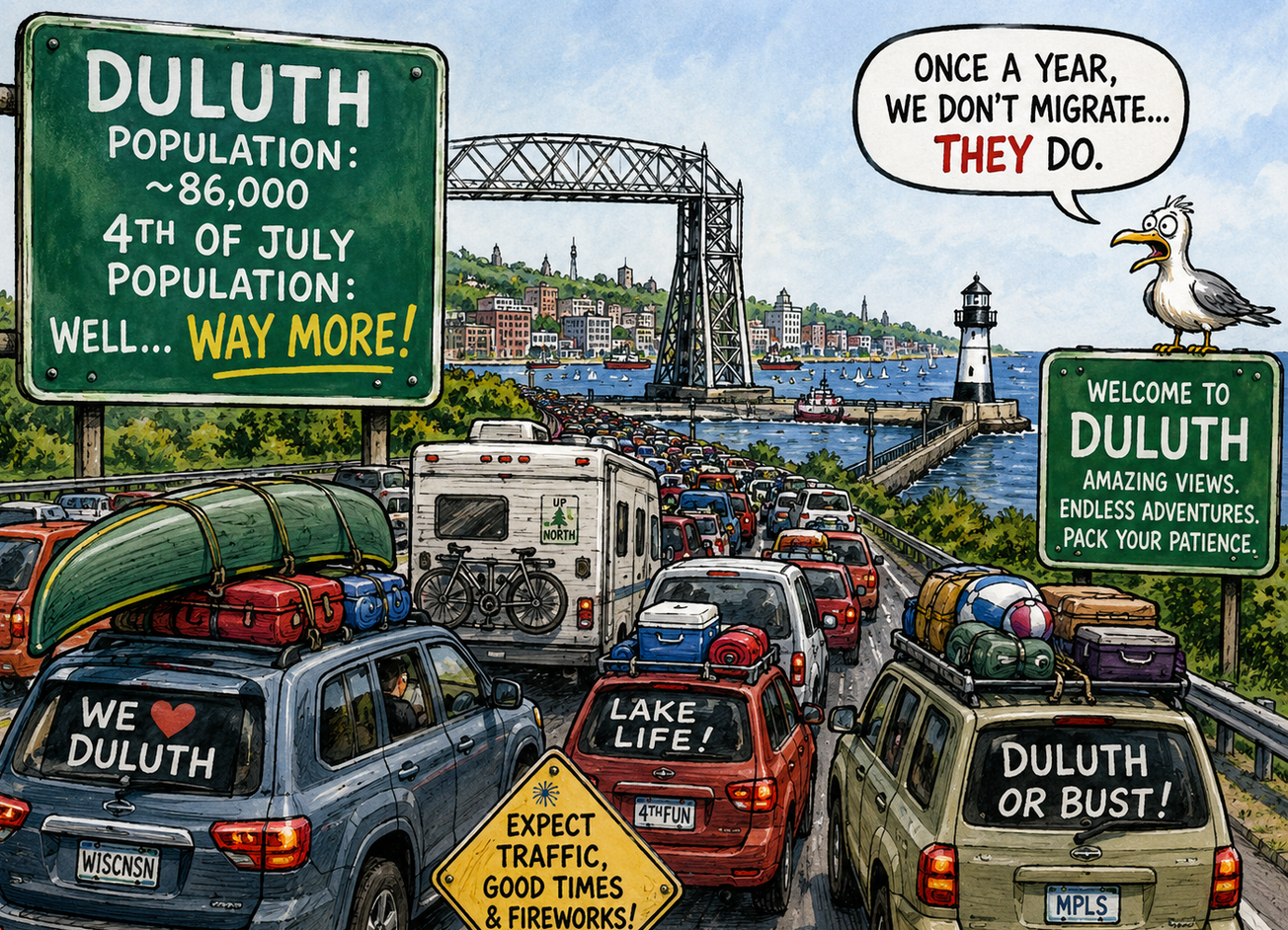
If you want to understand Duluth's economy, don't begin with the harbor. Begin with Interstate 35.
Beginning this week, tens of thousands of vehicles will stream north toward Lake Superior carrying families, kayaks, bicycles, camping gear, coolers, fishing poles and vacation plans. They'll fill hotel rooms, restaurant tables, brewery patios, marina slips, campground reservations, excursion boats, museums, golf courses and souvenir shops.
For a few days surrounding the Fourth of July, one of Minnesota's largest annual migrations quietly unfolds. It isn't just a celebration. It's an economic engine.
Tourism has become one of Duluth's defining industries. Approximately 6.7 million visitors come to the city every year, generating more than $780 million in direct economic impact and supporting roughly 6,800 hospitality and tourism jobs. Those aren't abstract statistics. They represent paychecks for hotel housekeepers, restaurant servers, cooks, charter captains, retail clerks, attraction employees, musicians, tour guides, maintenance workers and hundreds of small business owners whose busiest season begins in earnest during the summer months.
For many businesses, these few weeks help determine whether the year will be profitable. That's why this holiday matters.
Every occupied hotel room creates ripple effects throughout the regional economy. Visitors buy gasoline in Cloquet. They stop for pie in Two Harbors. They reserve campsites along the North Shore. They visit Canal Park, Glensheen, the Great Lakes Aquarium and the Lake Superior Maritime Visitor Center. They charter fishing trips, purchase local artwork, enjoy craft breweries and linger for one more meal before heading home.
Money changes hands dozens of times before a vacation dollar finally leaves the region. Economists call it the multiplier effect. Local businesses simply call it summer.
Statewide, Minnesota's visitor economy generated $14.7 billion in spending and a total economic impact of $24.7 billion while supporting more than 182,000 jobs. Duluth plays an outsized role in that success. Few communities of its size attract visitors from across the Upper Midwest—and increasingly from around the country—with the consistency that Duluth does.
The city's greatest natural asset remains Lake Superior. But its competitive advantage extends beyond scenery.
Visitors come because Duluth has steadily invested in itself. Canal Park evolved from an aging warehouse district into one of the Midwest's premier waterfront destinations. Miles of trails invite hikers and cyclists. The DECC anchors conventions and entertainment. Festivals fill the calendar. The Aerial Lift Bridge remains one of America's most recognizable waterfront landmarks. Together, those investments have transformed tourism from a seasonal bonus into one of the pillars of the regional economy.
Of course, success brings familiar frustrations. Traffic slows to a crawl. Restaurant waits grow longer. Parking spaces become scarce. Residents occasionally grumble that the city feels overrun. That's understandable.
But those inconveniences are also evidence of economic vitality. Every family standing in line for ice cream, every hotel displaying a "No Vacancy" sign and every packed patio overlooking Lake Superior represents money circulating through local businesses, supporting jobs and strengthening the tax base that benefits the entire community.
In many American cities, downtown storefronts continue to struggle. In Duluth, summer visitors help keep many of those doors open.
The challenge now is sustaining that momentum. Tourism is increasingly competitive. Every destination is competing for travelers' attention, and visitors have countless choices. Duluth cannot assume they'll always come. Continued investment in attractions, infrastructure, events, customer service and quality-of-life amenities will determine whether today's visitors become tomorrow's repeat guests.
Fortunately, history suggests they will. People rarely visit Duluth only once. They come for a weekend and return for a season. They bring children who later bring their own families. They discover a city that offers something increasingly valuable in modern America: authenticity.
This week, as fireworks illuminate the harbor and license plates from across the Midwest fill parking lots throughout the city, it's worth remembering that every visitor represents more than another car in traffic. They represent confidence in Duluth. And for one of Minnesota's great tourism cities, there may be no more powerful economic force than that.