

Howie's daily column is sponsored by Lyric Kitchen Bar.
Duluth property taxpayers are getting some genuinely good news.
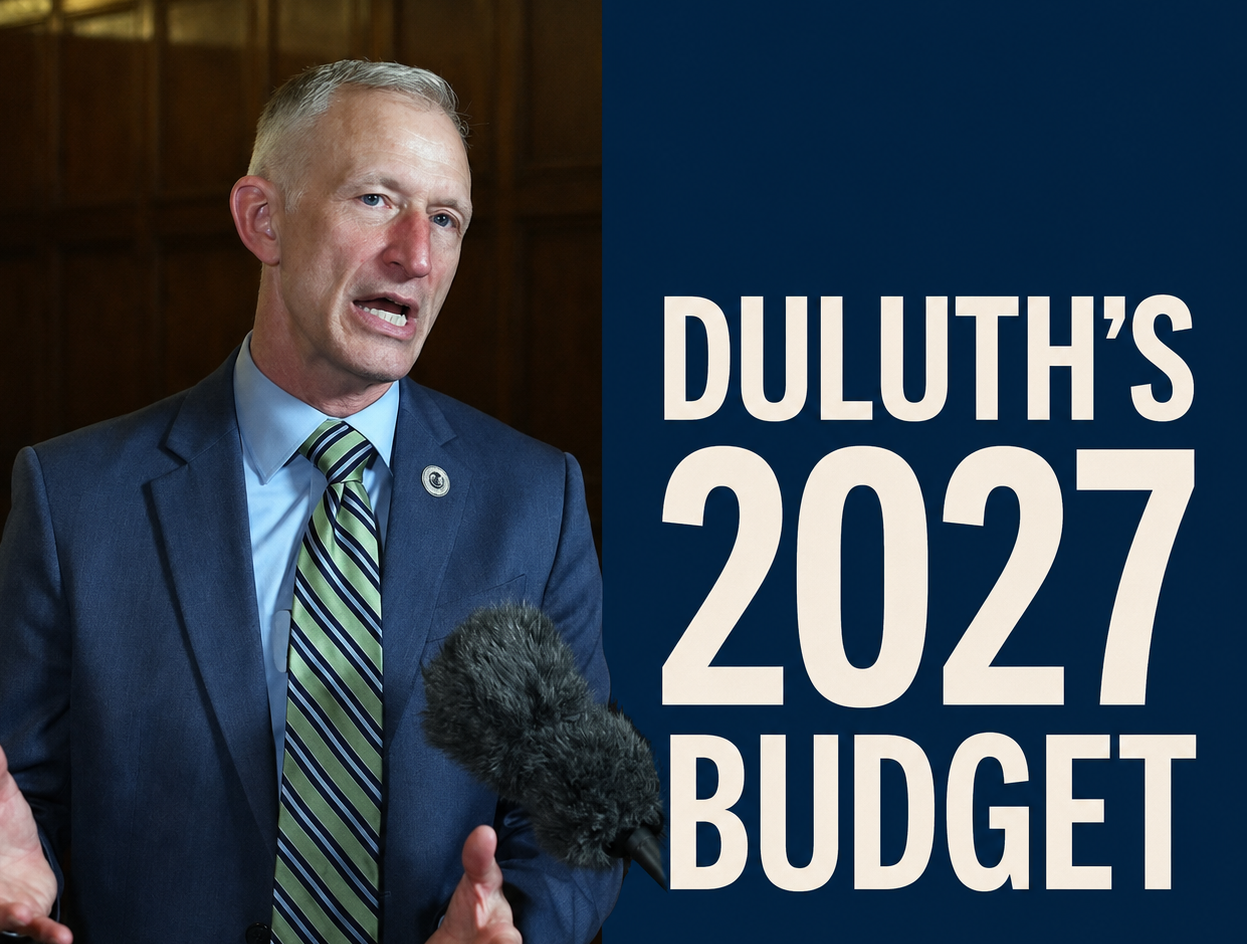
Mayor Roger Reinert will recommend a 2027 maximum property tax levy tonight that would hold the city’s increase to 2.65%, below the rate of inflation and slightly below last year’s proposal, while keeping Duluth’s levy growth among the lowest of Minnesota’s largest communities and St. Louis County.
If ultimately adopted, the proposal would leave the average annual property tax levy increase during Reinert’s term at just 1.77%.
That is a significant development for Duluth homeowners and businesses at a time when inflation, insurance, utilities, food, fuel and other household costs continue to squeeze family budgets.
Reinert’s recommended city levy increase of 2.65% is below the 2.7% proposal for 2026 and below the trailing 12-month Consumer Price Index.

The total maximum levy would increase 3.61%, a figure that includes 0.96% in new tax-base growth. The proposal also removes a 0.75% addition approved by the City Council last year.
In practical terms, Reinert is attempting to limit the tax burden on existing property owners by using new development and growth in the tax base to help absorb increased city costs rather than simply passing those costs along to homeowners.
“Affordability is an issue for the City too,” said Reinert. “Inflation, tariffs, and high fuel prices are serious cost factors in the city budget.”
The proposal is particularly notable because Duluth’s financial pressures have not disappeared. Reinert said city expenses, driven primarily by employee compensation and benefits, are increasing by approximately 6% annually while revenue is growing by only about 1.5%.
That gap has produced continuing structural budget deficits.
For many local governments, that kind of imbalance would produce a familiar response: Raise taxes.
Reinert is arguing for a different approach.
“Our mission is effective and efficient core city services at a tax rate our residents and businesses can both afford and sustain,” said Reinert.
He has made “Affordable City Property Taxes” one of his administration’s five strategic goals.
“Our community is older than average and less wealthy than average,” Reinert said. “And property taxes don’t care about ability to pay. We can’t look to solve ongoing budget deficits at the expense of our residential property taxpayers.”

That may be the most important sentence in the entire budget discussion.
Property taxes are particularly unforgiving because they do not rise and fall with a homeowner’s income. Retired residents, families living on fixed incomes and homeowners whose property values increase without a corresponding increase in earnings can all face larger tax bills regardless of whether they have more money available to pay them.
Holding levy growth near or below inflation therefore represents more than a bookkeeping exercise. It is a policy decision about how much government can reasonably ask its residents to absorb.
Reinert said Duluth has been able to restrain levy growth by narrowing its focus to core city services and scrutinizing how existing tax dollars are spent.
“The City is employing several strategies to keep our max levy the lowest amongst our peers,” said Reinert. “We’re focusing on core city services, and on being good stewards of money with which we’ve already been entrusted.”
The administration is evaluating revenue and expense projections line by line, reviewing employee vacancy savings, adjusting payroll and benefit budgets to more closely reflect actual expenditures, reallocating unused funds and avoiding an overall increase in full-time-equivalent positions.
Those are precisely the kinds of measures taxpayers should expect before City Hall asks them for substantially more money.

Reinert also continues to organize the budget around five priorities: expanding housing across income levels, increasing the commercial tax base, investing in streets and utilities, reviving downtown and maintaining affordable city property taxes.
The encouraging levy proposal does not mean Duluth’s financial problems have disappeared. It may actually sharpen the larger question facing City Hall: How long can the city hold tax increases near inflation while expenses continue to grow substantially faster than recurring revenue?
Duluth entered the 2027 budget cycle carrying a multimillion-dollar structural deficit, and previous budgets have relied on expense reductions, staffing adjustments and some one-time resources. Unless that underlying imbalance is corrected, restrained levies today could eventually require reduced services, new revenues or larger tax increases later.
That does not diminish the significance of Reinert’s proposal. It does mean taxpayers should judge the administration on two standards rather than one — whether it can keep taxes affordable and whether it can make the underlying city budget sustainable.
City Administrator Karla Culhane said the restrained budget still contains several visible investments for residents.
“We are fully funding a blight mitigation specialist to help improve neighborhood quality of life issues, and we’re moving operational expenses out of the dedicated park levy in order to allocate more of those dollars to park maintenance and improvements,” Culhane said.
The city also plans to spend approximately $1 million on smaller park improvements throughout Duluth.
“These are projects of $50,000 or less across our community,” said Culhane. “Things like fixing a fence, installing a vault toilet, or repaving a parking lot. Small, but beneficial to residents.”
That balance matters.
Holding down taxes is considerably easier if government simply stops maintaining infrastructure, parks and neighborhoods. Reinert’s challenge is to demonstrate that Duluth can restrain levy growth while continuing to provide the core services residents expect.

So far, the direction should be welcomed by taxpayers.
If the proposed levy is adopted, Duluth would have three consecutive years with the lowest levy increase among a peer group that includes Minneapolis, St. Paul, Rochester, St. Cloud, Bloomington and St. Louis County.
That is no small accomplishment for a city facing aging infrastructure, rising labor costs and persistent structural budget pressures.
The City Council must approve a maximum levy by Sept. 30. It can later reduce that levy before adopting the final 2027 budget by Dec. 31, but it cannot exceed the certified maximum.
That means Thursday’s recommendation establishes an important ceiling.
For Duluth taxpayers accustomed to hearing that nearly every government problem requires another property tax increase, Reinert’s proposal sends a very different message: City Hall intends to make its own budget fit economic reality rather than expecting homeowners to endlessly adjust theirs.
That is very good news for Duluth taxpayers.