Table of Contents
Community Action Duluth has spent more than 60 years helping residents overcome barriers involving employment, food, transportation, taxes and access to public benefits.
The nonprofit organization’s mission is to empower and engage the community to eliminate poverty. Its programs focus on immediate household needs while helping participants pursue employment and greater financial stability.
Community Action Duluth began as a City of Duluth program in 1965, shortly after passage of the federal Economic Opportunity Act. It became an independent nonprofit organization in 1982.
Community action agencies were created to give people experiencing poverty a role in identifying local needs and shaping programs. Community Action Duluth continues that model through community assessments, participant involvement and representation by people with low incomes or previous experience with poverty.
One-third of its board is reserved for people who have low incomes or have experienced poverty, according to the organization. Community Action Duluth also conducts a comprehensive community needs assessment every three years.
Executive Director Classie Dudley brings experience in public policy, nonprofit leadership and community organizing to Community Action Duluth.
Dudley, a Duluth native, joined the organization in 2022. She earned a bachelor’s degree in policy and strategic organizing from Metropolitan State University and a Master of Business Administration from Longwood University. She previously was co-owner and operations manager of Leiha LLC, a Twin Ports shelter serving people transitioning to stable housing.
Dudley was a member of the inaugural class of NEXTGEN, a leadership development program established by the NAACP National Board of Directors. She has served as president of the Duluth Branch of the NAACP and on boards around the country. She also was the first leadership fellow of the Arrowhead Regional Arts Council.
Her background aligns closely with Community Action Duluth’s work. Dudley has been involved in local policy and community initiatives emphasizing racial equity, collaboration and long-term solutions centered on the people receiving services. She also is a filmmaker whose work has appeared on the CW Television Network.
Community Action Duluth's current work includes free tax preparation, food access, employment training, financial coaching and assistance with public benefit programs.
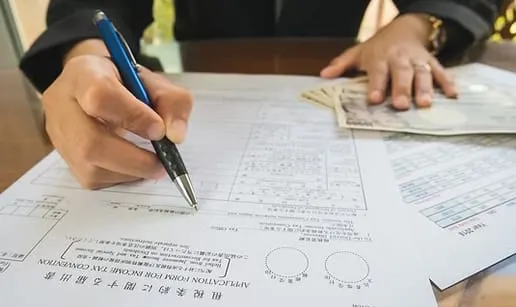
The organization’s volunteer tax service has operated for more than 20 years. IRS-certified volunteers prepare an average of about 1,200 returns each tax season, resulting in more than $2 million in refunds and credits returned annually to participating households, according to Community Action Duluth.
The service is intended to help qualifying residents receive earned income, child and other tax credits without paying commercial preparation fees. During the 2026 tax season, free in-person and virtual assistance was available to households earning up to $64,000.
Food access is another part of the organization’s work.
The Community Mobile Market uses a refrigerated vehicle to sell produce, dairy products, canned and dried foods and household necessities in Duluth-area neighborhoods. The market accepts cash, credit, debit and electronic benefit transfer payments.
Limited home delivery is available for residents who lack transportation to market locations in Lincoln Park, Central Hillside, New Duluth, Proctor and other participating neighborhoods. Community Action Duluth also operates a passive-solar greenhouse that produces food during the winter. The produce is sold through the Mobile Market or distributed to food shelves.
The organization’s employment programs combine paid work with job training.
Community Construction provides transitional employment for people who have encountered barriers to entering or remaining in the workforce. Participants learn building-trades skills while rehabilitating homes for families with low incomes.
The program is intended to address two community needs: preparing workers for jobs that pay sustainable wages and increasing the availability of affordable housing.
Stream Corps offers 11-month paid training positions involving natural-resource work. Participants develop general workplace skills while receiving instruction in chainsaw operation, pesticide application, GPS technology and geographic information systems. Industry certifications are available in several of those areas.
Community Action Duluth also works with participants in the Minnesota Family Investment Program, which combines employment services with financial and food assistance for qualifying families. Staff members help participants meet program requirements and establish employment and education goals.
Benefits outreach includes assistance with applications for the Supplemental Nutrition Assistance Program and health insurance through MNsure. Navigators help residents determine eligibility, complete applications and respond to documentation requirements.
The programs reflect Community Action Duluth’s approach to poverty: providing assistance with an immediate problem while helping participants establish longer-term stability.
That work has changed over time as local needs have changed. Food prices, housing costs, limited transportation and difficulty finding employment that supports a household continue to affect Duluth residents. Accessing assistance can also require reliable internet service, documentation and an understanding of several government systems.
Community Action Duluth does not control the economic conditions that contribute to poverty. Its role is to help residents navigate those conditions and obtain resources that already exist.
That may involve preparing a tax return, delivering groceries, helping someone enroll in health coverage or providing paid training that can lead to permanent employment.
The individual services are different, but the objective has remained largely unchanged since 1965: helping Duluth residents gain the tools, income and connections necessary to become more economically secure.