Table of Contents
Duluth Public Schools owes voters a convincing explanation of how another decade of operating levy revenue would produce lasting financial stability. Tuesday night’s referendum forum, co-sponsored by the Duluth News Tribune and Duluth Area Chamber of Commerce, made clear that further budget cuts would hurt students. It also reinforced why taxpayers deserve a fuller accounting of the decisions and expenses that brought the district to this point.
Even if voters approve both questions Nov. 3, the district says it must cut $5 million from its 2027-28 budget because of the timing of property tax collections. If both fail, it projects $12 million in reductions over two fiscal years, the equivalent of about 120 positions. Approval would spare schools some of the deepest reductions, but the district’s own projections establish that more money would not immediately end its financial problems.
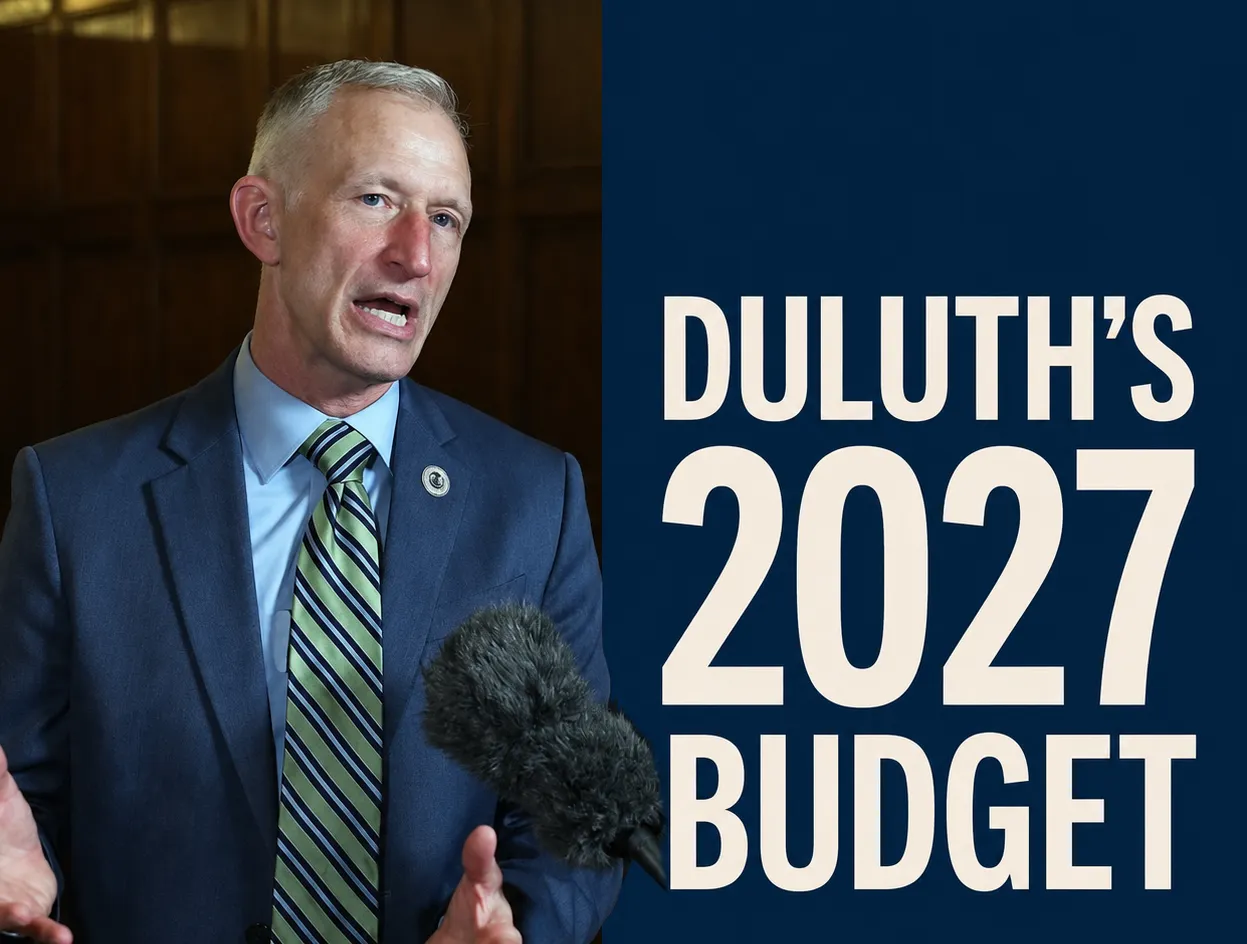
Superintendent John Magas described what already has been lost and what could follow.
“We've reduced things like reading interventionists, math interventionists, behavioral supports,” he told a small crowd of attendees at The Sports Garden in Canal Park. “We've increased our class sizes significantly and we still have another $5 million worth of reductions that will further impact those supports for students.”
Those are substantial consequences. Reading assistance, classroom support and manageable class sizes help determine whether children receive the attention they need. A responsible discussion of this referendum must take those losses seriously while examining whether the district has a sustainable plan for paying its bills.
School Board Chair Kelly Durick-Eder supplied the evening’s most personal explanation, describing how her older son benefited from reading intervention and her younger son received enrichment through the district’s eSquared program, which she said was cut last year. Her argument connected the ballot questions to specific opportunities children have received and others could lose.
“We're talking about an investment in adults so that they're there to serve our kids in our schools,” she said.

Later, she made the stakes particularly clear for western Duluth: “The West side is going to feel these cuts dramatically because we have more supports for our kids on the West side.”
That warning deserves attention. So does the question that ran through the forum: How can taxpayers be confident that approving these levies will lead to a budget the district can sustain?
The amount involved is considerable. Using the rounded annual estimates Magas presented, Question 1 would generate approximately $3.9 million in its first year and $8.3 million in each of the following nine years, totaling about $78.6 million. Question 2 would provide another $3.4 million annually, or approximately $34 million over 10 years. Together, that is about $112.6 million before inflation adjustments, which could increase collections.
The estimated initial combined tax increase is approximately $181 annually for a $300,000 home. Magas described the monthly amounts as about $8 for Question 1 and $7 for Question 2 and directed residents to the district’s tax calculator for estimates specific to their properties. Question 2 would take effect only if Question 1 passes, an important condition for voters considering the smaller request alone.
The monthly cost helps households understand the immediate effect. The decade-long total helps the community understand the commitment. Both belong prominently in the discussion, along with a financial forecast showing what the district expects those dollars to accomplish.
Longtime district critic Loren Martel challenged the board’s financial stewardship, arguing that compensation and benefit costs had increased beyond what the district could afford. His specific claims about those increases require reconciliation with the district’s financial records, but his broader demand was straightforward: Demonstrate control of spending before asking taxpayers for more.
“I wish we could do it all, but I do think at the end of the day, the public is not made of money and this is a tough time at the moment,” Martel said. “There are a lot of inflationary pressures.”

That concern cannot be dismissed as indifference toward education. Households face their own recurring expenses, and residents on fixed incomes have limited ways to absorb increases. The district’s need for revenue and taxpayers’ ability to provide it are both legitimate parts of this decision.
Durick-Eder acknowledged that pressure.
“I don't want to see people taxed out of their home. I want people to be members of our community that know that we care deeply about them,” she said.
She asked residents to consider what earlier generations had provided for their education and what today’s community should provide for the next.
That is a fair appeal. It becomes stronger when accompanied by a clear account of why spending has grown, which expenses the district can control and when its operating budget will balance.
The district’s financial results make those questions unavoidable. State-source revenue across its governmental funds increased from approximately $91.04 million in fiscal 2021 to $115.06 million in fiscal 2025, a gain of about $24.02 million, or 26.4%. Within the General Fund, which pays most everyday operating expenses, state-source revenue rose from approximately $86.25 million to $107.45 million, an increase of about 24.6%.

Minnesota’s basic per-pupil formula allowance grew much more slowly, increasing from $6,567 to $7,281 over that period, or approximately 10.9%. The formula’s purchasing power and the total state money reaching Duluth are different measures. Special education aid and other categorical funding also matter, and some revenue comes with restrictions or obligations that limit its usefulness elsewhere.
That distinction should be central to the district’s explanation. An increase in total state revenue does not establish that every required service is adequately funded. But a discussion focused only on the basic formula does not fully describe the money the district received.
Magas framed the problem as one extending well beyond Duluth: “This is not an issue of Duluth public schools mismanaging finance. This is an issue of, as you see on the chart here, that the state funding is not keeping pace with the cost of education.”
Other districts’ struggles provide context. Duluth’s own results still require examination. General Fund revenue increased from approximately $118.86 million in fiscal 2021 to $140.89 million in fiscal 2025, a gain of about 18.5%. Expenditures increased from approximately $110.79 million to $153.21 million, or about 38.3%. Spending grew at more than twice the percentage rate of revenue.
By fiscal 2025, General Fund expenditures exceeded revenue by approximately $12.33 million before other financing activity. After that activity, the fund balance declined by about $11.53 million. The result was approximately $8.75 million worse than the district had budgeted, with expenditures and other financing uses finishing nearly $15 million above the final budget. Additional revenue offset part of that overrun.
Special education and transportation were major sources of higher costs. Those explanations need to be developed in enough detail for residents to understand what was unavoidable, what was underestimated and what will change. A budget miss of that size demands a public explanation that connects the accounting to the decisions.

Durick-Eder pointed residents toward the district’s annual independent audits. “So the public is free to look up our audits and we actually make it very easy on the ISD 709 website to go and click on the finance button and you can get as deep as you want to in school finance,” she said.
Making those records accessible is necessary. Explaining them is a separate responsibility. An independent audit provides essential financial information; its existence alone does not establish that spending decisions were affordable or that forecasts were sufficiently accurate. Voters should not have to become school finance specialists to understand why a district exceeded its final spending budget by millions of dollars.
The discussion of federal pandemic relief was particularly revealing. Asked by News Tribune opinion writer Chuck Frederick whether the district had become too dependent on temporary money, Magas said the district deliberately invested in employees who could help students recover academically and behaviorally.
“We knew that there was some risk in putting it into the people positions, but we knew that the need was there,” Magas said. “So we put our money into social workers, we put our money into interventionists for reading and math and behavior because we wanted to do everything possible to help them.”
That was an understandable educational priority during an extraordinary disruption. Magas also acknowledged that the funding’s expiration was anticipated: “So it's not a surprise to any of us that we've had to make reductions in some of this, but it was strategic.”
The financial question follows directly from that explanation. If the funding’s end was expected, what was the plan for bringing recurring expenses into line with recurring revenue? How much of today’s shortfall represents the planned expiration of temporary positions, and how much reflects other spending growth or forecasting errors?
Martel repeatedly challenged compensation decisions made as pandemic assistance was ending. Durick-Eder defended the importance of paying educators adequately, saying, “I will never apologize for making sure that teachers have the benefits and the salaries that they need a livable wage so that they can live in this community, the community where they serve the kids.”

Teachers deserve fair compensation. The board also must approve agreements the district can sustain. Evaluating that responsibility requires the cost of settlements, staffing changes, benefit increases and other compensation commitments over time. Respect for employees and scrutiny of the budget are compatible obligations.
Magas offered one concrete example of the pressure, saying health insurance costs increased nearly 15% last year, adding approximately $2 million in district expenses. That is the kind of explanation voters need across the major spending categories, accompanied by the assumptions being used for future budgets and the steps available if those assumptions prove wrong.
Durick-Eder also acknowledged a measure of local responsibility. “Now I would say that our fiscal problems right now are, we have some culpability as the Duluth public schools as to how we manage our money, but there's also culpability and I would say more so for the state and the federal government,” she said.
That acknowledgment deserves development. Which local decisions contributed to the problem? Which procedures have changed? Who is responsible for identifying spending that departs from the budget, and how quickly will the board and public learn about it?
Duluth has already made painful reductions. The district says it has cut its operating budget by $12 million over three school years, including a 16% reduction in district administration costs and the elimination of 48 positions across school sites. Yet its adopted 2026-27 budget still projected a deficit of approximately $3.9 million when the district reported only about $2.5 million remaining in its fund balance.
Those figures leave little room for another substantial forecasting error. Voters need a year-by-year recovery schedule under each referendum outcome, showing when recurring revenue would cover recurring expenses and when reserves would be rebuilt.
The Red Plan’s legacy further complicates public trust. The proposed levies would support operations rather than pay off remaining building bonds, although Question 1 is structured to increase operating collections as some existing building debt expires. Residents deserve a clear presentation showing the debt payments that end, those that remain and the operating taxes that would replace part of the anticipated decline.
Magas urged the community to consider today’s students and the future alongside that history. That is reasonable. The district can strengthen that appeal by explaining its full financial position in terms residents can follow.
Durick-Eder closed by recognizing something important about one of the district’s most persistent critics. “I do respect that he does show up and he does ask the hard questions and he is always engaged in his community because he cares deeply about his community and I know that he cares deeply about kids.”
That should be the foundation for the remaining referendum discussion. Concern for children does not belong exclusively to either side of a tax question. Residents can value teachers, understand the consequences of larger classes and still insist on a credible explanation of spending, deficits and financial oversight.
Tuesday’s forum made the educational stakes clear. Before Nov. 3, the district needs to bring the same clarity to its recovery plan: what went wrong, what has changed and how approximately $112.6 million in additional operating revenue over a decade would produce a sustainable budget.
Children need dependable schools, and dependable schools need sound finances. Duluth taxpayers are being asked to make a long commitment. They deserve a plan detailed enough to judge before the vote and specific enough to hold the district accountable afterward.