Table of Contents

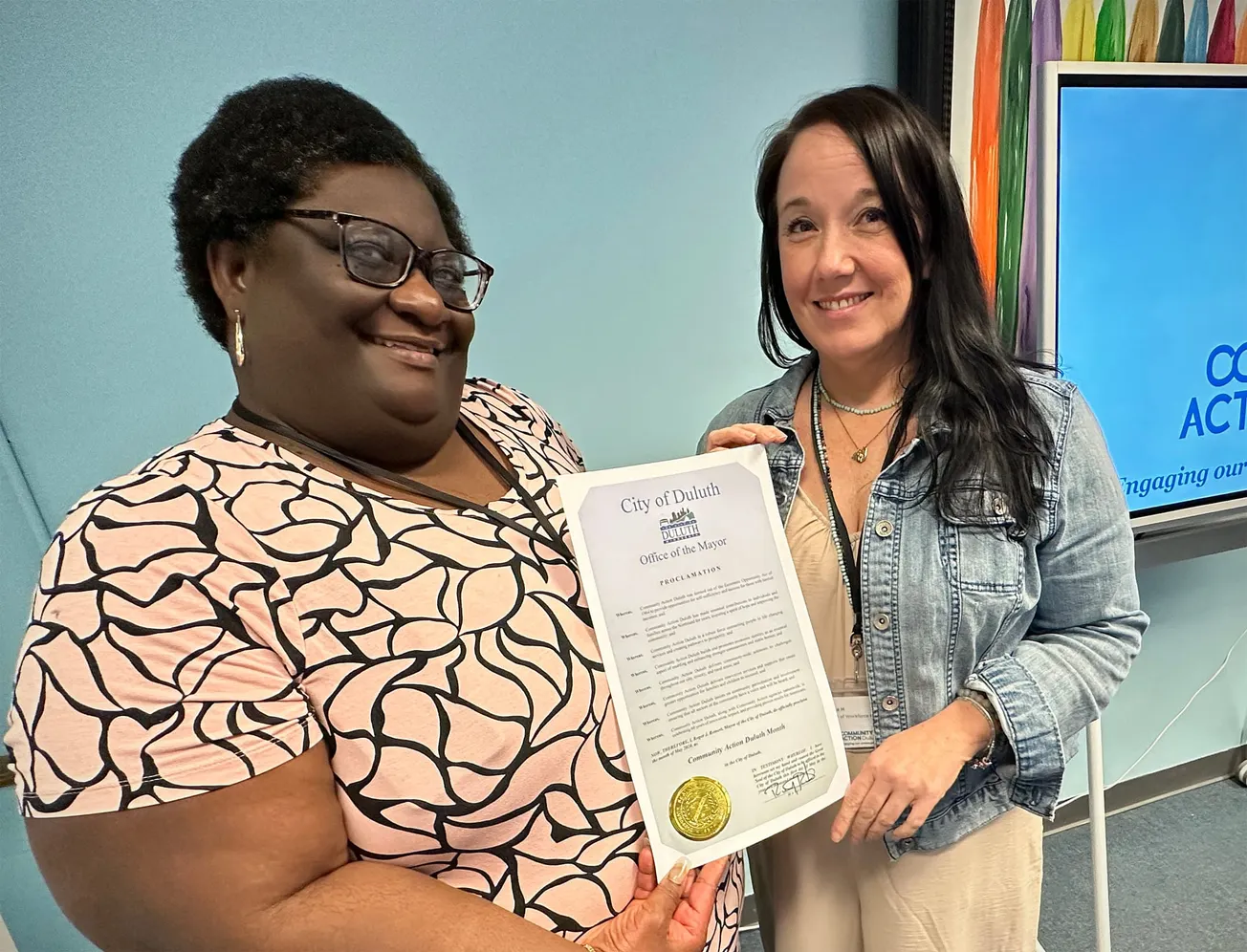
Community Action Duluth is standing today because Classie Dudley was willing to lead when leadership required more than attending meetings, approving budgets and accepting credit for comfortable decisions.
Dudley has carried an extraordinary share of the organization’s executive responsibilities while overseeing programs that help low-income Duluth residents find employment, obtain fresh food, prepare their taxes, develop financial stability and gain access to transportation and workforce training. The newly released audit of Community Action Duluth’s 2024 financial statements documents an organization that expanded its services, improved its operating performance and directed an increasing share of its resources toward the people it exists to serve.
That record deserves to be recognized.
Community Action Duluth generated $2.66 million in public support and other revenue during the 2024 fiscal year, an increase of nearly 26% from the previous year. Government grant revenue increased from $1.69 million to $2.11 million. Foundation and local grant support grew from approximately $304,000 to $416,000. Program income also increased, reaching nearly $97,000.

Those figures reflect more than successful accounting. They represent confidence from government agencies, foundations and community partners that entrusted Community Action Duluth with money intended to improve lives. Grants do not administer themselves. They require applications, partnerships, reporting, compliance, program design and daily supervision. Dudley has been at the center of that demanding work.
The strongest measure of a community-action organization is not how much money it receives, however. It is how much of that money reaches its mission.
Community Action Duluth spent $2.33 million on program services in 2024, approximately $398,000 more than it spent the previous year. About 87% of all organizational expenses were devoted to programs, up from approximately 84% in 2023. At the same time, management and general expenses declined by more than $32,000, falling from $373,604 to $341,462.
That is an important result. Community Action Duluth expanded its work while reducing administrative spending. It placed more of its available resources into programs and a smaller proportion into organizational overhead. For a nonprofit responsible for turning limited public and charitable dollars into measurable community assistance, that is the direction stakeholders should want to see.

The expansion was particularly significant in two areas. Spending on green-jobs programs increased from approximately $480,000 to $735,000, a rise of more than 53%. Spending on the organization’s tax-site services increased from approximately $104,000 to $163,000, an increase of more than 56%. Employment services, community engagement, transportation and financial services remained substantial parts of the organization’s work.
The audit also shows a meaningful improvement in Community Action Duluth’s unrestricted finances. The organization recorded a $224,422 reduction in unrestricted net assets in 2023. One year later, it produced a $37,972 unrestricted gain. That represents an operating improvement of more than $262,000.
Cash generated by operating activities tells a similar story. Community Action Duluth used $153,386 in operating cash during 2023. In 2024, its operations generated $99,871 — a positive year-to-year swing of more than $253,000. Financial assets available to meet general expenditures within one year increased from $305,209 to $358,383.
Community Action Duluth also invested more than $92,000 in property and equipment during the year. Its $75,000 line of credit, which remained outstanding at the end of fiscal 2024, was paid in full in April 2025.
These are not the results of an organization drifting without direction. They document increased program activity, stronger unrestricted performance, improved operating cash flow and a greater concentration of spending on direct services. They also reflect an executive director who has continued to carry the organization’s mission through circumstances that would test any nonprofit leader.

That does not mean the audit was perfect, and no credible assessment should pretend otherwise. The auditor concluded that the statements fairly presented Community Action Duluth’s financial position, changes in net assets and cash flows in all material respects.
Community Action Duluth’s challenge became even more difficult after the close of the 2024 fiscal year. According to the audit, reductions in several grant programs and the expiration of time-limited funding produced an estimated $462,500 decrease in available support. That money had paid for direct services, staff and operating expenses. When it disappeared, Dudley was forced to adjust the organization’s budget, staffing and service model to match the resources that remained.
Those are among the hardest decisions any executive director must make. A nonprofit cannot permanently employ people or operate programs with grants that have ended. Compassion does not eliminate arithmetic. Responsible leadership sometimes requires an executive to reduce expenses, reorganize operations and protect the organization’s core mission before a temporary funding loss becomes a permanent financial crisis.
Dudley should not be portrayed as a leader who inherited unlimited resources and presided over easy growth. She has been expected to raise money, manage government grants, supervise programs, maintain community partnerships, oversee personnel, answer to a board and respond to the continuing needs of people facing poverty — all while the organization’s funding environment has become less predictable.

No executive director accomplishes all of that alone. Community Action Duluth’s employees, volunteers, board members, donors and community partners all contribute to its work. Good leadership recognizes those contributions. But it is also fair to recognize the person who carries the final responsibility when funding disappears, staffing must be adjusted or difficult decisions cannot be postponed.
Dudley has carried that responsibility.
The appropriate response now is not to declare victory or ignore the work still required. Community Action Duluth needs stronger financial controls, more diversified revenue, a deeper administrative structure and a board prepared to provide active oversight and meaningful support. It should not remain dependent on one executive director to function simultaneously as strategist, fundraiser, operational manager and public defender.
Dudley has demonstrated that Community Action Duluth can expand services, improve its unrestricted operating performance and direct a substantial majority of its spending to programs. The next step is to build the institutional support around her that will make those gains sustainable.

Community Action Duluth serves people whose needs do not disappear when a grant expires or an organization faces internal pressure. Its mission is too important to be weakened by instability, and its executive director should not be left to carry an organization-wide burden indefinitely.
The audit documents considerable progress that deserves to be acknowledged. It presents Dudley as what Community Action Duluth has needed during an unusually demanding period: a determined leader willing to make difficult decisions, protect essential programs and keep the organization moving forward.